


God Is Not Fooled by Fine Print
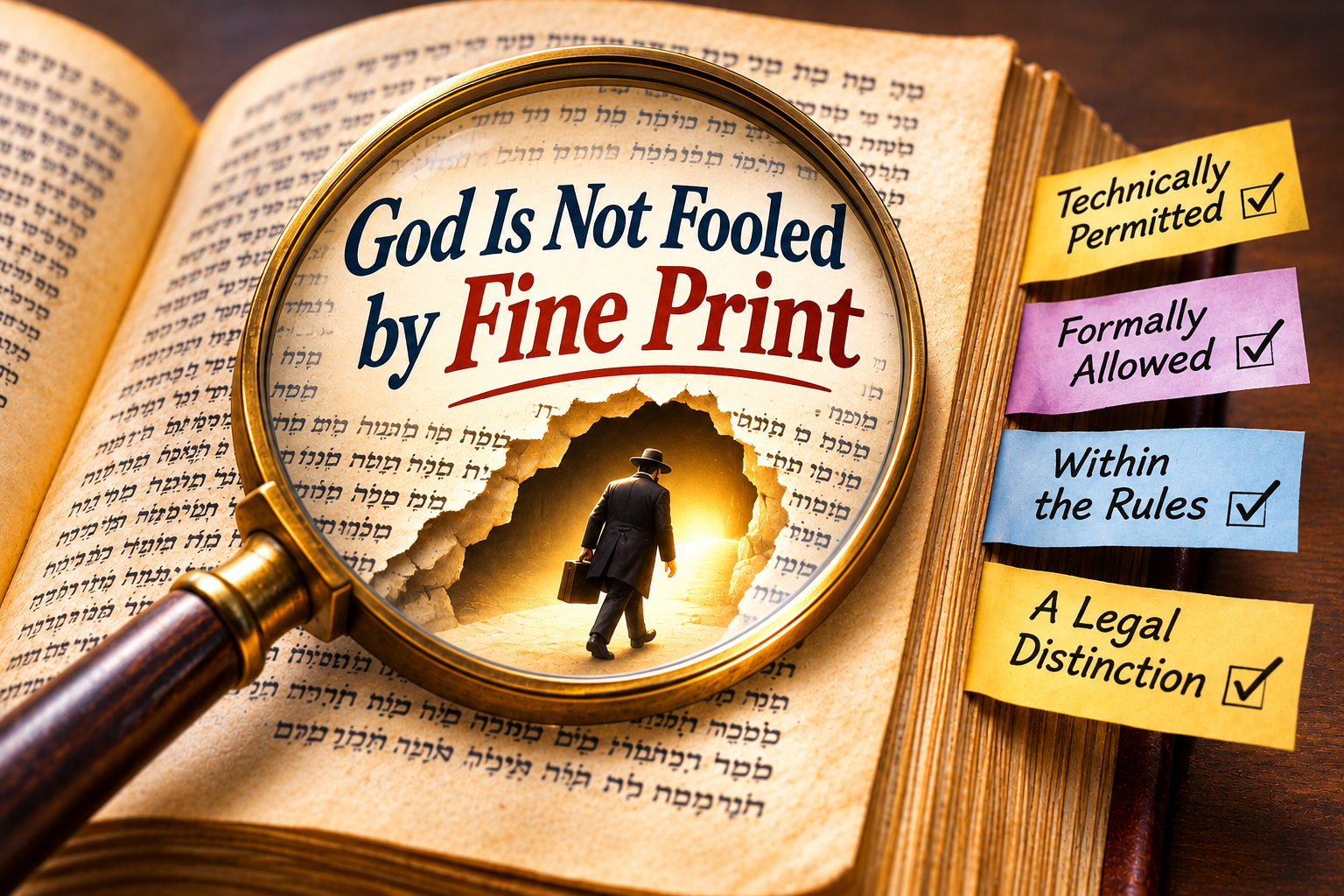
From Jacob’s deception to the moral loopholes of modern politics and religion- Parashat Toldot.
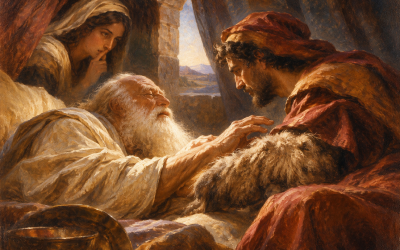
There is something almost comical about the lengths to which we will go to avoid calling a lie a lie, especially when the liar happens to be someone we admire, a leader we support, or, even more conveniently, one of our biblical patriarchs. In this week’s Torah portion, Toldot, Jacob conspires with his mother Rebecca to deceive his blind father, Isaac, and obtain the blessing intended for his brother Esau. He dresses in his brother’s clothes, covers his arms with animal skins, and approaches his unsuspecting father. When Isaac asks whether he is really Esau, Jacob replies, “I am.” And then, for generations, our commentators perform an impressive exercise in moral gymnastics.
Some explain that Jacob never actually lied. His words, “I am Esau, your firstborn,” can supposedly be divided differently: “I am [the one bringing you food]; Esau is your firstborn.” Others argue that Jacob was merely fulfilling a divine plan, making his deception not only permissible but necessary. How reassuring. With sufficient interpretive creativity, even an elaborate conspiracy can become an innocent misunderstanding. The problem, of course, is that Isaac was deceived, Esau was deprived, and Jacob knew exactly what he was doing. No amount of grammatical ingenuity changes that reality.
I sometimes wonder whether our political leaders have been studying these commentaries a little too enthusiastically. In Israel and the United States alike, we have developed an extraordinary industry devoted to explaining why things that look, sound, and smell like corruption, dishonesty, or abuse of power are technically nothing of the sort. A gift is not necessarily a bribe. A misleading statement is not technically a lie. A broken promise was merely misunderstood. An obvious conflict of interest becomes a complicated legal distinction, and conduct that would once have ended a political career is now defended with the confidence of someone who has discovered a particularly useful footnote. The question is no longer whether an action is right, but whether someone sufficiently clever can construct an argument that makes it permissible.
And nowhere is this temptation more troubling than in religion itself. There is a profound irony in religious systems that devote extraordinary intellectual energy to defining the smallest details of permissible behavior while sometimes displaying remarkable flexibility toward cruelty, dishonesty, discrimination, or the abandonment of communal responsibility. When religious authorities can find elaborate justifications for avoiding obligations borne by others, or invoke sacred law to excuse conduct that violates the most elementary demands of justice, we should ask whether fidelity to the law has become a means of escaping its purpose. A perfectly kosher technicality can still be morally rotten.
Fortunately, the rabbis did not give us the only interpretation of Jacob’s story. The haftarah, from the prophet Malachi, offers a considerably less accommodating perspective. Malachi confronts the priests who bring defective, sick, and inferior animals as sacrifices, apparently assuming that fulfilling the formal requirements of worship will suffice. They have performed the ritual, observed its outward structure, and perhaps even convinced themselves that they have done their duty.
But God is not impressed.
Offer it now to your governor,” the prophet challenges them. “Will he be pleased with you? (Malachi 1:8).
Malachi exposes the moral bankruptcy of treating religious observance as a negotiation over minimum requirements rather than a commitment to the highest standards. And perhaps this is precisely the challenge facing those Orthodox religious authorities who have turned the extraordinary sophistication of Jewish law into an equally sophisticated machinery of moral exemptions. What does it say about a religious system when its scholars can navigate the most intricate details of Jewish law yet somehow find ways to justify exemptions from obligations that others must fulfill, discrimination in the name of tradition, or political alliances with leaders whose conduct violates the very values the Torah demands? When religious ingenuity is devoted to finding loopholes rather than demanding integrity, Halacha risks becoming an instrument for legitimizing injustice. A tradition that has spent centuries perfecting the art of legal interpretation should be equally determined to perfect the art of moral responsibility.
The same moral gymnastics are performed in the political arenas of Jerusalem and Washington. Laws are dissected, conflicts of interest redefined, ethical boundaries stretched, and every abuse of power defended by an army of lawyers, commentators, and loyal supporters. The question is no longer what public servants owe the people they serve, but how much they can get away with while remaining technically within the rules. Yet legality is the floor of public morality, not its ceiling, and a democracy that confuses the two is already in serious trouble.
Jacob may have succeeded in obtaining his father’s blessing, but the deception did not bring him peace. It brought estrangement, fear, and years of exile. Winning through deception has a price, even when the victory can be defended. Perhaps that is why Malachi’s rebuke is such a necessary companion to Toldot. It reminds us that the purpose of religious and moral life is not to become better at defending our conduct, but to become better human beings.
God does not need our clever explanations. And neither does society.
What we desperately need is the courage to stop asking whether we can justify what we have done, and start asking whether we should have done it in the first place.
Shabbat Shlom!