God’s Truth Is For Religious Pluralism Until Judgement Day
People often refer to Indonesia as the largest, most tolerant, and most moderate Muslim country in the world. At a time when many Muslim countries globally have been involved in political conflicts, civil wars, and other strife, Indonesia remains an oasis of pluralism, a model Muslim country. The Indonesian version of democracy not only disproves the claim that Islam and democracy are incompatible, but also demonstrates how Islam can be maintained within a modern nation state.
Several parts of the Middle East have also witnessed years of fighting, with almost all of the violence perpetrated by Muslims against Muslims in spite of the many verses in the Qur’an that support revering pluralism within Islam and between the Abrahamic religions. Most people have at one time or another asked, ‘If there is only one God why are there so many religions?’ A good question that I as a Rabbi have often been asked.
This is my answer. The Qur’an declares that Allah could have made all of us monotheists, a single religious community, but (didn’t) in order to test our commitment to the religion that each of us have been given by God.
“If Allah had so willed, He would have made you a single people, but (God’s plan is) to test you in what He has given you: so compete in all virtues as in a race. The goal of you all is to (please) Allah who will show you on judgment day) the truth of the matters in which you dispute.” (Qur’an 5:48)
This means that religious pluralism is the will of God. Yet for centuries many believers in one God have chided and depreciated each other’s religions, and some believers have even resorted to forced conversions, expulsions and inquisitions. Monotheists all pray to the same God, and all prophets of monotheistic faiths are inspired by the same God.
So how did this intolerance come about, and how can we eliminate religious intolerance from the Abrahamic religions. Greek philosophy, with its requirement that truth must be unchanging and universal, influenced most teachers of sacred scripture during Medieval times to believe that religion was a zero sum game; the more truth I find in your scripture the less truth there is in mine.
Instead of understanding differing texts as complementary, they made them contradictory and declared the other religion’s sacred text to be false.
If religion is to promote peace in our pluralistic world we must reject the zero sum game ideology and develop the pluralistic teachings that already exist within our sacred scriptures. After all “all prophets are brothers. They have the same farther (God) but different mothers (mother tongues, motherlands and unique historical circumstances that account for all the differences in their scriptures).
“Narrated Abu Huraira: Allah’s Apostle said, “Both in this world and in the Hereafter, I am the nearest of all people to Jesus, son of Mary. Prophets are paternal brothers; their mothers are different, but their religion is one.” (Bukhari, Book #55, Hadith #652) Prophets are brothers in faith, having different mothers. Their religion however; is one“. (Muslim, Book #030, Hadith #5836)
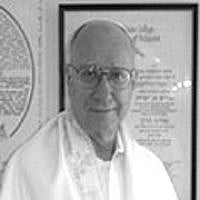
I am a Reform Rabbi who first became interested in Islam when I studied it at the Hebrew University in Jerusalem 66+ years ago. I have continued my study of Islam off and on for many years and for some time I have consider myself to be a Reform Rabbi who is a faithful Jew submitting to the will of God, because I am faithful to the covenant that God made with Abraham the Hebrew (Genesis 14:13) and I submit to the commandments that God made with the people of Israel at Mount Sinai; and I believe that Jewish spiritual leaders should modify Jewish tradition as social and historical circumstances change and develop. I also believe we should not make religion difficult for people to practice.
These are lessons that prophet Muhammad taught 12 centuries before the rise of Reform Judaism in the early 19th century. In many ways statements in the Qur’an about Orthodox Jewish beliefs and Ahadith relating Muhammad’s comments about Orthodox Judaism, and religion in general, prefigure the thinking of Reform Rabbis some 12-13 centuries later.
I could have written this essay about religious pluralism by using quotes only from the Hebrew Scriptures, such as: “In the last days the mountain of the Lord’s temple will be established as the highest of the mountains; it will be exalted above the hills, and peoples will stream to it. Many nations will come and say, “Come, let us go up to the mountain of the Lord, to the temple of the God of Jacob. He will teach us his ways, so that we may walk in His paths. Torah will go out from Zion, and the word of the Lord from Jerusalem. He will judge between many peoples and will settle disputes for strong nations far and wide.
“They will beat their swords into plowshares and their spears into pruning hooks. Nation will not take up sword against nation, nor will they train for war anymore. Everyone will sit under their own vine and under their own fig tree, and no one will make them afraid, for the Lord God has spoken. All the nations will walk in the name of their gods, and we (Jews) will walk in the name of the Lord our God for ever and ever.” (Micah 4:1-5)
Or I could have used a pragmatic argument like an eleventh century BCE Jewish leader named Jephthah offered when he tried to avoid a war by appealing to an invading king as follows: ”Do you not hold what Chemosh, your God, has given you? So we will hold on to all that Adonai, our God, has given us.” (Judges 11:24)
Jephthah does not believe in Chemosh, nor does he think that Chemosh is just another name for the Holy One of Israel. He knows that the One God of Israel does not allow Jews to have any other God. But Jephthah recognizes the king’s religious beliefs and wants the king to equally recognize Israel’s.
Thus, Adonai the One God of Israel, is the only God for Jews; but others can have a different view of God that they submit to, as long as this God leads them to practice virtue. As the Qur’an declares, “For every community We have appointed a whole system of worship which they are to observe. So do not let them draw you into disputes concerning the matter, but continue to call people to your Lord.,..God will judge between (all of) you on the Day of Resurrection about what you used to differ”. (22:67&69)
I choose to use Qur’an and Hadith to illustrate that all religions, as well as my own, have statements proclaiming and endorsing religious pluralism. They also have other statements that appear to claim religious exclusivity. These opposing views are the will of God, so that we may be tested.
Choosing between good and evil is a moral choice that even agnostics and atheists can do. Believers should believe in all God’s words (plural), but if we value kindness, humility and peace we are obligated to choose to understand the seemingly exclusive statements in the context of the accepting statements.
This is the will of God so that believers may be tested in their commitment to kindness, humility and peace. “We have revealed to you, [O Muhammad], the Book in truth, confirming that which preceded it of the Scripture, and as a criterion over it. So judge between them by what Allah has revealed and do not follow their inclinations away from what has come to you of the truth. To each of you We prescribed a law and a method. Had Allah willed, He would have made you one nation [united in religion], but [He intended] to test you in what He has given you; so compete to [do all that is] good. To Allah is your return all together, and He will [then] inform you concerning that over which you used to differ.”
He (Allah) will [then] inform you concerning that over which you used to differ.” This statement is so important that it is repeated at least five times in the Qur’an. Only God knows the total truth in religion and love your neighbor and the stranger is the most important religious truth. God tells us (Qur’an 39:46) “Say, “Allah, Creator of heavens and earth, Knower of the unseen and the witnessed, You will judge between your servants concerning that over which they use to differ.” And (Qur’an 6.164) states: “Then to your Lord shall you return, and He will inform you of that over which you differed.”
Qur’an 32:25 states “Indeed, your Lord will judge between them on the Day of Resurrection concerning that over which they used to differ.”
And Qur’an 16:124 “And indeed, your Lord will judge between them on the Day of Resurrection concerning that over which they used to differ.”
And the
Qur’an states 39:46 “Say, “Allāh, Creator of the heavens and the earth, Knower of the unseen and the seen, You will judge between Your servants concerning that over which they used to differ.’” All the Abrahamic religions produce good servants!