


Stop romanticizing the return to the Gaza border
About 105 years ago, the words attributed to Joseph Trumpeldor, “It is good to die for our country,” became a cornerstone of Israeli national consciousness. This statement, born from a reality of war and sacrifice, has shaped the Israeli narrative for generations, a narrative that celebrates resilience, dedication, and a willingness to pay a personal price for the country.
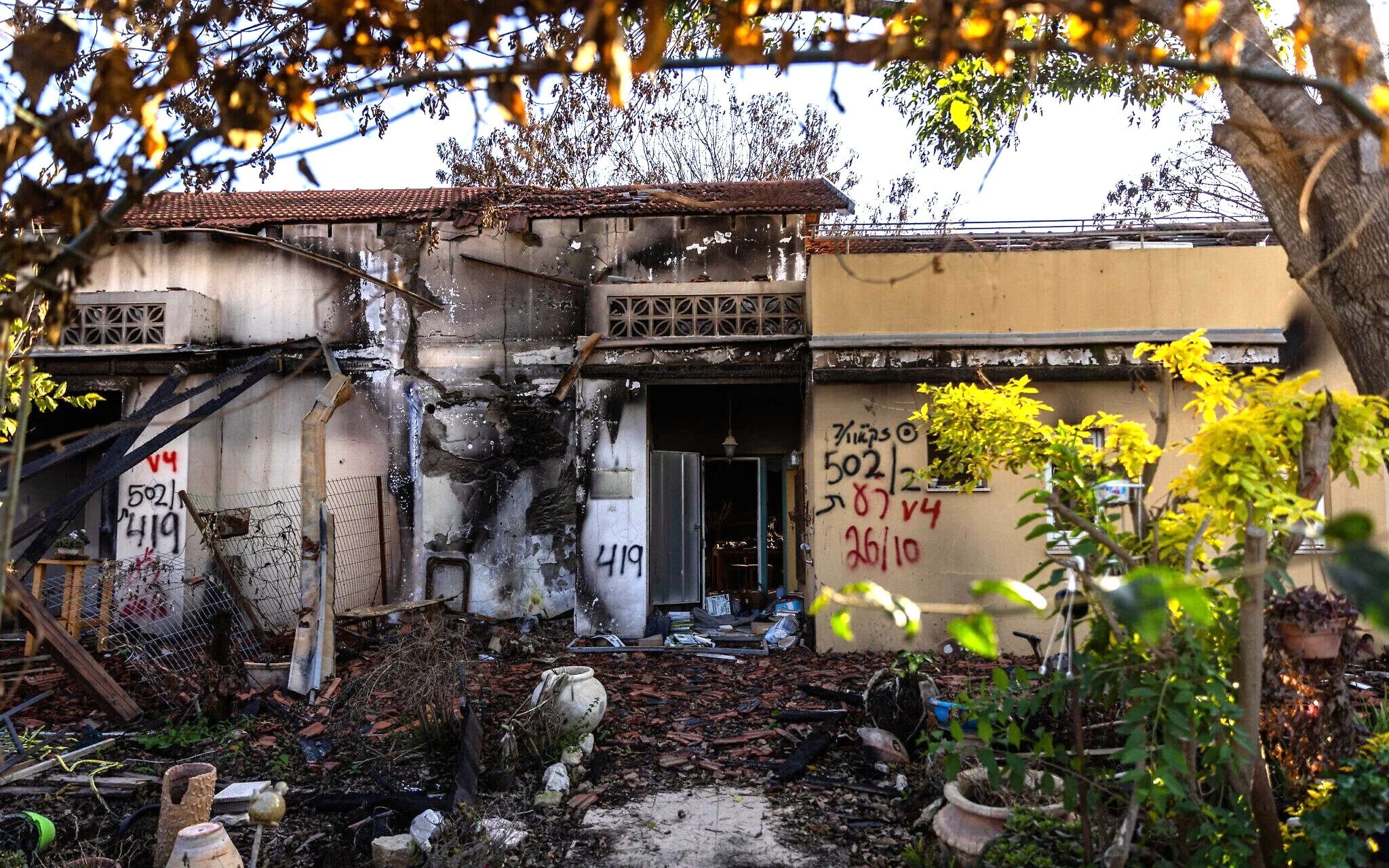
But in 2026, after October 7, these words no longer sound to me like heroism. They sound like an excuse. As someone who survived the massacre in the Gaza border region, I understand today that this myth does not remain in the past. It continues to govern the present. It allows the State of Israel to expect people to return to living in the line of fire without creating a new security situation, a real solution, or a meaningful alternative.
As far back as Operation Cast Lead in 2008, we developed the habit of leaving the kibbutz when the situation “heated up.” Our parents sent us to live in central Israel for short periods, in a desperate attempt to protect us. It was there that I first experienced the gap between the Gaza border region and the rest of the country. A drive of an hour and a half separated a life in which I was running for shelter every few hours from a life that continued as usual. Cafés were full, public transportation ran normally, and routine was preserved. That contrast made it clear to me how the risk we lived with was seen as a local problem, not a national one.
This gap was not accidental, nor was it the result of a single operation. It was built over years, since the early 2000s, when the security reality in the Gaza envelope seemed temporary but quickly became a daily routine. Since then, the gunfire has never truly stopped. Over the years, the state offered Gaza border residents a range of economic benefits. These were tools designed to preserve a situation of ongoing risk — a smokescreen meant to make us feel valued, instead of providing lasting security and protection. The message was clear: you are the defensive line. You are the buffer. As if money could compensate for living under constant threat.
I remember the morning of October 7. I was sitting in the attic, hearing voices in Arabic around the house. I could not understand why I was the one expected to pay the ultimate price. Why should a 28-year-old woman die simply because of where she lives? What did I do to deserve a death sentence because my parents chose a kibbutz based on ideals of solidarity and shared living? At that moment, I understood that life in the Gaza border region was no longer just a housing choice; it had become an act of sacrifice, even though none of us truly chose it.
Today, two years after the war began, about 90 percent of residents in the Eshkol Regional Council have returned home. Yet explosions are still heard, and Hamas is not ready to disarm. Life in the so-called “return to routine” feels closer to October 6 than to a new beginning. Instead of preventing another abandonment, the government is focusing on rebranding the situation. It is time to stop romanticizing the return to the Gaza border. Return must be a real choice, not a quiet obligation. This requires a clear and transparent security policy for the Gaza border region, long-term civilian protection that does not rely on constant emergency response, and full accountability for the failures of October 7. Without these conditions, return is not rebuilding; it is repetition.
It is true that today, due to regional threats, no place in Israel feels entirely safe. In that sense, risk has expanded. But there is a critical difference between a shared national threat and a permanent policy of exposure. Most Israelis live with danger as an emergency. Gaza border residents live with it as routine. When an emergency becomes permanent, the burden is no longer equally shared.
After such a traumatic event, we must ask ourselves which values we are raising our society on. How far should love of country go? Do resilience, solidarity, and Zionism protect life, or do they continue to be excuses for risk?
The state must reexamine its policy toward Gaza border residents, those who feel abandoned and are no longer willing to carry the responsibility for national security by themselves. This is the moment to establish a body that will lead real change and take responsibility for civilian security and regional peace. Years of containment, delay, and avoidance have solved nothing. Enough is enough. After the barrier collapsed with the security conception on October 7, the question of what has replaced it remains unanswered, and without an answer, life in the Gaza envelope cannot continue as usual.