
Good News for the Jews: A reminder we are still here and still moving forward
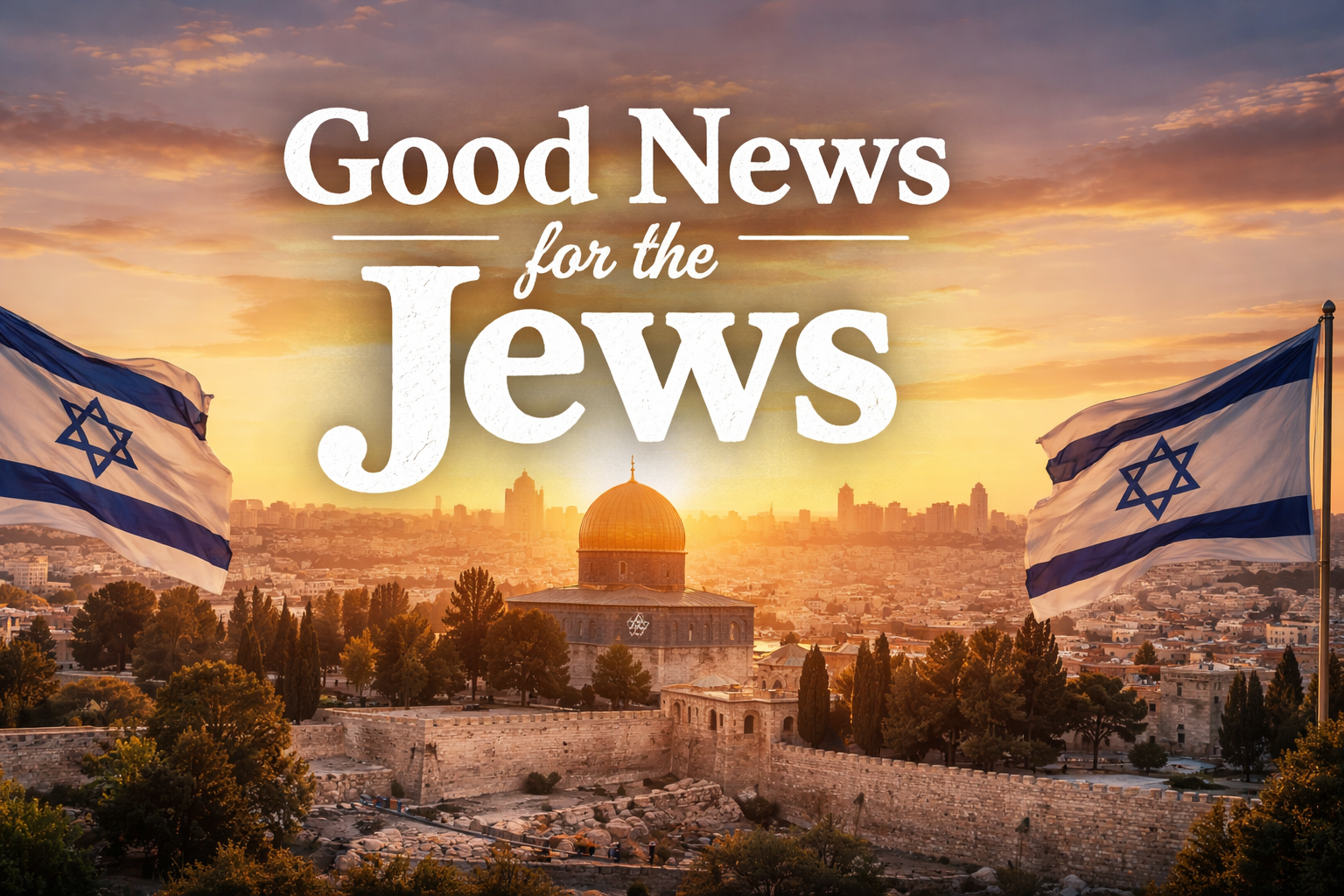
It has been a brutal stretch. The kind of news cycle that does not just inform, but exhausts. The kind that leaves you doom-scrolling at midnight, wondering whether the world has lost its mind or just finally stopped pretending it ever had one.
So this week, I want to do something radical. I want to pause the outrage, lower the blood pressure, and take stock of something unfashionable but real.
If you can get beyond the headlines, there is good news for the Jews out there.
Not spin. Not denial. Not a “both sides” sedative. Just concrete reminders that Jewish life did not freeze on October 7 and that history, once again, is failing to cooperate with the predictions of our enemies.
Here are six examples:
First: Israel keeps saving lives, including people who will never thank it.
Israeli doctors from Sheba Medical Center continue to pioneer trauma and rehabilitation techniques now used worldwide. Emergency response protocols developed in Israel are standard in hospitals across Europe and North America. Israeli water purification and desalination technologies are deployed in drought-stricken regions across Africa and Asia, often without public attribution.
And here is some completely predictable irony: The same governments and institutions that accuse Israel of genocide and apartheid, and flirt with boycotts, quietly purchase Israeli cyber defense systems, intelligence software, and military technology. When terrorism, drones, or cyber threats appear, slogans give way to survival. Publicly, Israel is condemned. Privately, it is indispensable.
Israel does not export ideology. It exports competence.
That, too, is good news.
Second: Jewish life in the diaspora is not retreating. It is consolidating.
In cities like Berlin, Jewish communities have expanded security and doubled down on programming rather than shrinking. In Paris, Jewish schools are reporting steady enrollment even as public Jewish visibility remains contested. In North America, day schools and Jewish summer camps have seen renewed interest from families who want something sturdier than vibes and slogans. Synagogues are not empty. They are fuller, more intentional, and more honest about the moment we are in.
This is not fear. It is prioritization. Jewish life has always sharpened under pressure.
Third: October 7 survivors are choosing life, loudly and deliberately.
Families displaced from kibbutzim like Be’eri and Kfar Aza are rebuilding homes and businesses while publicly demanding accountability and justice. Former hostages and bereaved parents have run the New York City Marathon, planted memorial forests, and spoken directly to international audiences who would rather not hear from them. Israeli farmers near the Gaza border have replanted fields under rocket fire, not because it is symbolic, but because the next harvest matters.
This is not resilience branding. It is continuity practiced daily.
Fourth: Young Jews are leaning in, not out.
Hillel chapters across major campuses report increased attendance at Jewish learning events and Shabbat dinners, even in hostile environments. Jewish students are forming independent study groups, hosting teach-ins rooted in Jewish history rather than activist slogans, and showing up visibly as Jews when anonymity would be easier. In Israel, post-army young adults are volunteering in devastated communities and agricultural programs instead of disappearing into post-service drift.
The generation written off as fragile is proving otherwise. Quietly. Persistently.
Fifth: Moral clarity still exists, even when it costs something.
It has come from writers like Bari Weiss, who refused to launder atrocity through euphemism. From historians and public servants like Deborah Lipstadt, who have been explicit that antisemitism dressed up as human rights advocacy is still antisemitism. From public intellectuals such as Douglas Murray, who stated plainly that mass murder is not context and barbarism is not resistance. And from political leaders like Ritchie Torres, who have shown that moral clarity is still possible inside progressive politics, even when it comes with a price.
It has also come from clergy, veterans, and civil rights voices who spoke without hedging and paid for it in lost platforms and professional standing. They did not trend. They mattered.
Because Jewish continuity has never depended on universal approval, only on the few who tell the truth when it counts.
Sixth: Jews are showing up in sports, unapologetically and at the highest levels.
In an era when Jewish identity is often treated as a political liability, Jewish athletes are simply competing and excelling in public. No slogans required.
In the NBA, Deni Avdija has become one of the league’s most compelling young players. Born in Israel to a Serbian mother and Israeli father, Avdija wears his Jewish and Israeli identity openly while carving out a reputation as a tough, versatile, team-first competitor. He is not a novelty. He is not a symbol manufactured for social media. He is a legitimate NBA talent who has become a source of pride for Jews who rarely see themselves reflected on that stage.
He is not alone. In Major League Baseball, players like Alex Bregman and Max Fried have spoken openly about Jewish identity while performing at the highest level of the sport. In the NHL, Zach Hyman has combined elite performance with visible Jewish engagement and philanthropy connected to Israel. These athletes are not activists first. They are competitors. And that, in its own way, is the point.
For a people so often cast as abstractions, seeing Jews succeed in the most universal language of all, competition, matters. It reminds the world, and sometimes ourselves, that Jewish life is not only about survival. It is also about excellence, confidence, and belonging in the public square.
That, too, is good news.
Zoom out.
The Jewish people are still here. Still building. Still arguing productively. Still investing in education, family, memory, and life itself. Not because the world is kind. It never has been. But because Judaism is built for long games and bad centuries.
Hope is not pretending things are fine. Hope is noticing that despite everything, the Jewish story keeps advancing anyway.
That is not optimism.
That is evidence.