Grandchildren in Egypt
Yaakov is old, he has little time left. He has lived with his reunited family in Egypt for seventeen years, in a state of tranquility which had escaped them until now. Yoseph brings his children to visit their ailing grandfather. Yaakov tells them a story:
Yaakov said to Yoseph, “El Sha-dd-ai (God), appeared to me at Luz in the Land of Canaan, and blessed me. He said to me, ‘I will make you fertile and numerous, making of you a community of peoples; and I will assign this land to your offspring to come for an everlasting possession.’ Now, your two sons, who were born to you in the land of Egypt before I came to you in Egypt, shall be mine; (אפרים ומנשה כראובן ושמעון יהיו לי) Ephraim and Menashe shall be to me like Reuven and Shimon…when I was returning from Paddan, Rachel died suddenly in the land of Canaan, when still some distance short of Efrat; and I buried her there on the road to Efrat”—now Beit Lehem. Yisrael saw Yoseph’s sons and said, “Who are they?” And Yoseph said to his father, “They are my sons, who God has given me in this.” He said “Bring them up to me, that I may bless them.” (Bereishit 48:3-9)
Yaakov’s monologue seems tangential and rambling. He starts with a story of a vision of a blessing God gave him, then sidetracks and says that Ephraim and Menashe would be like Reuven and Shimon. He returns to the story, but the tone has changed; he tells them of Rachel’s death. Then, distracted again, he asks who the grandchildren are. Yoseph incomprehensibly responds that they are his children that “God has given me in this,” a “this” which seems unfathomable, as no definite article has been mentioned. Yaakov then proposes to bless them. Is this a clumsy conversation or a carefully crafted message? What is Yaakov trying to say?
To understand Yaakov’s message, we have to probe a little into Yoseph’s experience of the last twenty-two years: Yoseph’s children, Menashe and Ephraim, were born at a time which is little discussed. It was during the years of plenty. After Yoseph had become the viceroy of Egypt, but before the famine that brought his brothers to him. When they are born, the Torah gives us a little window into his mind:
וַיִּקְרָ֥א יוֹסֵ֛ף אֶת־שֵׁ֥ם הַבְּכ֖וֹר מְנַשֶּׁ֑ה כִּֽי־נַשַּׁ֤נִי אֱלֹהִים֙ אֶת־כָּל־עֲמָלִ֔י וְאֵ֖ת כָּל־בֵּ֥ית אָבִֽי: וְאֵ֛ת שֵׁ֥ם הַשֵּׁנִ֖י קָרָ֣א אֶפְרָ֑יִם כִּֽי־הִפְרַ֥נִי אֱלֹהִ֖ים בְּאֶ֥רֶץ עָנְיִֽי: (בראשית מא:נא-נב)
Yoseph named the first-born Menashe because, “God has helped me leave behind my hardship and my father’s home.” And the second he named Ephraim because, “God has made me flourish in the land of my affliction.” (Bereishit 41:51–52)
These are bittersweet names. For Yoseph, who finally finds himself successful after so much suffering, the emphasis might be on the sweet. For the reader, who knows that there is a grieving father in a distant land and a family torn apart, these names have a bitter tang. Yoseph has reached a point of closure. He has left his family behind and built a life elsewhere.
A few years later, with their family reunited, Yaakov meets his grandchildren and learns of their names. He understands the sentiment but won’t accept it. He tells Yoseph: “אפרים ומנשה כראובן ושמעון יהיו לי – Ephraim and Menashe are as good for me as Reuven and Shimon are.” They might have been born in a distant land, raised in the surroundings of a foreign culture, but they are still part of the family. He tells Yoseph: “You may have left your father’s house, but your father’s home never left you. You and now your children will be part of it forever.”
With this idea, we can understand how the different parts of Yaakov’s speech are not haphazardly rambled but are all part of one clear message for his son. Yaakov tells Yoseph: I had a prophecy, a blessing from God, that I would be called Yisrael and my descendants would form a great nation. The family might have broken apart, but the vision remained whole. I see it fulfilled today in these grandchildren. They might have been born in Egypt, but they are Children of Israel. Rachel died, and you were cut off from the family for twenty-two years. Those were parts of the story, not its end. The bumps along the road do not define the journey.
After he has made this point, he then asks Yoseph: “Now who are these children?” Yoseph, having understood his father’s message, responds, “They are my children, who God has given me in this.” “This” refers to what Yaakov has been talking about, and the only part of his speech in reference to which the word “this” could plausibly be used: the vision he had, and the promise, however hard it had been to achieve, of having a family which was unified into a nation.” The grandchildren born in Egypt are a fulfillment of a vision conceived in the Land of Israel. Yaakov, satisfied, does what every content grandfather would do; he blesses his grandchildren.
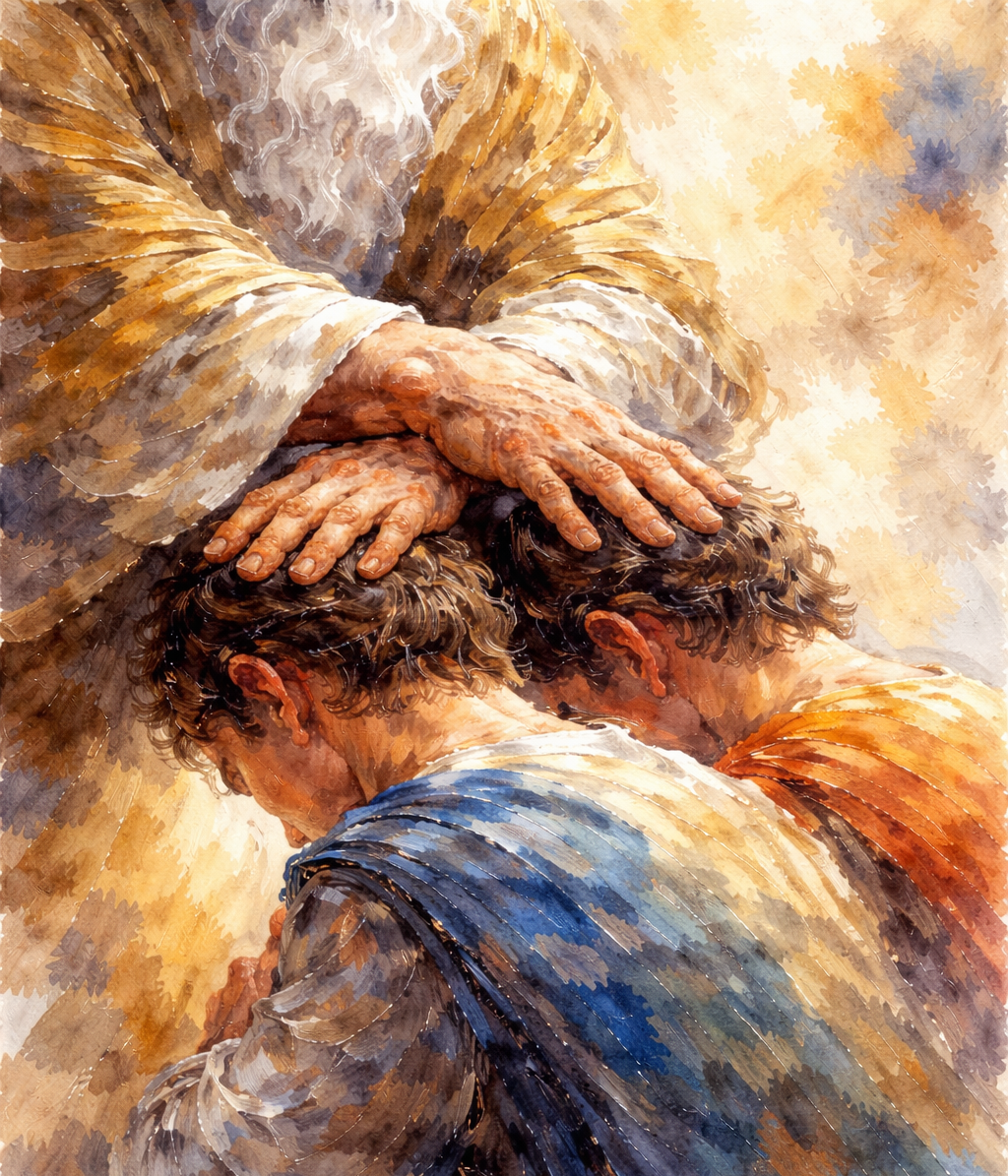
With this, we can understand the next perplexing twist that the narrative takes. Yaakov could not see well. Yoseph brings his two children to Yaakov to receive his blessing. Yaakov crosses his arms, placing his right hand, traditionally placed on the firstborn, on the younger child, Ephraim. His left hand, unconventionally, is put on the head of the firstborn, Menashe. Yoseph, thinking his father has made a mistake, tries to correct him. Yaakov responds that this was deliberate; he consciously put Ephraim before Menashe.
Yaakov’s message and motive are now clear. If we look a little closer at the children’s names, two things become apparent. First, they are two sides of the same coin: Menashe is named after the negative side; Ephraim, the positive. Menashe symbolizes what Yoseph has left behind; Ephraim celebrates his success in this new land. Second, they are named chronologically: Yoseph first left behind his father’s house; therefore, his firstborn is named accordingly. He was then successful in Egypt; hence, the name given to his second son. Yoseph closed one chapter and then opened another.
Yaakov never sanctioned such a move. There was no closure to be had. Yoseph could and did succeed elsewhere, but his home had not left him behind. For Yaakov, the name and symbolism of Ephraim would always supersede that of Menashe. (It is interesting to note that Yaakov puts Ephraim ahead of Menashe even before his crossing of his hands. In his opening speech, he says: “אפרים ומנשה כראובן ושמעון יהיו לי” – see Netziv, Ha’amek Davar 48:5.)
With this approach, we can explain the apparent injustice towards Menashe. This is not another story of selection and rejection that has plagued brotherly relationships since the beginning of Sefer Bereishit. This is a story of the rejection of Yoseph’s rejection. Menashe is often listed before Ephraim in the Torah, and often their order is reversed. They were different people and therefore succeeded in different ways. The primacy of each was seen in different fields. Yaakov welcomes Yoseph back into the family fold by telling him he was never right to have felt abandoned. For Yaakov, Ephraim must come first; for Yoseph, Menashe remains his firstborn (see Yehoshua 17:1).
וַיְבָ֨רֲכֵ֜ם בַּיּ֣וֹם הַהוּא֘ לֵאמוֹר֒ בְּךָ֗ יְבָרֵ֤ךְ יִשְׂרָאֵל֙ לֵאמֹ֔ר יְשִֽׂמְךָ֣ אֱלֹהִ֔ים כְּאֶפְרַ֖יִם וְכִמְנַשֶּׁ֑ה וַיָּ֥שֶׂם אֶת־אֶפְרַ֖יִם לִפְנֵ֥י מְנַשֶּֽׁה: (בראשית מח:כ)
And he blessed them on that day saying: “So may Israel always bless: ‘May God make you like Ephraim and Menashe.’” He put Ephraim before Menashe. (Bereishit 48:20).