
TRAVEL FLASH TIPS ON THE TIMES OF ISRAEL
Halkidiki: Greek Macedonia, Uniquely
Inside Greek Hospitality: Part 1
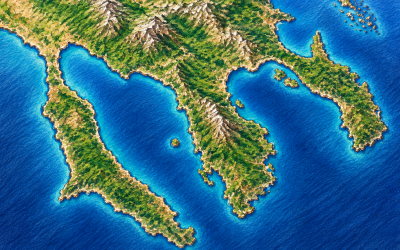
For Israeli travelers, Greece has long meant islands: Crete, Rhodes, Corfu, Mykonos and Santorini. But in the north of the country, a different Greek experience is waiting to be discovered. One that combines a major city, dramatic landscapes, long sandy beaches and large-scale resorts within a relatively compact region. This is Halkidiki, the three-pronged peninsula stretching into the Aegean from Greek Macedonia, just beyond Thessaloniki. Famous for its crystal-clear turquoise waters, pine-fringed beaches and spectacular coastline, Halkidiki is divided into three distinctive peninsulas. My destination was Sithonia, the middle “finger” and the most unspoiled of the three, where thick pine forests descend toward shimmering waters of turquoise and deep blue.
A fascinating story made me curious. Yiannis Carras, a shipping magnate from Chios who sailed into Greek Macedonia, fell in love with this stretch of coastline in the 1960s and went on to create one of the region’s most iconic tourism landmarks. He was the man behind the Porto Carras Grand Resort complex on Sithonia and had a very specific vision when he acquired this vast stretch of land.
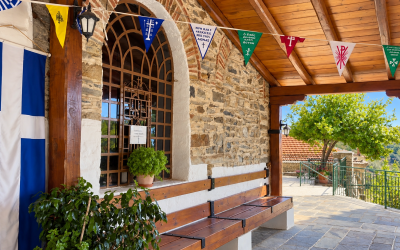
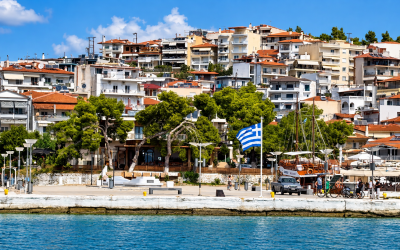
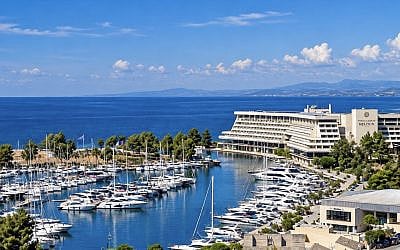
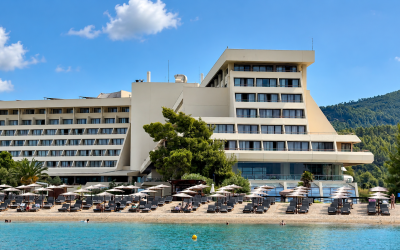
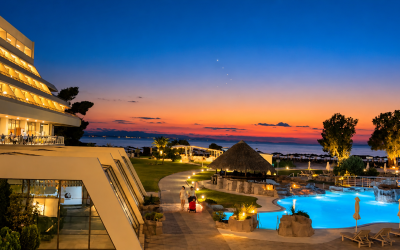
The journey to Porto Carras Meliton, the landmark hotel at the heart of the vast resort complex, is an experience in itself. In Nikiti, the beautifully preserved old village climbs the hillside above the coast, its narrow lanes winding between stone-built Macedonian houses and a historic church, offering a glimpse into Halkidiki’s traditional past. Farther south, Neos Marmaras is livelier, cascading down green hills toward a picturesque harbor on the Toroneos Gulf. Founded around a century ago by Greek refugees from Marmara Island in present-day Turkey, it grew from a small fishing settlement into one of Sithonia’s most colorful seaside towns. From its harbor, a small ferry provides an especially scenic arrival at Porto Carras, crossing the bay as the vast resort gradually comes into view along Sithonia’s intensely green coastline. Beside the marina rises the Meliton, the landmark hotel of Porto Carras, its long, sweeping architecture resembling a cruise ship anchored on the shore.
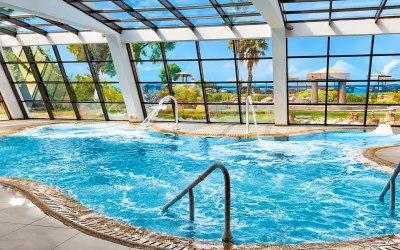
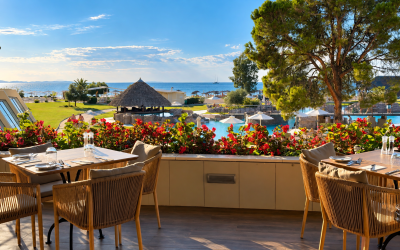
Porto Carras Meliton is the kind of resort where staying-put can easily become part of the holiday. With four swimming pools -two indoor and two outdoor – extensive grounds and direct access to the 9 kilometers coastline, it is particularly well suited to families, while its beautifully appointed rooms feature spacious balconies overlooking the surrounding landscape.
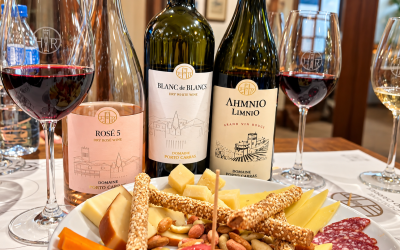
The marina adds another dimension: cycling beside the yachts, with the sparkling Aegean on one side and the resort on the other, is a pleasure in itself. The estate is also home to Domaine Porto Carras, the renowned winery producing distinctive wines from historic vineyards that over the decades attracted celebrities from around the world, most famously surrealist painter Salvador Dalí.
Porto Carras also boasts the only golf course in Northern Greece, an 18-hole course surrounded by olive trees, pine-covered scenery and sweeping Mediterranean landscapes. As the sun begins to set, the rhythm changes again. Happy hour comes alive with the sounds of a live saxophonist drifting through the resort as guests sip cocktails and unwind; the golden Aegean light slowly fades, the sky deepens and the day slips into night.
The resort has changed hands since Carras’s time. In 2020, Porto Carras was acquired by Belterra Investments, associated with the family of Greek-Russian businessman Ivan Savvidis,, which subsequently embarked on a major redevelopment of the historic resort. Ownership may have changed, but Carras’s vision remains firmly anchored here.

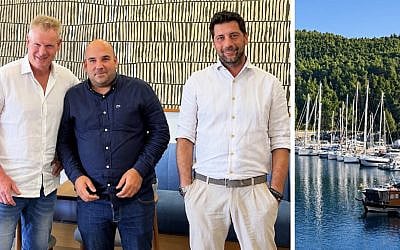
But why should Israeli travelers choose Halkidiki and Greek Macedonia when Greece already offers so many famous islands? I put the question to Konstantinos Arvanitis, General Manager of Porto Carras Meliton. “The growing number of flights to Thessaloniki compared with previous years has made the region far more accessible,” he says. “It allows Israeli travelers to create a much more diverse holiday. Combining Thessaloniki, Greece’s second-largest city, with nature, beautiful beaches and a full resort experience, all within the same trip. You don’t have to choose between a city break, a beach holiday and exploring nature. You can combine all three.” Arvanitis also points to the economic difference between northern Greece and many island destinations. On islands heavily dependent on a short summer season, much of the year’s tourism activity is compressed into a few peak months, which can contribute to higher operating costs and ultimately higher prices. Halkidiki, by contrast, is connected to the broader economy of Macedonia and Thessaloniki and is less dependent on those few summer weeks.
Gastronomy, Arvanitis believes, is another of the region’s strengths. Macedonia’s culinary tradition reflects the different populations, cultures and histories that have shaped northern Greece, creating a gastronomic experience that extends well beyond the familiar image of Greek island cuisine. And then there are the beaches. While many Mediterranean islands are characterized by smaller coves or rocky shores, Halkidiki offers long stretches of sandy coastline bordered by pine forests and exceptionally clear water. Perhaps most importantly, however, Halkidiki has not yet experienced the same level of international exposure as Greece’s most famous islands. Mykonos and Santorini have benefited from enormous global recognition, but their success has also brought increasing pressure from overtourism. Halkidiki remains considerably less familiar to international travelers, although that may now be changing as Greece looks to expand its tourism map beyond its most saturated island destinations.
For Porto Carras, attracting more international visitors is only part of the challenge. The Meliton is closed during winter and the bigger ambition is to change when tourists come. At the third Imerisia Summit, held last month, during the Thessaloniki International Fair, Filoklis Kotsifis, CEO of Porto Carras Grand Resort, addressed one of the central challenges facing Greek tourism: its traditional dependence on the summer season. Speaking during the panel “Tourism Beyond Summer,” Kotsifis outlined Porto Carras’ strategy to develop into a year-round destination, with investment extending beyond the traditional sun-and-sea model into sports and golf, wellness tourism, conferences and events, and wine tourism centered around the historic Domaine Porto Carras. At the same time, he stressed that renewing and developing the resort’s infrastructure must go hand in hand with protecting the natural environment that makes Sithonia distinctive.
Kotsifis and Arvanitis hosted me for an unforgettable lunch by the beach. Lively, engaging and clearly at ease with people, the two men embody the warmth of Greek hospitality. Yet behind their relaxed manner are two seasoned hospitality professionals with a clear eye on the future and on how to develop Porto Carras without losing the character that makes it so special.
That vision reflects the wider challenge facing Halkidiki itself: how to welcome more international travelers while preserving the unspoiled landscapes and authentic character that make the region so appealing in the first place. For Israeli travelers who think they already know Greece, Halkidiki offers a compelling reason to look north: familiar Greek hospitality, spectacular beaches and landscapes, Thessaloniki within easy reach, and, perhaps most appealing of all, a corner of Greece that still feels like a discovery.
Related Topics
Related Posts