

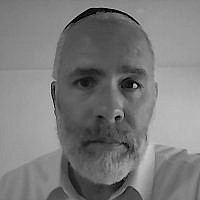
Healing Heart
It had only been two months since Rabbi Shlomo Ellituv retired from the Manchester rabbinate and returned to his native Israel when he fell ill with a heavy cough and challenged breathing. His family tried treating him at home. Antibiotics were prescribed, and an oxygen concentrator was brought in from Yad Sarah. Yet after two weeks, his condition only worsened, and finally, he could hardly breathe, his lips an odd shade of blue. “Shlomo, this isn’t okay,” his wife said, frightened. “We’re getting you to the hospital!”
At Shaare Zedek, he joined approximately 120 others fighting for their lives in the hospital’s three corona wards. It was March, 2020, two weeks before Pesach – the virus’s first and deadliest wave.
A CT scan revealed clotting in his lungs, and the doctors administered blood thinners. He was placed in a four-person room, feeble and immobile atop his bed, a transparent reservoir face mask directing a high-oxygen flow to his lungs.
Within twenty-four hours, his oxygen levels improved, and a nasal cannula replaced the mask. After three days, he was strong enough to use his cell phone, and after three more, he could leave his bed.
One morning, a nurse’s voice jarred him awake. “Mr. K, you must drink,” she urged another patient in the room. “Take some water, please!”
“No! No!” the man rasped, moving his head from side to side to evade the cup and straw in her hand.
Mr. K was putting up a persistent fight because he had lost the will to live. He had surrendered to the virus, refusing all food, hydration, and bloodwork to embrace what he perceived as the inevitable, fast-approaching end. Here, severed from family in this guarded ward, surrounded by staff in ghoulish white body suits and face shields, he’d decided would die. His seventy-four years had been enough. He had reached the end. Why wouldn’t they let him leave?
“Excuse me,” Rabbi Ellituv called softly to the nurse. “I’ll take care of Mr. K.”
The woman turned on her heels in surprise and stared through her sterile gear at the patient speaking from across the room. “What did you say?”
“I said I will be happy to take care of Mr. K. But I’ll require a longer tube for my oxygen if I’m to reach him. I’m feeling stronger now.”
“You’ll require a longer tube,” she mouthed, incredulous.
He nodded.
Cup and straw still in hand, she turned to consider Mr. K staring blankly at the wall, content that another battle had been won. She gave a “first time for everything” shrug and left.
An extra-long oxygen tube was procured, and Rabbi Ellituv crossed the room to make a friend. Though initially resistant, Mr. K welcomed the companionship of this stranger who hardly seemed willing to die, who even dared to laugh despite the pain to his lungs and ribs. When Mr. K mentioned offhandedly the desserts and drinks he missed, Reb Shlomo’s daughter Michal was outside the ward the next day with pastry and juice, and a nurse brought them to the room.
“The staff quickly understood that I could give him what they, of necessity, could not,” Rabbi Ellituv relates. “A touch. An embrace. A measure of human grace. And most importantly, an assurance that he and I, together, would pull through.”
From where does a man fighting for his life summon the will to help another cling to life?
Rabbi Ellituv will tell you that the drive to surpass one’s challenges and help others grapple with pain of their own comes from his mother, who raised seven children in Jerusalem’s Old City and Katamon during the 1930’s and 40’s – and took in six polio-stricken children from the ALYN rehab hospital to boot. He’ll also tell you that it comes from his father, who, blind from youth, required of his family a heightened sensitivity to another’s unique needs. Whatever its origins, the desire to help and heal has compelled him since youth.
***
In 1975, at the age of 32, Shlomo Ellituv was finally engaged. Driving down Yerushalayim’s Malchei Israel Street toward Kikar Shabbat, he felt a new and spirited focus to life. Wedding plans were unfolding. He and his long-sought kallah would settle in Rechavia. He would continue in business. Everything was coming together.
As he neared the old Schneller military barracks, he saw that many cars had double parked as new recruits were dropped off and wished well. He did not see, however, the police bus heading toward the barracks from the opposite direction and crossing into his lane around a double-parked car. Before he could react, its great mass was already upon him, and the crash catapulted his tiny, tin-like Volkswagen Golf past the guard post and into the military compound itself. He landed, and all was still.
Chaotic voices penetrated his metallic tomb. Instruments pried and tore. Hands, gentle and probing, were everywhere. He was extricated, taken by ambulance to Shaare Zedek, and then transferred to Hadassah Ein Kerem.
The bones of Shlomo’s left leg were crushed from foot to hip. The right leg was paralyzed. His damaged spleen required removal.
The first several months were painful and sleepless. One leg, full of metal rods and bone grafts, ached and throbbed as the many fractures healed. The other constantly prickled and stung as paralysis gradually ceded to regenerating nerves. Slowly, he regained mobility and could cover short distances on crutches. After eight months, he was transferred to a rehabilitation ward at Hadassah Har Hatzofim.
His rehab roommates were always young soldiers, nineteen- and twenty-year-olds who had sustained injuries that upended their lives. Some couldn’t bear their misfortune and sank into depression – and Shlomo couldn’t bear their depression. Finding a private moment, he would counsel each one, and even others throughout the ward, in his mission to rekindle human dignity and hope. “I was about to get married before the accident,” he would say. “She’s waiting for me. That’s what keeps me going. We all have initiatives and dreams, sometimes buried within. Discover yours, and don’t let go!”
In his travels on the floor, he met the children of an elderly man who had suffered a stroke and now, though recovering, was beset with nighttime urinary incontinence. Of all his post-stroke symptoms, this seemed the most persistent, and no one knew how to conquer it.
“Live with it,” doctors seemed to communicate with their sympathetic nods and shrugs. “He’s lucky to have regained as much as he has,” they would assert.
“May I try and help?” Shlomo asked the man’s children. The suggestion seemed to them curious at first. Who was this patient, hobbling about in his hospital gowns and leg braces, to propose aid? Yet offer he did, unabashed, as though such solicitation were a sickroom norm. “I think I can help,” Shlomo reiterated. “With your permission, may I try?”
“Of course,” one of the sons said, his bemusement giving way to gratitude. “That would be wonderful.”
Shlomo mentioned Mr. G’s predicament to his roommates. “Let’s bring him in with us,” he suggested. “We do have an empty bed.”
“No way, Shlomo,” the soldiers protested. “That’s disgusting. And anyway, we wouldn’t have anything to say to such an old man.”
“But I think I can do something. I have a plan. And you’ll all share in the zechut.”
They wanted no such zechut.
“Guys, this is an opportunity,” he persisted. “Please help me help him.”
Outmatched, they shrugged and acquiesced.
Mr. G moved in, and the first night, Shlomo woke him and took him to the bathroom. Every half hour, he got him out of bed and into the bathroom. After two weeks of toil, night after night, Mr. G could stay dry on his own.
“It’s the same with babies,” Rabbi Ellituv explains. “Why do they lie in their own diapered wetness? Because it’s warm and comforting – until, of course, some irritation develops. I broke Mr. G’s comfort.”
After an eleven-month hospitalization, Shlomo and his bride did indeed stand beneath the chuppah, with many in attendance whom family and friends didn’t know – former patients he had pulled from despair, medical staff who had marveled at his resourcefulness, Mr. G’s grateful family and even the old man himself. Yet the life they had envisioned of a business career and a home in Rechavia took an unimaginable turn.
A friend’s sibling living in England visited Israel in the hopes that Shlomo could help him find someone to serve as rabbi for his community in Manchester. Yet upon meeting Shlomo and sitting down with him on a motzei Shabbat, the man felt his search was over. “You know, you’d be perfect,” he said. “You yourself should come.”
A sense of mission quickly filled Shlomo, but his wife sensed mostly dread. “My family has been in Israel for eight generations,” she told her husband. “Now, I should leave?”
“This is our call,” he said. “‘Eit la’asot laShem – It is a time to act for Hashem.’ We must go. We can go.”
They soon found themselves as rabbi and rebbetzin of Shaare Zedek Congregation in Manchester. He studied for semicha while officiating, but having been taught to lain and lead all the davening from a young age gave him solid footing from the start. A natural teacher, he trained boys for their bar mitzvah and tutored in cheder. A natural motivator, he took to the pulpit like a bird to wind. As his English improved, the complexity of his derashos increased, but the stirring message in his eyes and tone were palpable from day one.
The United Kingdom’s National Health Service assigns clerics from all religions to serve as chaplains in hospitals where they counsel members of their respective faiths. Understandably, some find this duty tangential to their primary congregational roles, perhaps even burdensome. Yet here is where Rabbi Shlomo Ellituv truly thrived.
Here, Jewish souls needed nurturing, souls hidden among the gentile masses, hidden even from themselves.
“Rabbi Ellituv,” a voice called out as he passed the nurses’ station. “There’s a woman in 272 who didn’t specify religion on her admission form, but her name certainly seems Jewish. She’s having a difficult time.”
“I’ll look in on her,” Reb Shlomo said and headed to the room. He knocked and entered. An old woman regarded him cautiously from the bed.
“Mrs. C, I’m Rabbi Ellituv. I wonder if….”
“Stop right there!” she announced, holding up a frail hand. “I’ve no need of rabbis. I left that line blank for a reason. I’m a staunch atheist!”
“Terribly sorry,” he said, backing out of the room. “I’ve made a mistake.”
“You certainly have,” she scoffed as the door shut.
Minutes passed, and there came another knock. Reb Shlomo poked in his head. “Mrs. C, I’m Mr. Ellituv. May I have a word?”
“Oh, thank God,” the woman said. “Please come in.”
Here, battles were fought.
A formidable and persistent adversary throughout Rabbi Ellituv’s four decades in Manchester was the medical community’s zeal for postmortem examinations. In the mind of medicine, autopsies are essential to education: medical students dissect, explore, and practice on cadavers, the more at their disposal the better. In the mind of the Jew, they’re anathema. Obviously, one must submit to the coroner’s will when death is sudden or suspicious. Yet the UK’s medical system insists on postmortems in every scenario, regardless of the apparency of natural causes, and, as such, comes to blows with the Jew’s inviolate sense of the body’s enduring sanctity.
It was Sunday morning, and Rabbi Ellituv was teaching in cheder when he got the call that a Jewish patient had died. From that moment, he knew, the race through Britain’s entrenched, impossibly formal medical protocol was on. A delay of mere hours could lead to a postmortem. Failure to notify or locate certain personnel could lead to a postmortem. A strong, uncharitable current to fight – and it was the weekend besides.
He drove to the hospital and located the deceased’s GP, who alone could issue a signed certificate of death. Were it a weekday, Rabbi Ellituv would take the death certificate to the Town Hall Registrar’s office to receive a certificate of burial; it being Sunday, however, he would have to travel to the registrar’s home in North Manchester. Finally, he would return to the hospital, hearse in tow, and have the body released and transferred to a Jewish mortuary for taharah.
“Very well then, Rabbi Ellituv,” Dr. L said, glancing at the cause of death on the patient’s chart. “The secretary will call you once I’ve signed the death certificate.”
That wasn’t good, Reb Shlomo thought. It was Sunday, and Dr. L was just a resident covering for the senior GP, who was off for the weekend. Anything could happen in the next several hours to result in that certificate still sitting in the office come Monday morning. The secretary might forget and never call. He himself, immersed in something else, might forget. And when the senior physician returns tomorrow to find that someone’s died, he might glance at the signed certificate, question his underling’s presumption, and send the body to postmortem on principle, the rabbi’s precious document now rescinded.
I can’t leave, he realized. I’ll stay until I get what I came for. “Wonderful! I’ll wait right here,” he said, smiling broadly.
“Now?” asked Dr. L, allowing himself an incredulous chuckle.
“Yes, of course. I don’t mind at all.”
“But it’s not ready, and I’ve patients to see. I thought that was abundantly clear. Pity on your time, Rabbi.”
“I’ll use my time well, Doctor,” Reb Shlomo said, holding up a sefer. “I have a book with me, so I don’t mind in the least. You finish your rounds, and I’ll be here.”
“Why Rabbi Ellituv,” he crooned, suppressing distain at being told what to do, “I simply won’t have a man of your station waiting around for paperwork. I mean really. It’s just not how things are done. I’ll make certain someone calls once I’ve signed the certificate.”
Reb Shlomo gently touched the sleeve of the man’s white coat and, breaking the flow of politesse, said, “Your being a good doctor does not compel me to be a bad rabbi. You do your job, and I’ll do mine. Finish your rounds, and I’ll sit here until I get my death certificate.”
Dr. L was taken aback, but then smiled in admission of defeat. Without a word, he slipped inside the nurse’s station, filled out the form, and signed it.
“Here you are, Rabbi,” he said, their dance of decorum now resumed.
“Why thank you, Doctor.”
And here, bold Jewish ingenuity saved lives.
Mr. F, well into his eighties, needed a pacemaker. And he needed it now. The problem was, however, that he wouldn’t hear of it. His heart pitifully weak, he would constantly faint, dropping off midsentence into a fleeting oblivion. His doctor implored him. Rabbi Ellituv pleaded with him. Soon, his heart would fail. Yet he refused. He had survived the Holocaust, he asserted, and lost his parents and entire family. He would survive now, without a gadget implanted in his chest.
“May I borrow an ambulance?” Rabbi Ellituv asked the doctor outside of Mr. F’s room.
“May you what?”
“Borrow an ambulance. I’m taking Mr. F home.”
“You’re doing what?” the doctor asked, nearly shouting.
“Taking him home. This place is giving him a false sense of security.”
“What place?” the doctor demanded.
“This place,” Rabbi Ellituv said, gesturing around the ward. “You. The staff. All the machines. He feels safe here and assumes you’ll always be able to save him. But you won’t, and he hasn’t much time left.”
“Are you mad? You can’t take Mr. F home. He’ll die!”
“He’ll die here in any event,” Rabbi Ellituv said, holding the doctor’s gaze in his own. “You know it.”
He did know it. He’d seen it before. But that knowledge hardly helped him grasp the rabbi’s reasoning. “So you want to take him home … to accomplish what exactly?”
“His wife is gone,” Rabbi Ellituv said. “Once he’s sitting in his lonely flat, he’ll feel his weakness, and it will be overwhelming. I guarantee you he’ll be back within the hour, begging for a pacemaker.”
The doctor looked away, struggling within. Perhaps the British mind was uncomfortable thinking out of the box, but the rabbi seemed to shred the box altogether. How could he send a sick man home?
“Okay, I’ll do it,” he heard himself say.
The ambulance ride was short, and Mr. F was wheeled into his apartment. He and Rabbi Ellituv sat opposite one another in the cold, stale living room, the paramedics lingering nearby.
Mr. F looked around his home. It all seemed so desolate and … unsafe. He was suddenly very afraid. He felt his chest, and a sense of dread washed over him. “Rabbi Ellituv,” he said. “I think I’m in need of a pacemaker.”
“Do you really? When, would you say?”
“Immediately, I’m afraid.”
The paramedics took their cue.
***
It was three o’clock at night on the corona ward. Reb Shlomo’s door cracked open, and a bonneted, shielded head peered in to see if he was awake. He was, and the nurse entered, relieved. “Rabbi Ellituv, a new patient is extraordinarily difficult. He won’t allow anyone near him, especially female staff. He won’t let us shift his position on the bed to avoid sores – he’s quite large. He won’t drink. He won’t eat because of Pesach and hechsherim. He won’t allow any blood work. We’re at our end.”
“Yes, of course,” he said, removing his oxygen and sliding his legs off the bed. “I’ll go. Where is he?”
Reb Shlomo opened the door and walked in. Before him lay a large Chassid, his graying beard flowing over neck and chest, his massive girth mountainous atop the bed. The sound of his labored breathing filled the room. Reb Shlomo approached the man’s side.
“Shema, adoni,” he said through his surgical mask, his face close to the man’s, his voice low and threatening. “Ten days ago, I was brought in here and plopped on a bed, just as helpless as you are now, but baruch Hashem, I know I’ll soon be leaving on my own two feet. If you don’t let them do what needs to be done, if you don’t eat and drink whatever you’re given, I’m sure you’ll also be leaving soon, but you won’t be walking.”
Their eyes locked, the man’s full of fight and fear. Rabbi Ellituv turned his back and left.
Reb Shlomo had become the address not only for trouble, but for a kind word, an embrace, a source of hope for the hopeless. He would go from room to room, pausing in between to return to his own for oxygen and rest.
“You just worry about yourself,” one doctor said, horrified to hear of his exploits. “You need to get better!”
“You don’t understand, sir,” Reb Shlomo challenged. “This is how I’ll get better.”
And so it was. After twenty-one days, he was well enough to leave. Still weak but purged of the virus, he was discharged at 10:00 pm on a motzei Shabbat. As he headed toward the doors leading out to where his disinfected clothes were wrapped and ready, he felt a tap on his shoulder. He turned, and there was the Chassid, towering over him, his round face beaming behind the mask perched awkwardly upon his great beard. “Harav Ellituv,” he said, his voice full of emotion, “Thank you for what you told me that night. It got me thinking and set me straight.” He gestured toward the exit. “I now know that I, too, will soon be walking through those doors, not carried out in a bag.”
In the corridor outside the unit, doctors and nurses who had finished their shifts formed an impromptu honor guard. Rabbi Ellituv had never seen them shorn of face shields and bodysuits and was moved to behold the people behind the gear.
Their eyes were moist and smiling over their surgical masks, and they bowed respectfully and thanked him as he passed, savoring this pause from the battle-weary ward, where scores still fought for life yet where a healing heart had left its mark.