

Healing Israel Starts With Talking About Mental Health
Israelis are facing a major challenge today. For the past three years, huge numbers of men and women have been called up for reserve duty. But when they return to civilian life, many struggle to make the transition. Soldiers are left carrying the lasting effects of war, including PTSD, while the stigma around seeking mental health support remains strong in Israel.
I am trying to change that.
My connection to this issue runs deep. My brother, Roi, was a combat medic who served more than 300 days of reserve duty. For more than two years, he was constantly moving between combat and student life at Afeka Academic College of Engineering in Tel Aviv. It was an incredibly difficult transition to make. Ultimately, my brother was unable to escape the demons of war.
I knew after his death that I could either sit around in my grief, or take action to try and prevent this from happening to more people in our country. I believe the best way forward is to normalize open conversations about mental health and encourage people to seek support when they need it.
If you break your hand, you know exactly what to do: You go to the hospital and get treatment. But if you’re experiencing night terrors, anxiety, or struggling with something you’ve been through, you may not know where to turn. Even when you do seek help, getting it isn’t always simple.
I experienced this myself when I had cancer. I needed psychological support as part of my treatment, but was told there was a one-year waiting list. If we recognize that mental health is an essential part of recovery, that is not sustainable.
Fortunately, soldiers in the army can access psychological services, and they can often receive help more quickly. But access is only part of the problem. The bigger challenge is that many people don’t ask for help in the first place. The majority people who die by suicide have not sought professional psychological help.
That is where my work comes in. I want to change the way we think about mental health. Seeking psychological support should be normal. It shouldn’t be something you do only when you reach a crisis point.
We understand that we need to train our bodies to stay healthy. We should have the same mindset when it comes to our minds. Mental health should be treated as a normal part of taking care of ourselves, not as a sign of weakness, and certainly not something to be ashamed of.
How I’m taking action:
I don’t want to open an NGO. I want to create spaces that people can use over the long term.
Even after the fighting is over, many reservists struggle to return to their daily routines at home, at work, and in academia. The need doesn’t disappear when someone takes off the uniform.
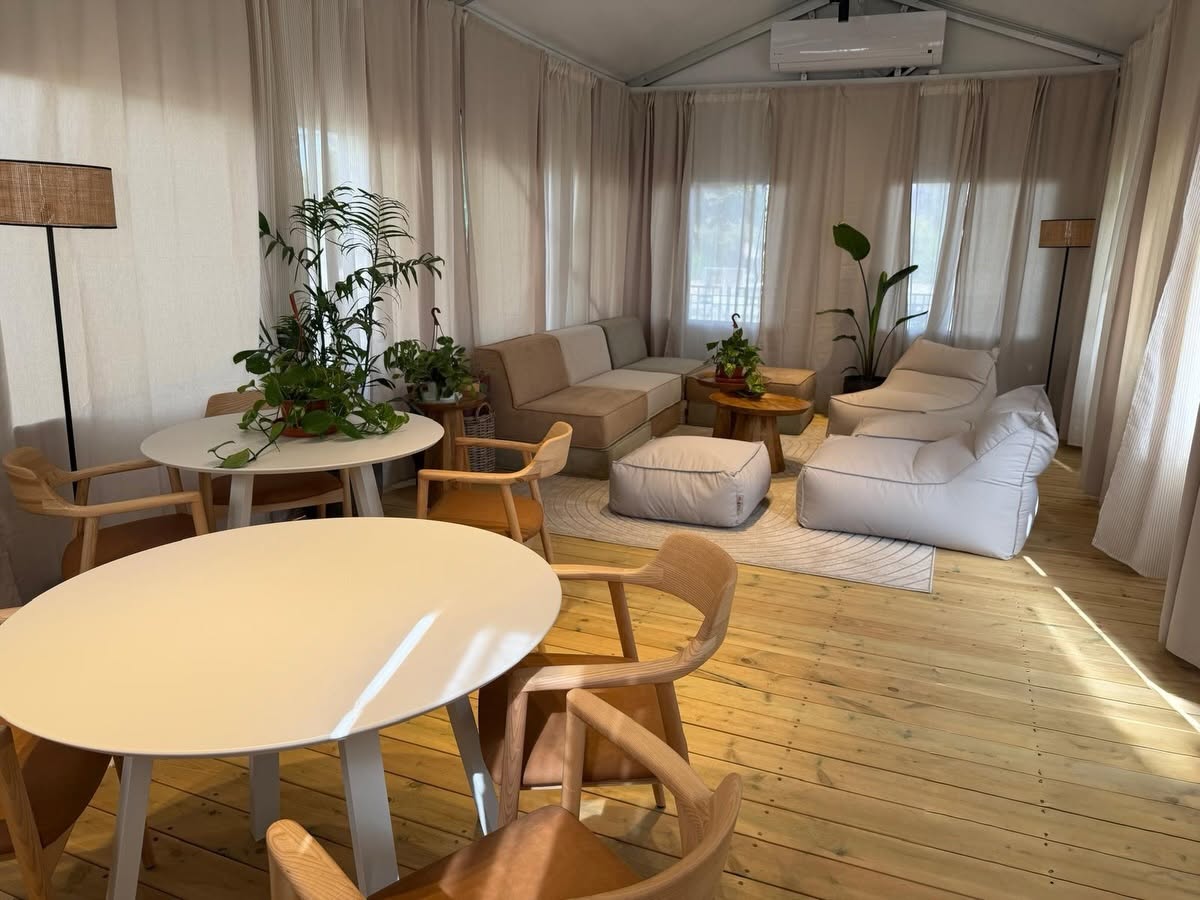
Afeka, where Roi studied, invited me and my family to meet and talk about how the College could offer support. That conversation grew into an ongoing relationship, and together we began exploring what meaningful care and resources for students and reservists could look like. With the generous support of Professor David Seidman and Mrs. Shoshanah Seidman, this collaboration ultimately led to the creation of the ‘Quiet Tent’ (Ohel Rei) on campus, a safe space where students and reservists can come to find care, connection, and simply have a place to breathe. It offers personal coaching, mind-body workshops, and resilience activities for reservists, past, present, and future, as well as their families and anyone affected by the war.
I’m starting to see more communities creating similar spaces, and I think that’s important. We need places that will still be there after the headlines fade and the fighting ends, places where people can come regularly, without stigma, and find the tools, community, and support they need to rebuild their lives.
In addition to working on the ‘Quiet Tent’, I also go to the army every two months as part of a program focused on addressing mental health issues among soldiers. The program brings together people who can help—psychiatrists, senior military officers, and leaders of NGOs, to develop practical ways to support soldiers and improve access to mental health care.
I also speak directly with soldiers. Every month, I meet with a group and talk openly about mental health, what they may be experiencing, and the importance of asking for help.
Recently, I spoke to a group of about 50 soldiers. Afterward, their commander who organized the meeting told me that after I left four soldiers came up to her and said they wanted to get help. These were soldiers who had been involved in identifying bodies after October 7th.
For me, that is exactly why these conversations matter. Sometimes people just need to hear that it is okay to ask for help, and to know that they are not alone.
You never know what someone is hearing, what they are feeling, or what they have been through.
At a motorcycle trip that I organized, someone came up to me and said, “I need to thank you.” He told me that he had been feeling this way for more than 20 years, and that people made him feel like he was crazy. He said that only after hearing me talk about these things openly, he was finally able to say, “This is what I feel, and I’m not crazy.”
Those are the moments that remind me why I keep doing this. Because when you save one life, it’s like you save an entire world. And people need to know that help is available to them.
My vision for the future
I have a lot of stories like this, and these are the moments that keep me going. The work is difficult. It takes a lot of time, energy, and money, but I do it entirely from the heart.
I believe this is bigger than helping people in a moment of crisis. My hope for the future is that the places where people spend their lives, schools, universities, and workplaces, will make mental health and emotional well-being a real part of the environment, just as they support physical health.
Let’s give people the spark which reminds them that there is hope, healing, and a chance to rebuild.