
Healing Power of Peers: How Israelis Are Supporting Each Other Through Trauma
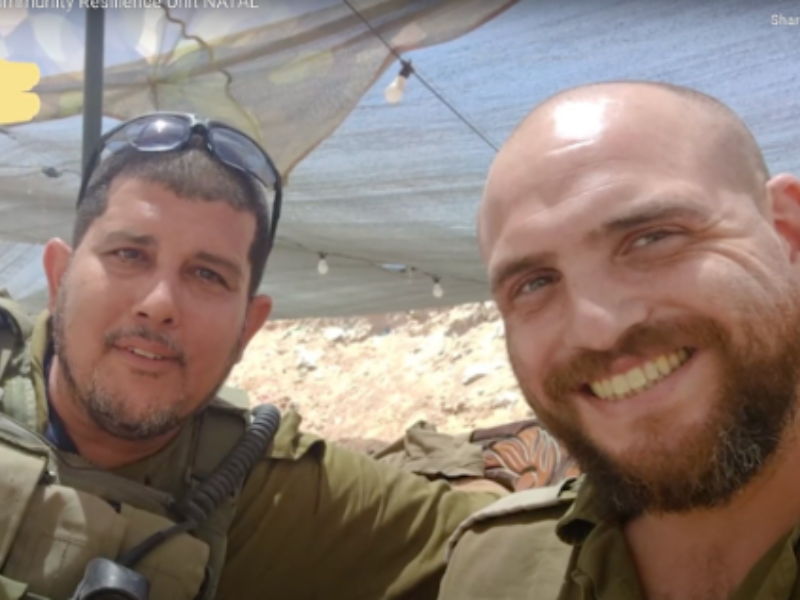
When Daniel Goldstein, BSW, manager of community programs at NATAL, joined the organization just weeks before October 7th, he couldn’t have predicted the carnage he would experience only weeks later. He is one of the more than 3 million Israelis estimated by the state comptroller to be suffering from PTSD symptoms, depression, or anxiety since October 7th. Despite his own symptoms, Daniel is making a difference in the lives of his peers, helping to support Israel’s collapsed mental health system, which the state comptroller’s office said was barely functioning before the latest war broke out.

Commander in Gaza Finds Strength and Understanding from a Peer
Daniel is currently serving as a commander in Gaza. When the war broke out, he was called up for reserve duty as an IDF officer. He has served for 320 days and has been displaced from his home in the north. His spouse has had to move from one rental to another through this whole year — all while he leads community programs for reservists and living with PTSD himself.
Daniel shared a few words about the peer support program he leads and what it means to him while he is serving.
In his own words: “There are things outsiders can’t fully understand. Not because they don’t care, but because they haven’t been there. Even people close to you—even your therapist—might see your pain, but they don’t always have the tools to really be there for you. That’s what I’ve been trained for. Peers can offer someone who’s been through it and knows how to meet you where you are.
Last week in Gaza, I felt the weight of being a commander. I’m the one holding everyone together, showing strength. But inside, I was struggling. Then, by chance, I ran into a friend. We sat for five minutes and talked. He didn’t try to fix anything. He just listened and in his eyes, I felt a message: ‘I see you. You’re not alone.’ He put a hand on my shoulder, and in that moment, I could finally breathe.
That’s the power of peer support. It’s not therapy. It’s someone who gets it and makes you feel you’re part of a community. Training peers and supporting others has given meaning to what I’ve been through. And when I help someone carry their load, my own becomes just a little lighter.”

Meeting Trauma Survivors Where They Are — When They Need Help
While there are many programs that offer mental health services, the reality is that Israel simply does not have enough psychotherapists to meet this unprecedented need, and this is where people like Daniel come in. And even if Israel did have enough therapists, traditional treatment is not always the answer.
Many, particularly first responders and reservists that have served in other wars and suffer from trauma, require something different. They need support that meets them exactly where they are — in the moment they need it most. NATAL’s peer-to-peer support program is doing just that, providing immediate, on-the-ground “first emotional aid” through trained peers like Daniel who understand because they’ve been there — or are still there — themselves.
While a fully trained psychotherapist can offer deep, long-term healing, in the moments right after trauma, nothing compares to the connection between peers who have lived the same reality. Soldiers speak a language that even the most skilled therapist may not fully grasp. It’s in the way they share a look, a nod, a hand on the shoulder. These are the signs of understanding that go beyond words. This special bond allows them to reach each other in ways professionals cannot.
That’s why NATAL’s peer-to-peer program focuses on providing “first emotional aid” right where it’s needed, in the field, without waiting for a formal treatment process to begin. Our training equips reservists and first responders with the tools they need to listen without judgment, validate feelings, normalize reactions, ground someone in the present, and guide simple breathing techniques. Just as you wouldn’t tell a wounded soldier to wait until they reach the hospital for care, we believe emotional wounds deserve immediate attention that’s delivered by someone who truly understands.
Scaling a Peer-to-Peer Program
The impact of NATAL’s peer-to-peer initiative is already visible on the ground. In less than a year, we have trained three groups of reservists and first responders, with 45 active peer supporters now embedded in units across the country.
Demand has been overwhelming. The very first training program filled in just three days. To meet this need, we plan to run five additional training cycles next year, steadily building a nationwide network of trained peers. Within two years, our goal is to reach more than 180,000 people, ensuring that no one facing the weight of trauma has to carry it alone.
Peer to Peer Programs Fit Into A Multi-Circle Trauma Response
Mental health care cannot be one-size-fits-all. Different people need different kinds of support at different points in their lives. Trauma doesn’t just affect the person who experiences it directly. It ripples outward to families, friends, colleagues, and entire communities. Treatments for mental health must be both innovative and comprehensive, addressing every circle of impact. There needs to be a focus on PTSD prevention and resilience building — and to demonstrate post-traumatic growth.
NATAL provides immediate support through our helplines, which have answered more than 100,000 calls since October 7th. For recovery and growth, we offer therapy in multiple formats: individual, couples, and group alongside career development and post-traumatic growth programs. Our clinical unit has expanded dramatically, from treating 350 patients a week before the war to serving 3,000 weekly today. By combining multiple methods, we ensure that help is available in the right way, at the right time, for anyone affected by trauma.
Support from U.S. Partners
We are deeply grateful to our colleagues and friends in the United States whose partnership has strengthened our work in Israel. Last year, we learned from the Boulder Crest Foundation’s groundbreaking peer-support model and met with Dr. Richard Tedeschi, executive director of the Boulder Crest Institute for Posttraumatic Growth.
Together, we are ensuring that even in the midst of war, people understand that growth after trauma is within reach.
Bringing Mental Health Support to the Moment It’s Needed
Even in the shadow of war, growth after trauma is possible. Across Israel, there is strength, compassion, and resilience from people who refuse to let trauma define them. But meeting this challenge requires individuals, communities, policymakers, and our international partners to stand together.
We cannot wait for people to seek therapy months after they first experience trauma. We must meet them where they are in the moment they need it most. By working collectively and innovatively, we can ensure that no one faces the aftermath of trauma alone — and that hope and healing become part of our national recovery.