Healing the Wounds of War: A Soldier’s Story of Recovery
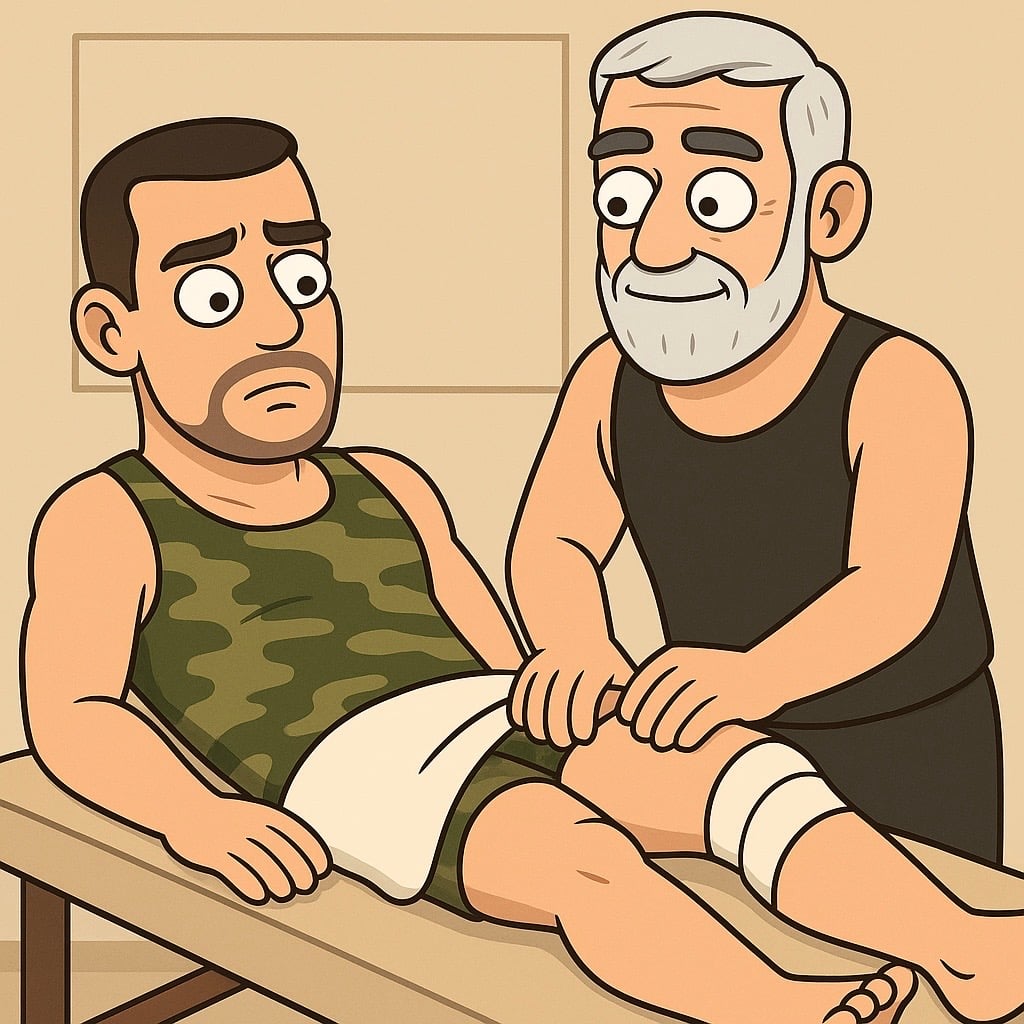
He still carries the battlefield inside his body. A shard of shrapnel lodged against a nerve, months after the blast.
Beneath my hands, his quadriceps resisted release. Not from overtraining or a pulled muscle — but from the pain of a piece of shrapnel still pressing on a nerve. Months later, the fragment remained, a piece of the battlefield carried inside his body.
As a sports therapist, I’ve worked with many athletes after surgeries. I’ve also had the honor of working with soldiers during the war. I’ve helped them prepare for marches, recover from training injuries, and return to duty. But this was different. This wasn’t a routine strain or sprain. This was a war wound — and with it came the weight of trauma. That makes treating this soldier differently than a regular patient.
Because four or five months later, the pain is never only physical. Trauma echoes in the body. Every pain in his leg reminds him of the moment of impact, the chaos of that day. Treating him meant more than releasing a tight muscle or easing nerve pain. It meant holding space for the unseen wounds, the ones that can’t be scanned but are felt in every guarded breath, every flinch, every sleepless night.
“Gratifying physical experiences, such as massages … may be experiences that patients build up that are not contaminated by trauma, and which may serve as a core of new gratifying experiences.”— Dr. Bessel van der Kolk, The Body Keeps the Score
When I worked on this soldier’s quadriceps, I could feel exactly that. The shrapnel was lodged against the nerve, but the trauma was lodged in the body and mind itself.
Soft tissue specialists also know that fascia and muscle fibers carry tension patterns created during trauma. Studies of myofascial release show that manual therapy can help calm not only the muscle but the nervous system itself, giving the body a chance to “relearn safety.” This is why military rehabilitation programs in Israel, the US, and Europe increasingly combine physiotherapy, massage therapy, and psychological counseling for veterans. Healing has to be whole.
The soldier himself understood the difference. As I worked, he told me that he sometimes receives massage treatments, but in his words, “it’ not real therapy like this.” What he needed was focused, clinical care to address the shrapnel pressing against his nerve. That day, he finally felt the difference.
“We get massage – ya know – the nice stuff — not real therapy.”, he laughed.— wounded IDF soldier-patient
That moment stayed with me. This young man wasn’t just any patient. He was someone who had been wounded to protect me. To protect our nation. It struck me that in giving him back some measure of freedom from pain, I was giving back to him what he had given to me: safety, life, the ability to go home at night and walk freely through my own city.
For years, I have prepared professional athletes for sport and soldiers for combat. I have treated them before championship games, and long marches — patched them up during intense training cycles — and helped them stay ready for the fight. But this was different. This was tending to one who carried the fight home inside his body.
Healing him was not about me. It was about restoring function, dignity, and hope to someone who risked everything for all of us. But in that act, I also understood something deeper. This was my own full-circle moment — going from preparing athletes to helping soldiers for the battlefield, to helping them recover from the battlefield that now lives inside them.
This is the honor of my life. To serve those who have served, to help them carry less, to remind them they are not alone in their recovery and that there is a good life ahead.