

Her Instrument
Finchley Central Synagogue, c. 1962–64
I.
You cannot tune a shofar.
No peg, no reed, no valve,
no A for the orchestra to find.
The ram grew it the way he grew,
curled around his own stubbornness,
and whatever pitch was in the bone
is the pitch you get.
Kol ha-kolot kesherim, the rabbis ruled,
all voices are fit:
the cracked, the thin, the hoarse.
A mercy I did not understand
as a boy.
II.
Two hundred people and no one coughing.
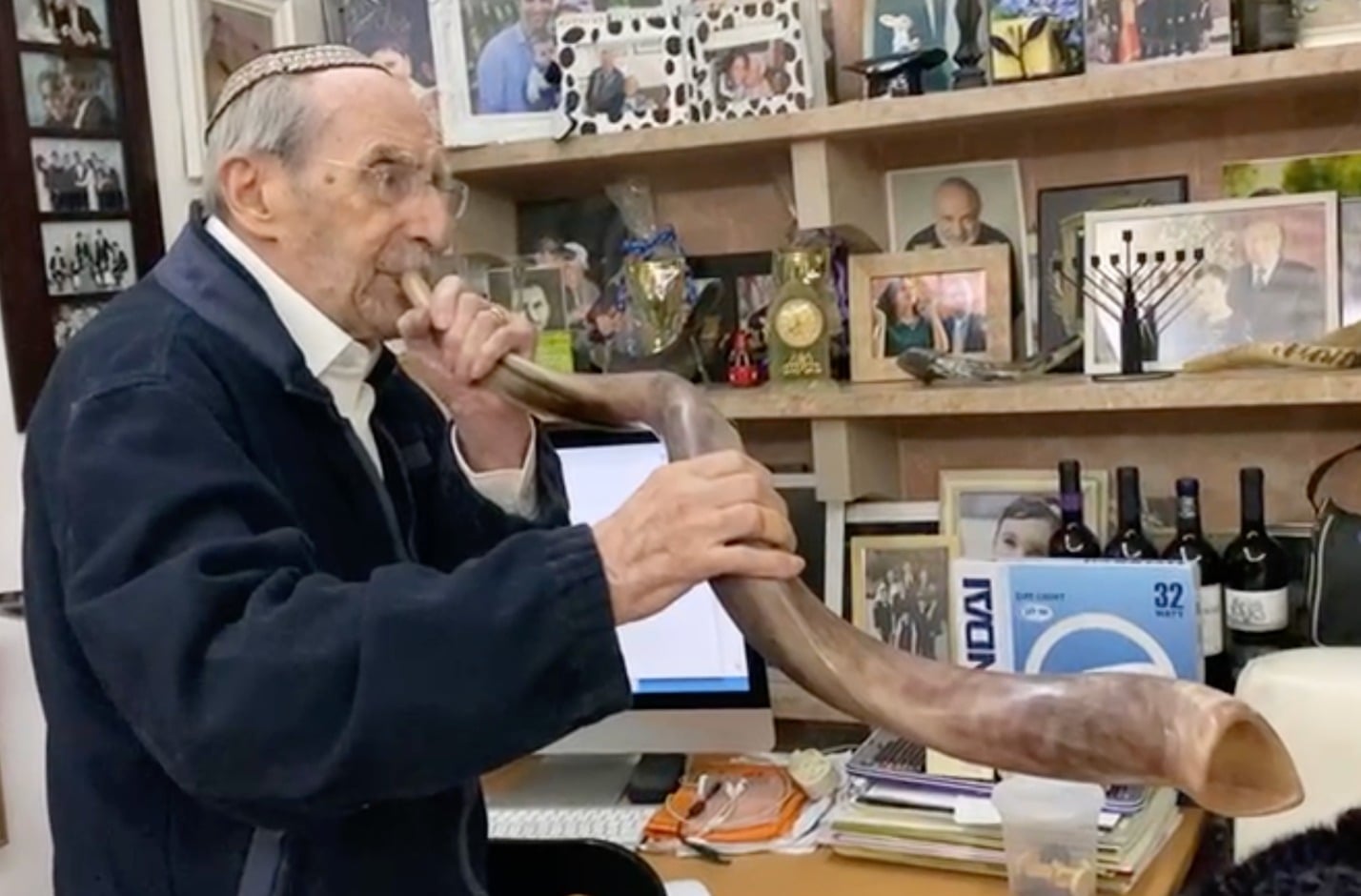
My father on the bimah,
tallit over his head
like a man proving to his father he survived,
the horn set to the corner of his mouth,
Ninety he had already given.
Now the last ten, the ones after everything,
when the lips are spent,
red, swollen, split against the bone.
Tekiah, the caller said.
And nothing.
Air. A wet hiss.
Somewhere above me my sister stopped breathing.
I confess it now:
I was not praying for heaven’s mercy,
I was praying for ours,
the name, his name,
the refugee’s hard-won English accent perfected,
riding on a column of breath
through a shofar.
Every year the same tenterhooks.
Every year I held my breath as did my sister
as if I could lend it to him.
As if I could do it for him.
Then it came,
torn, not beautiful,
but it came,
and two hundred people smiled,
and I hated them a little
for having sacrificed my father
On the altar of their expectations.
III.
He is gone now.
A hundred kolot, a hundred and two years;
he overshot the count.
And I am older than he was on that bimah,
and I hear differently.
The Talmud asks what a teruah is
and answers with a woman:
the mother of Sisera at her lattice,
waiting for a son who is not coming home.
Genuchei ganach, she sighed.
Yelulei yalil, she wailed.
Shevarim is the sigh, broken in three.
Teruah is the wail, shattered small.
A hundred cries she cried, they say,
and so we blow a hundred.
All those years I thought the sounds were ours,
our sins going up, itemised,
a family’s good name going up with them.
IV.
The Rav taught that on this day
a man is subject and object both:
he blows, and he is blown upon;
he crowns, and he is judged;
and the commandment was never to blow.
It is to hear.
So who was blowing
in Finchley Central, in those years?
The Zohar knows an upper shofar,
the Mother, from whom all voice sets out,
and a lower one that wakes her.
And the Shekhinah, down here,
in exile with us,
has no mouth in this world
but a man’s split lips,
no throat but a ram’s horn.
It was She.
She sighing the shevarim
over what we broke and what broke us.
She wailing the teruah
at the lattice, for her children,
the ones who did not come home.
The babies who went up in smoke.
My father was not performing.
He was being played.
The struggle I took for failure
was her difficulty in getting through:
grief forcing itself through a narrow place.
Min ha-meitzar.
V.
That is why it cannot be tuned.
You do not tune a sob.
You do not ask a mother at a window
to come in on pitch.
Each horn its own bone, its own bore,
each blower his own torn lips,
and She takes what She is given.
All voices are fit.
And the last long tekiah,
the one he held until his face went dark,
held past what his lungs had,
was never his.
It was her one unbroken breath
saying what the broken ones could not:
I am still here.
I am still here.
You can breathe now.