

Grammy and Emmy nominated singer-songwriter, author, essayist
Featured Post
Shannon defied the odds. She needs to keep doing so
Healing patterns of rare, deadly illnesses are hard to track down, but if we gather the medical histories of survivors, doctors may yet create new treatment plans
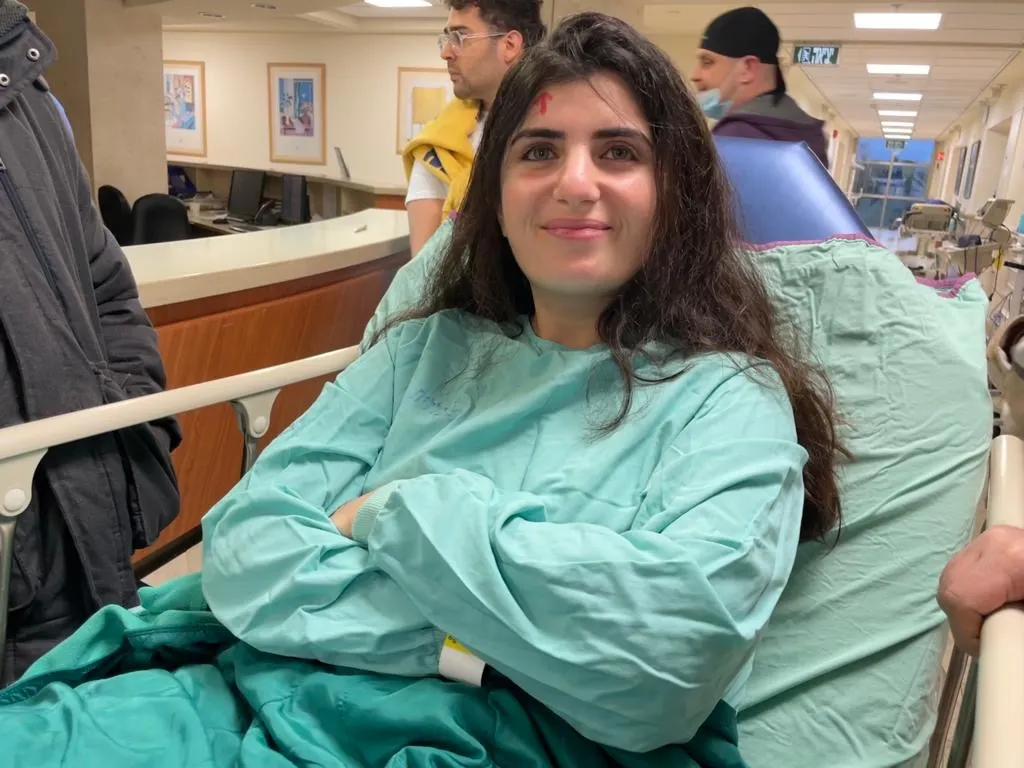
Rephaela Sarah Shannon bat Yael
My friend Eric’s daughter’s name is Shannon. She is 29 years old. A gifted architect, a former IDF commander specializing in optics, a woman of uncommon beauty and resolve. In February of 2023, the day after she presented her graduate thesis, she fainted during a university presentation. A CT scan revealed a mass in her brain. The diagnosis: glioblastoma multiforme — Stage 4. The prognosis: six to 14 months.
Her father, Eric, is a scientist. A French émigré who moved to Israel on a scholarship to the Technion in Haifa. A rational man — precise, linear, fact-based. He is not the kind of person to whom miracles come easily. But he is exactly the kind of person you want in your corner when the system tells you there is nothing left to do. Because that is what the system told him. More than once.
I met Eric at a Chabad synagogue in Santa Monica, where he had begun coming to pray — something that would have been unimaginable to him a year earlier. It was there, over tea and conversation, that a friendship formed between us, and that I began to understand what this family had been through.
Eric was not a religious man. He had no interest in synagogue, in prayer, in any of it — until Shannon’s diagnosis turned his world inside out. A rabbi in the south of Israel told him he had to leave the country immediately, that everything he needed would be waiting for him in Los Angeles. Eric, the scientist, dismissed this outright. His wife, Yael, convinced him to go back and listen. Reluctantly, he did.
When I first met Eric, he had the look of a man who wanted to be left alone. For two weeks, I kept my distance, telling myself I was respecting his space. The truth is, I was protecting myself from rejection. Eventually I sat down next to him, said hello, and asked what had brought him there. What he told me changed everything.
Shannon had undergone surgery in Israel, traveled to Prague for proton therapy, been accepted into an experimental trial — and pulled from it after only two injections. A war had erupted. Her brothers were mobilized. And yet, improbably, a network of strangers began to form around the family — people who had read a blog post, or knew someone who knew someone, or simply showed up. Through that network, Eric connected with Dr. Santosh Kesari, a leading neuro-oncologist in Santa Monica. Targeted treatments existed for Shannon’s specific genetic mutations. In March of 2024, the family landed in Los Angeles.
The surgeries that followed removed 95% of the tumor. Experimental medications arrived through channels that defied easy explanation. A pharmacist found a way to reduce the cost of a critical drug from $1,700 a week to nothing. Doors kept opening. And then, after a grueling first cycle of chemotherapy, an MRI showed something no one had dared to expect: the tumor had shrunk.
Shannon regained her ability to speak. To eat solid food. To smile. To laugh.
“Peter, if it hadn’t happened to me, I wouldn’t believe it,” Eric told me. “It’s crazy. On one hand, it’s impossible. On the other hand, it’s happening.”
* * *
I tell you Shannon’s story not only because it is extraordinary, but because it raises a question her father — the scientist — will not let go of.
Why Shannon? What combination of treatments, timing, genetics, and persistence produced this outcome when so many others with GBM do not survive past the median? And more urgently: what can be learned from cases like hers, so that others might have the same chance?
Shannon’s condition has since worsened. She has lost her ability to speak again. She, like so many GBM patients, urgently needs new information — from outliers who have exceeded their prognoses, who found something that worked when nothing was supposed to.
GBM is one of the most aggressive cancers known. The standard of care has changed little in two decades. The patients who beat the odds are rare. But they exist. Shannon is one of them — and she needs to hear from the others.
The tragedy is that what these outliers know is largely invisible to the medical community. Data about alternative and experimental treatments rarely makes it into clinical trials. It lives in the memories of oncologists, the notes of caregivers, the lived experience of patients already told the system has nothing left to offer. Healthcare institutions treat outcome data as a competitive asset. Patients fear exposure. Physicians are overwhelmed. And so the knowledge disappears — one patient at a time.
Each of those positions is defensible. But not costless. Every outcome that goes unrecorded is a pattern unrecognized. A therapy delayed. A family that runs out of time before the system finds its answer.
* * *
This is why Eric, a UCLA physician named Dr. Todd Fineman, and I created gbmoutlierstory.com — to collect the stories and data of GBM outliers. Patients who have beaten the odds. Patients who are still fighting. Patients whose journeys contain information that could, in aggregate, illuminate paths clinical trials have not yet explored.
If you or someone you love has lived with GBM — as patient, caregiver, or physician — please visit the site. Submit your data. Share your story. What you know may save someone’s life.
And if you are not directly affected, share this essay. Eric came to Los Angeles knowing no one. A rabbi told him everything he needed would be there. It was — because people showed up.
You can be one of the people who shows up.
Say Shannon’s full name, if you are inclined to prayer: Rephaela Sarah Shannon bat Yael.
Then go to gbmoutlierstory.com