

Philosophy, kabbalah, screenwriting...
Here in Venezuela, we are all in shock
With local news silent, citizens are sharing videos of explosions in Caracas and learning from sources abroad that their president was taken away by plane
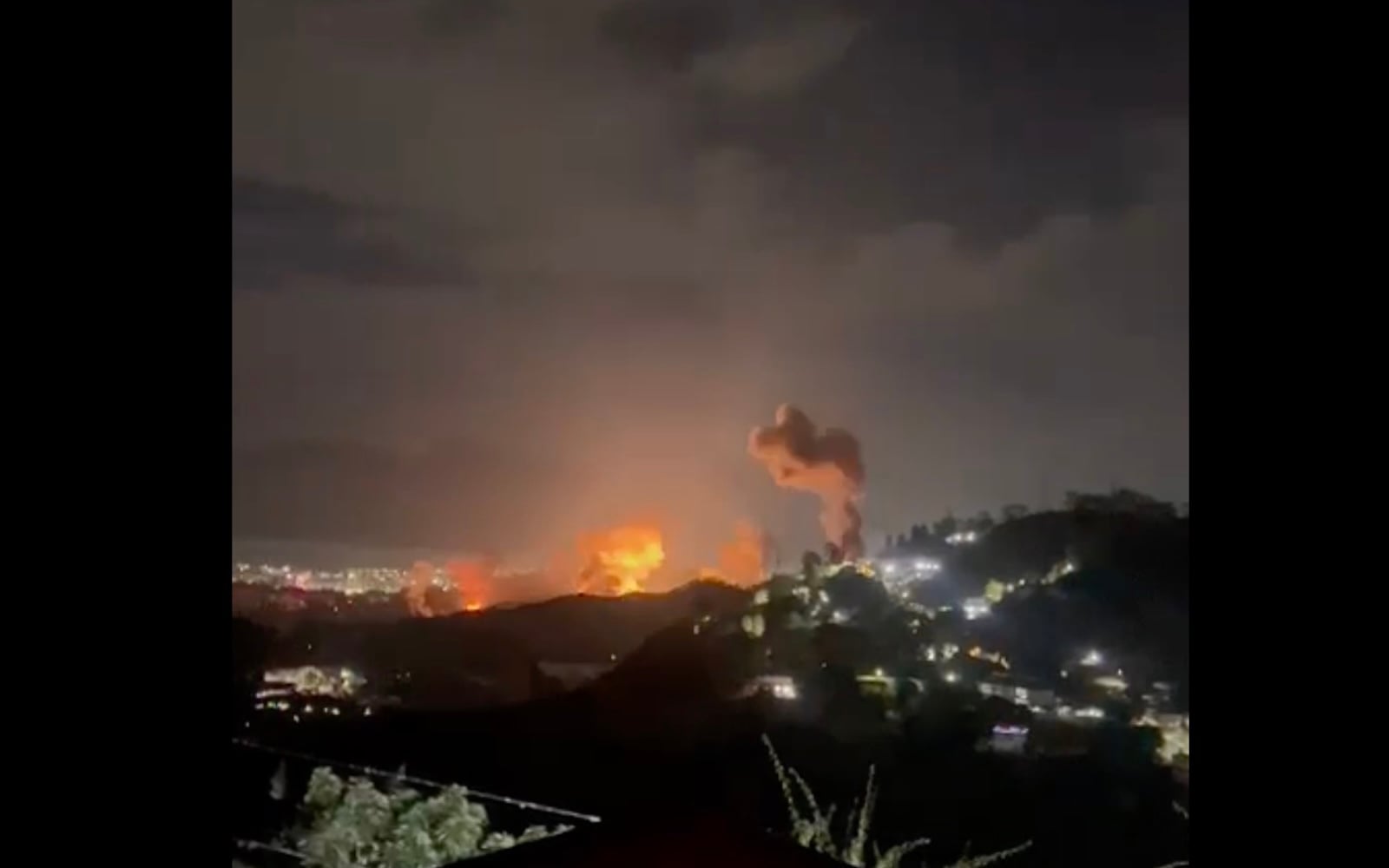
Screenshot of a video taken in Caracas, January 3, 2026 at 2:48 AM
At 2 in the morning, we were fast asleep when all or our cell phones suddenly started ringing, and our chat apps awoke with a whirlwind of messages.
There was nothing on the news. We Venezuelans began sharing videos ourselves, which promptly went viral. We were seeing live videos of bombings at La Carlota Airport in Caracas, at the Federal Legislative Palace, where the National Assembly meets, and at the Port of La Guaira, all captured by neighbors’ cell phones, from buildings and apartments, from cars, from moving motorcycles. Let’s just say it’s a sixth-generation war, from a communications standpoint.
We saw helicopters flying over Caracas and dropping bombs on the capital, the port of La Guaira, and the city of Maracay, a large military stronghold.
There was no air defense; as far as we could tell, the Russian missiles and Iranian drones were not activated, and we didn’t hear the Shukhoi fighter jets defending the city. We did learn that anti-aircraft batteries were fired from La Guaira port with .50 caliber machine guns, but not the missiles of the anti-aircraft shield.
Defense Minister Vladimir Padrino López spoke, but Nicolás Maduro, who should have been addressing the nation, didn’t appear.
At 4:00 a.m., my friend Ángel Bermúdez, the BBC correspondent in Miami, and my friend Julio López, from the Daily Journal, an English-language Venezuelan newspaper in the US, wrote to me: Trump had just published a statement on his social media accounts in which he spoke of the large-scale attack. The Daily Journal was reporting it in its breaking news, along with the capture of Nicolás Maduro and his wife, Cilia Flores, who were reportedly taken out of the country on a plane.
I’m in Palo Negro, in the state of Aragua. I’m next to the most important military air base in the country. There were no bombings here; everything was quiet.
A tense calm, that much I can tell you, my friends.
Everyone is waiting for dawn to see how things will turn out.
Best regards from Venezuela.
Matu