‘Hinenu’ is the Humans of Israel Project We’ve Been Waiting For
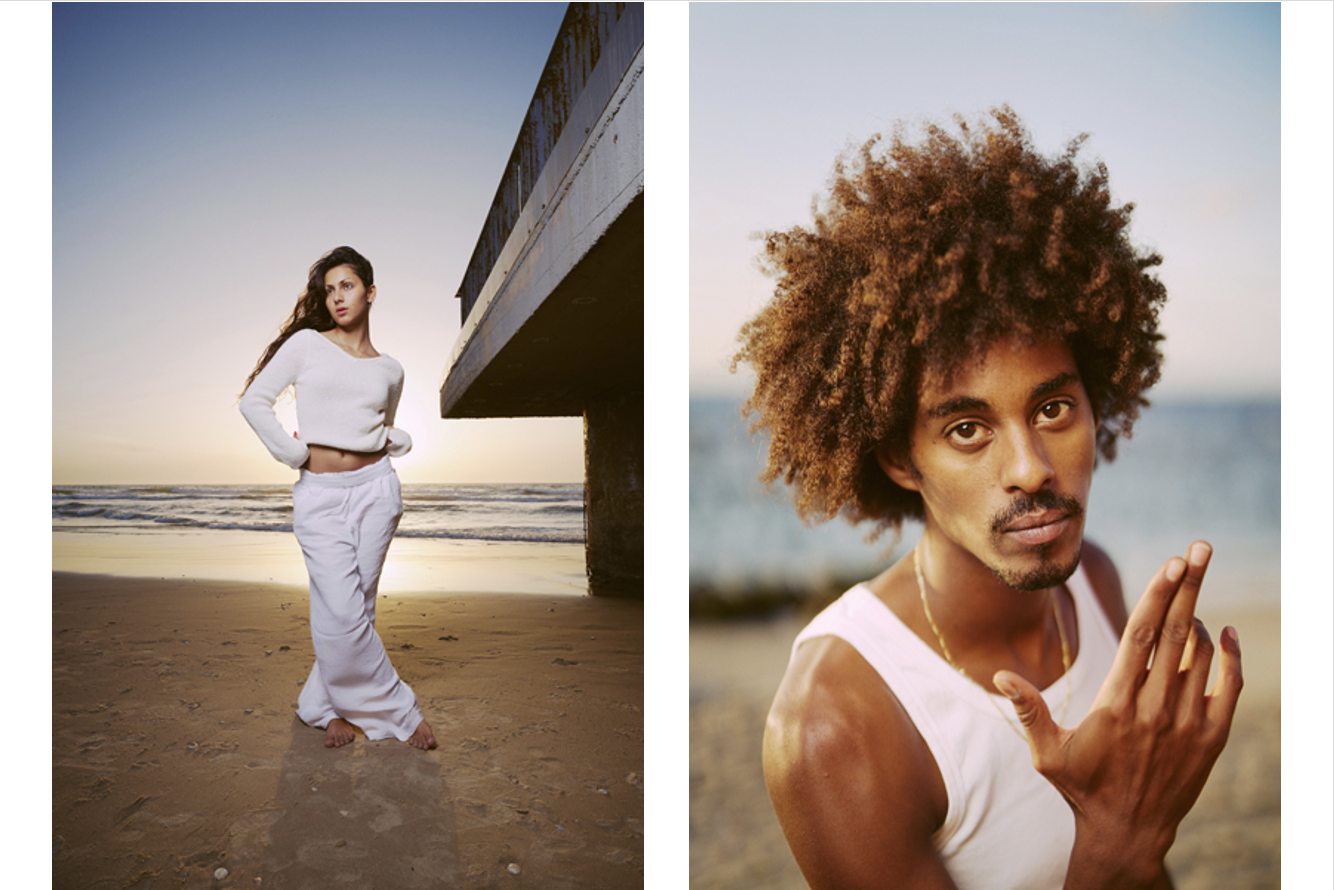
Move over, Humans of New York. There’s a new project showcasing the people of Israel in the form of a beautiful book titled Hinenu: Israel at Ten Million. And in contrast to its unaffiliated counterpart from the Big Apple, this one actually represents the beautifully diverse humanity of a population.
Anyone still following Humans of New York knows just how far that account has strayed from its original premise. What once was a place to highlight stories from the diverse residents of the capital of the world has openly morphed into a hotbed of anti-Israel propaganda—all from an account claiming to represent the place with the largest Jewish population outside of Israel. This isn’t humanity—it’s blatant Jew hatred on a platform with millions of followers.
How fortuitous, then, that we’re able to shift our focus and embrace this beautiful new project from David Shlachter. An entrepreneur with a background in international development, David took note when Israel’s population was set to cross the ten million mark. He wanted to document this milestone and answer the question: Who is Israel at this moment? David analyzed the census data, traveled the country interviewing residents who proportionally reflect the population, and utilized his expertise in portrait photography to craft a stunning and authentic reflection of Israeli society today.
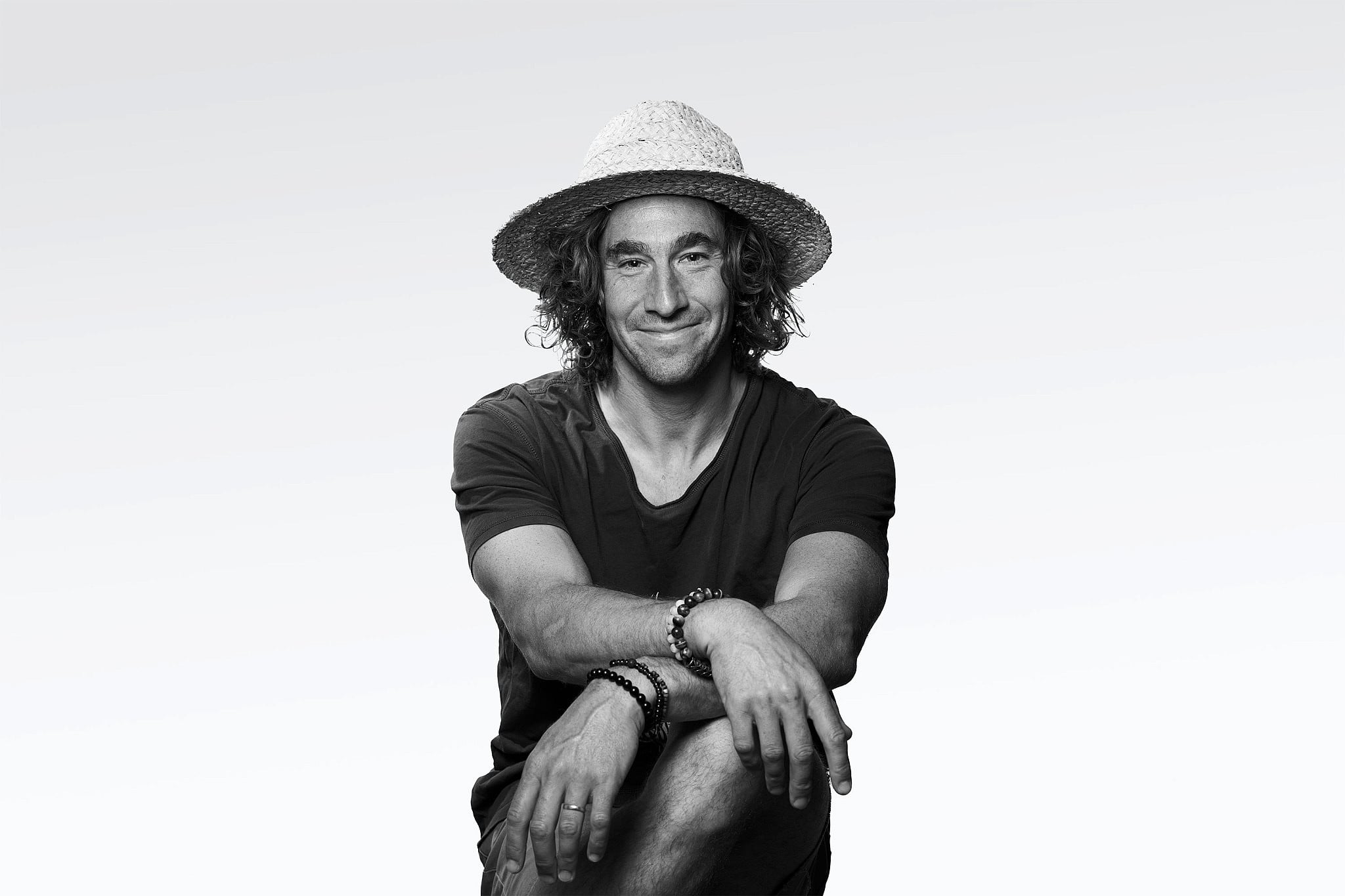
David’s goal was simple: “to find, interview, and photograph 100 residents of Israel, focusing purely on human stories that provide a window into their lived reality.” Though his mission is in no way connected to Humans of New York, the premise of these projects certainly share similarities. The difference? David celebrates the diversity of the population without pushing a personal narrative, allowing the beauty of the country to speak for itself.
David explains, “My goal was never political. In fact, the project was intentionally apolitical. I felt that there were untold media outlets trying to present an angle on the country and the conflict, and I wanted to serve up a signal through the noise: documentation of raw, unfiltered human experience in a place that is the subject of so much fascination but is so poorly understood. I asked participants only to share true, meaningful stories—ones that would help others understand who they really are, in their own words.”
The result is Hinenu. Here we are.
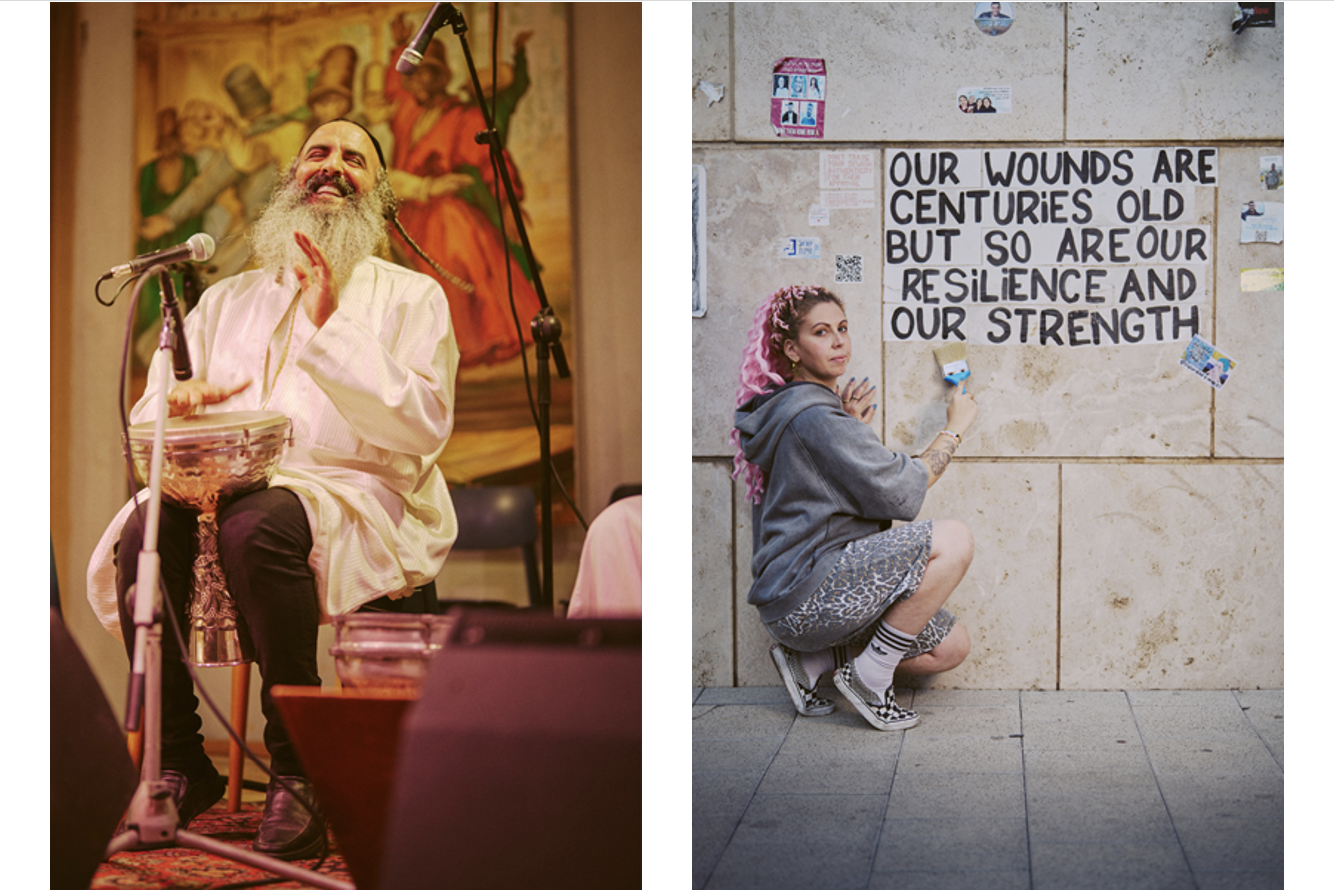
Leah Grossman: David—the book is beautiful. What a wonderful idea to document Israel’s population as it reached this milestone. Can you share more about your scientific approach to the census data? What was your process for selecting the 100 residents you feature in the book?
David Shlachter: It was like putting together the craziest puzzle ever, with the pieces often changing shape! I used the census data to create a spreadsheet with 100 profiles, each with its own datapoints for age, gender, religion, ethnicity, location and place of origin. I was also careful to ensure integrity within categories, like proportion of specific sects and geographic distribution among the ultra-Orthodox, specific region of origin among the olim, etc.
Oftentimes we would find an almost-perfect candidate who was maybe male instead of female, or in their 60s instead of their 50s. I would then borrow a data point from a different profile, setting off a cascading effect of changes through many others. I felt like I painted myself into a corner by the end, when no more changes were possible! One of the last ones I needed to find was a Jewish, Sephardic/Mizrahi female olah born in Iran, living in Kiryat Shmoneh, between the age of 70 to 79. But because this is Israel where divine synchronicity abounds, I made one phone call and found her in two days. That’s pretty much how the project went: everyone was found through word-of-mouth, and everybody wanted to help!
LG: As someone who scoured the country meeting residents from every demographical category, what’s your reaction when you hear Israel being called an apartheid state?
DS: It’s been a long journey, but I’ve finally landed in a place where I’m no longer bothered by charges like this. I’ve been targeted publicly as a “Zio colonizer” (and far worse) because I don’t hide my love for Israel, and I learned the hard way that constantly defending myself was just legitimizing the accuser. So what’s my reaction to all the hate and mischaracterization? Maybe this book is my reaction. If these stories challenge people’s assumptions about Israel, then dayenu. But if even one person out there is moved by these stories and then shows just a little more curiosity and empathy toward the other, then it’s mission accomplished.
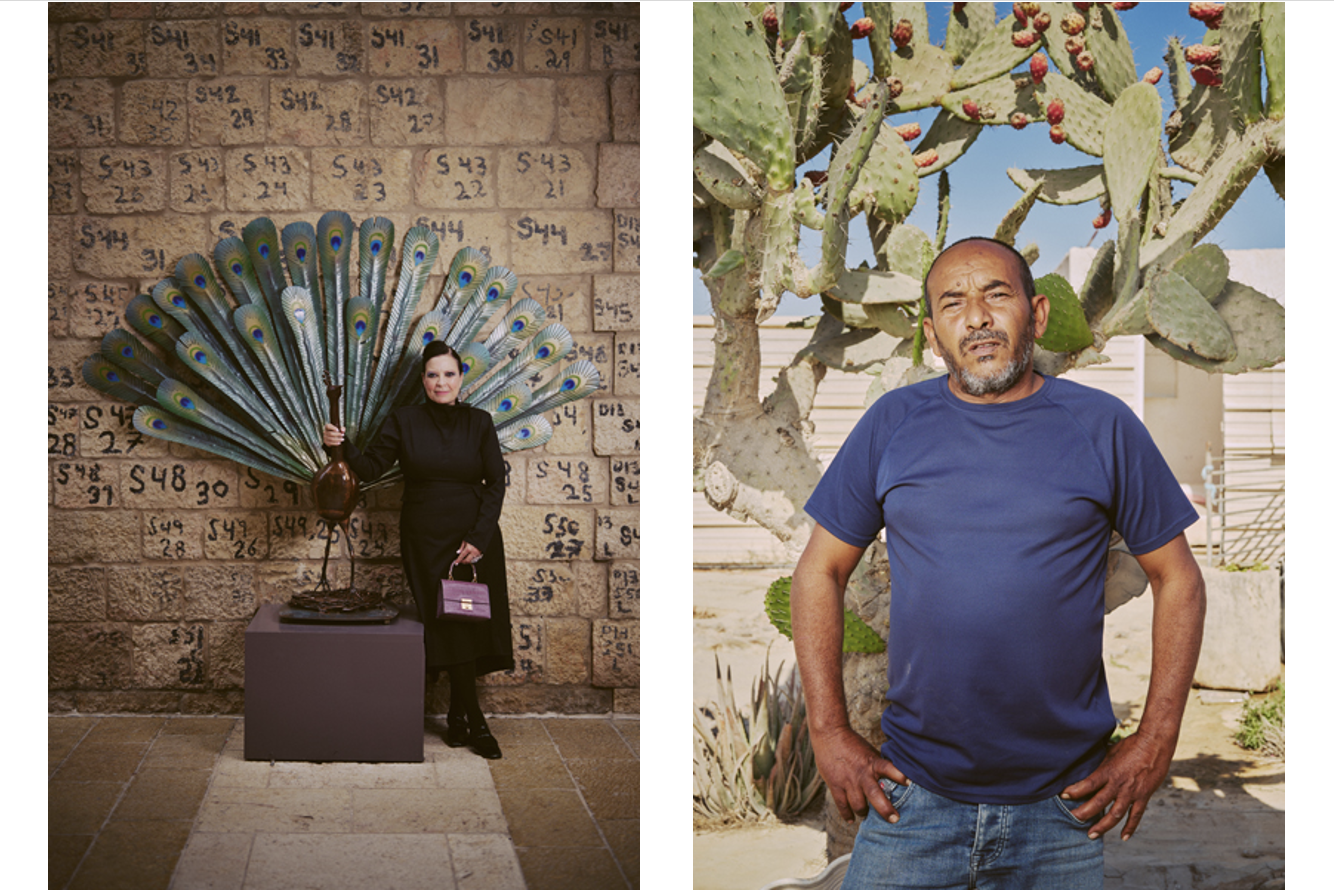
LG: The portraits are stunning—it seems you’ve truly captured the essence of the people you’re highlighting. How did this experience differ (if at all) from other portrait photography projects you’ve worked on?
DS: The legendary war photographer Robert Capa once said, “If your pictures aren’t good enough, you’re not close enough.” I think this applies both to physical proximity and to emotional engagement. Unlike past projects of mine, I did all the photoshoots in the field (rather than in a studio), often at people’s homes or places that are special to them. All the shoots were one-on-one, without an assistant, so comfort and intimacy were already built into the equation.
But I think what made the portraits so special was that I did the photoshoots right after an unusually deep and vulnerable interview in which people laid bare the contours of their private lives. Participants reported back that they really felt heard when telling their stories, often accompanied by a tremendous emotional release. By doing the photoshoots right after the interviews, I feel like people were primed to be truly seen. There was no performance. It was just, “Here I am—this is me.”
LG: How did the war impact the process of creating this book? Was the conflict at the forefront of many of the stories you documented?
DS: I came up with the idea for the book a few months before October 7th, intending to document a nation at a population milestone, not a nation at war. But I stayed the course with my original prompt, simply asking people to share meaningful stories from their lives. In about 2/3 of the stories, the war is not mentioned at all. It does feature prominently in the other third, showing how the war has reverberated through the lived experiences of the young and the old, people of different religions, from Metula to East Jerusalem to Eilat. You’ll meet a female IDF medic shot in a Gaza rescue mission, several Nova survivors, children from kibbutzim in the Gaza Envelope, and the father of a fallen hero among many others.
Logistically, the war served up some complications. For the first five months or so, I couldn’t operate in the north, which was still mostly evacuated. So I took a few trips to the south, where I vividly remember photographing a 3-year-old girl in Kibbutz Magen while we could hear bombs exploding in Gaza just a few kilometers away. My final photoshoot was in East Jerusalem after waking up in an underground bomb shelter for the seventh morning in a row during the Twelve Day War with Iran. The silver lining was that there was no traffic on the drive up there from Tel Aviv!
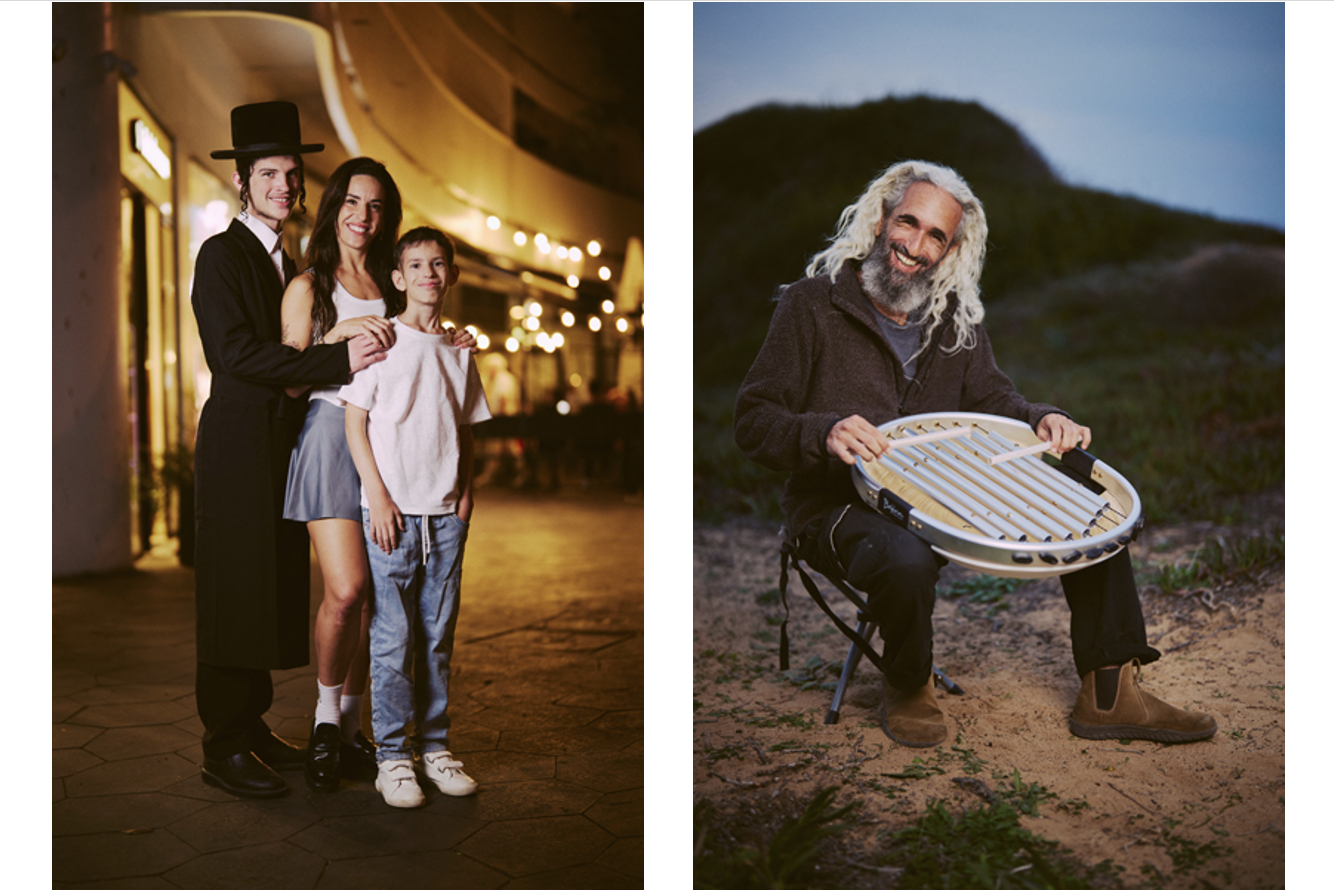
LG: What was your biggest takeaway after spending time with so many residents of varied backgrounds? Was there a common thread you didn’t expect, or anything that stood out?
DS: Certain themes kept popping up over and over: a lot of trauma, a lot of resilience, a lot of tight-knit community, and a lot of kids. The trauma piece should come as no surprise, but the stories of resilience are absolutely staggering. I can’t tell you how many times I choked up during the interviews, not from a place of sadness, but from a place of pure inspiration.
I come from the US, where the Surgeon General has declared loneliness and isolation as a public health epidemic. I’ve seen data showing that 15% of American men report having no close friends at all. Here in Israel, we don’t have that problem. Everything is done with family, in groups, in community. Everything. The cultural background doesn’t matter—everyone’s doing it. I think this phenomenon helps to explain the resilience piece, and it’s just beautiful to see.
Finally, when you walk around anywhere in Israel, one of the first things you’ll notice is the mind-boggling volume of kids, over 1/3 of the population! Fertility rates in OECD countries are falling off a cliff, averaging 1.5 children per woman (well below the replacement rate of 2.1). Israel’s fertility rate is an outlier, almost double the OECD average, and it’s the only country that doesn’t depend on immigration for population growth.
The profiles in Hinenu are organized by age, starting with a 95-year-old Holocaust survivor and ending with an 8-day-old baby at his bris. Each chapter covers people in a 10-year increment, and each chapter is longer than the one that came before—an outcome of a rapidly growing population. In the final two chapters (age 10-19, and age 0-9), you’ll meet 35 kids—they are absolutely gorgeous, and their stories are incredible.
LG: For those who have never been to Israel or have preconceived notions, what’s the one thing you wish they knew about the country and its residents?
DS: If you show up here with curiosity and respect, you will be embraced; when that connection happens, the only thing you’ll wonder is why you waited so long.
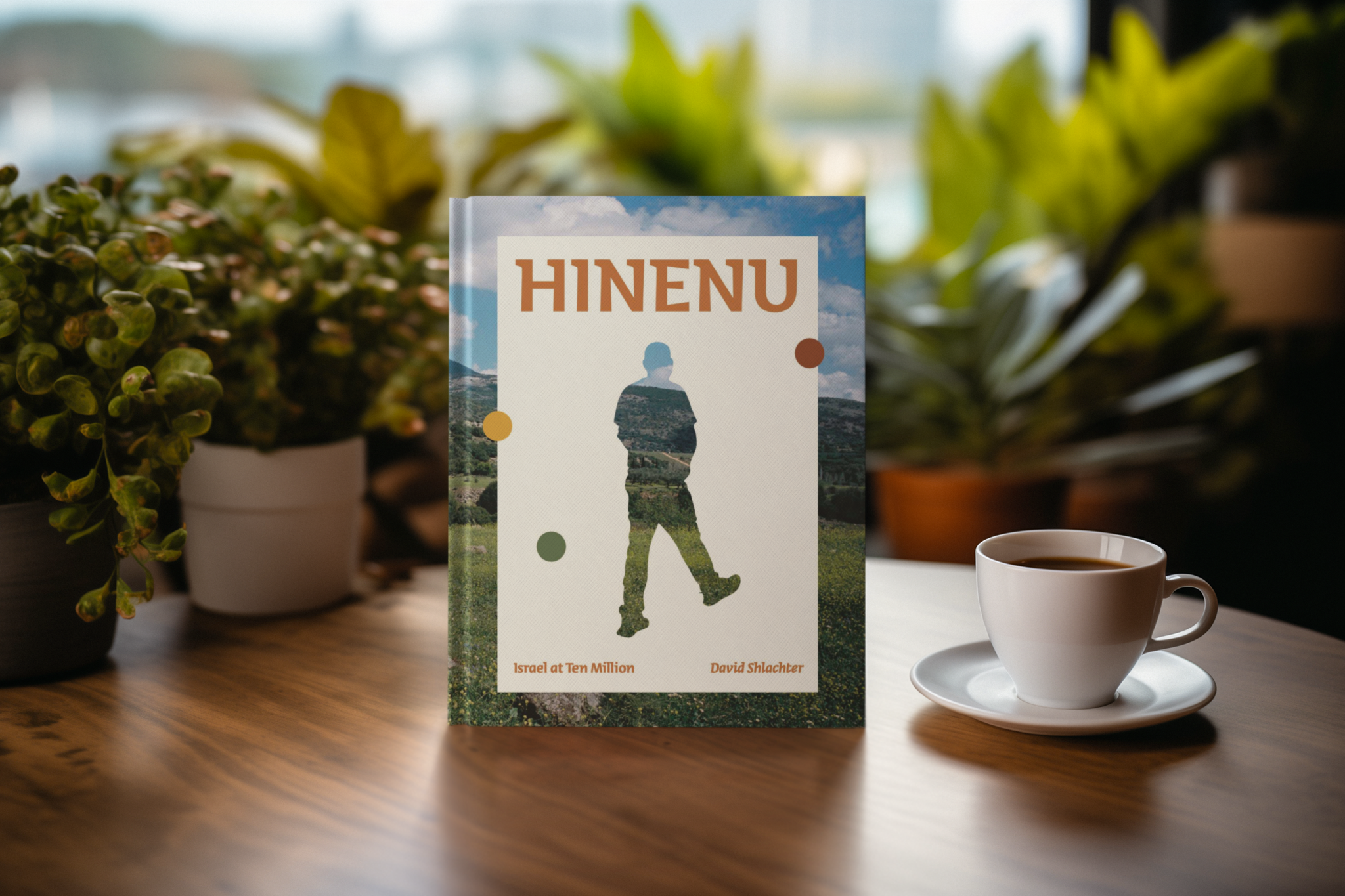
How fortunate that David not only became aware of Israel’s population growth, but that the milestone inspired him to create something so beautiful. He reflects, “People don’t just want to be seen—they want to be heard. It was the privilege of my life to listen.”
Do yourself (and humankind) a favor: Unfollow the account pushing hate, and support the project that’s inclusive, beautifully diverse, and a true reflection of humanity.
Here we are. Hinenu.
__
Hinenu (Gefen Publishing House) hits bookshelves just before Hanukkah on December 10, 2025 and is now available for pre-order in Israel and on Amazon.
In sum, you can champion this beautiful book and get ahead on your holiday shopping. (That’s a win-win if you ask me.)
Inquiries: info@hinenubook.com