


Mathematics Teaching Professor, Author
Historic Plum Street Temple: A Cincinnati Jewish Landmark
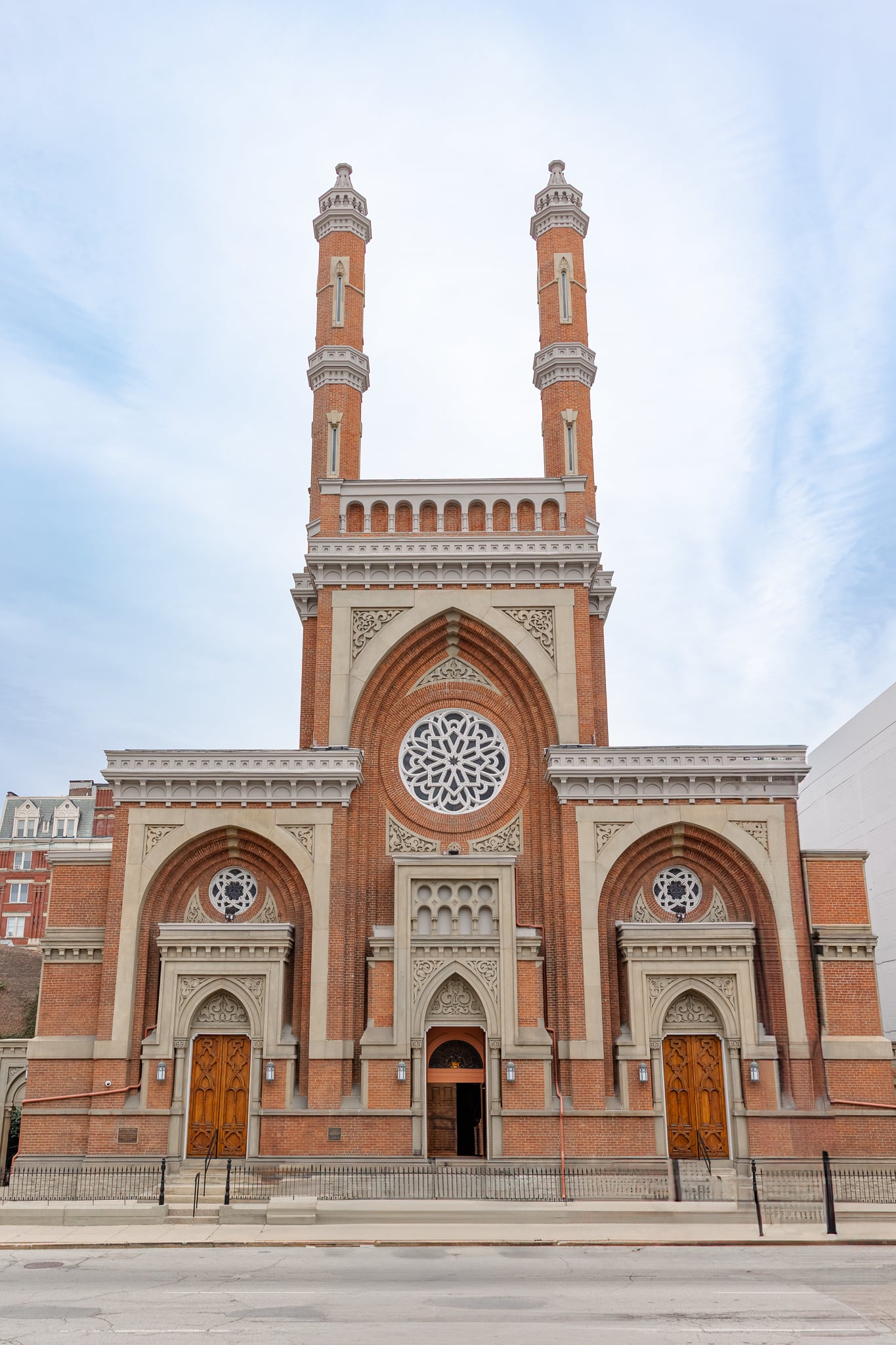
Plum Street Temple (Source: Credit: Alyssa Matt Photography)
Isaac M. Wise Temple is one congregation with two distinct locations, each reflecting an important part of its history and community life. The historic Plum Street Temple, located in downtown Cincinnati, is a landmark of American Reform Judaism and continues to serve as a living place of worship. Wise Center, located in Amberley Village, provides a modern home for everyday congregational life, including a chapel, religious school classrooms, administrative offices, and flexible program spaces. Together, these two locations connect Wise Temple’s rich history with its vibrant present and future.
I would like to thank the esteemed Lauren Glynn Smyjunas, Director of Communications for her support and guidance.
Synagogue
Isaac M. Wise Temple, also known as Wise Temple, is an important center of Jewish life in Cincinnati, Ohio. Its Wise Center, dedicated in 1976, serves as the heart of the congregation’s everyday activities and is located on 30 wooded acres in Amberley Village. The center provides spaces for religious education, worship, study, administration, celebrations, and community gatherings. It is home to the Kehillah Religious School, the Ralph & Julia Cohen Library, the Wohl Chapel, the Sisterhood Gift Shop, administrative offices, community kitchens, and flexible event spaces.
In addition to Wise Center, the congregation is connected to the historic Plum Street Temple, which was built in 1866 under the direction of Rabbi Isaac Mayer Wise, a founder of American Reform Judaism. Known as the “jewel of Jewish Cincinnati,” Plum Street Temple connects the congregation to the history of Reform Judaism and the broader history of Cincinnati. Its magnificent sanctuary continues to host important Shabbat and festival services, weddings, B’nai Mitzvahs, and other meaningful Jewish celebrations.
Together, Wise Center and Plum Street Temple represent both the modern life and rich historical heritage of Isaac M. Wise Temple.
Plum Street Temple
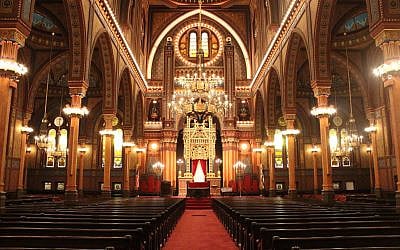
Plum Street Temple, is a historic and majestic synagogue in Cincinnati, Ohio. Constructed in 1866, it is considered the fountainhead of Reform Judaism in America and is one of only two Byzantine-Moorish-style temples in the United States. Designed by prominent Cincinnati architect James Keys Wilson, the temple reflects Jewish architecture that developed in 19th-century Germany. Many other examples of this style in Germany were later destroyed during the Holocaust, making Plum Street Temple a rare surviving example. Only one other synagogue of a similar style remains in the United States, in New York.
The temple combines Gothic Revival, Islamic, and Moorish influences, including its tall proportions, pointed arches, rose window, minarets, decorative motifs, and Torah Ark. Fourteen bands of Hebrew inscriptions, selected by Rabbi Isaac Mayer Wise primarily from the Book of Psalms, surround the interior.
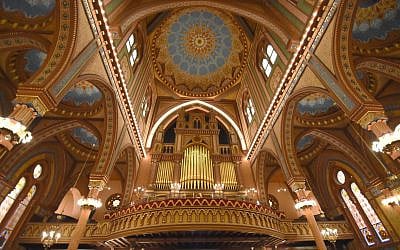
The temple is especially significant because Rabbi Isaac M. Wise established important institutions of American Reform Judaism within its walls, helping transform Reform Judaism from an ideology into an organized religious movement. Today, Plum Street Temple continues to preserve its remarkable history while serving as an active place of worship and community life.
Wise Center
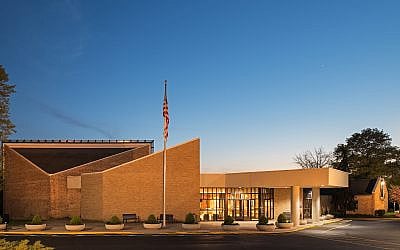
Isaac M. Wise Temple’s Wise Center is a contemporary, suburban, warm, and inviting Jewish community space located on 30 wooded acres in Amberley Village. Designed to encourage active participation and community engagement, the center provides a variety of facilities for worship, education, social activities, and administration. It includes a large Religious School with 24 classrooms, a program room, an art room, and a unique open space for younger children.
The campus also features a beautiful chapel, a versatile social hall and board room, and one of the largest congregation-owned libraries in North America, containing more than 22,000 items. In addition, Wise Center houses the rabbinic and administrative offices as well as indoor and outdoor play spaces. Together, these facilities make Wise Center a welcoming environment where members of all ages can learn, worship, gather, and become actively involved in the Jewish community.
Religious Events
Isaac M. Wise Temple offers a variety of worship opportunities and programs throughout the year, including regular Shabbat services held at Wise Center every Friday at 6:15 PM, with services also available through livestreaming. During the High Holy Days, the congregation provides special services and programs for members of all ages.
The celebration includes guest speakers, such as Rabbi Seth Limmer, as well as talented cantorial soloists who help lead the congregation in prayer and music. The cantorial soloists include Rachel Kobernick, a Cincinnati-based soprano and musician; Morgan Small, a professionally trained vocalist and opera performer; and Betsy Singer-Lefton, a vocalist, educator, and longtime member of the Wise Temple community.
Education
Wise Temple also offers special programming for children during the High Holy Days. Children in PreK through second grade can participate in holiday-themed stories, songs, and crafts in the Open Room. These programs provide families with opportunities to celebrate the holidays together while making Jewish worship and traditions accessible and engaging for children.
Isaac M. Wise Temple places a strong emphasis on Jewish education through programs that encourage learning, friendship, leadership, and community. Its Kehillah program provides a reenvisioned Jewish learning experience for students from Pre-K through eighth grade, combining Jewish studies with fine arts, outdoor activities, and social engagement. Consecration celebrates kindergarten students as they begin their formal Jewish education and marks an important milestone for their families.
Wise Temple also offers Shelanu, a supplemental program for Cincinnati teens that explores Jewish values and encourages students to view the world through a Jewish perspective. The Madrichim program gives more than 30 high school students the opportunity to serve as teaching assistants and role models for younger children, helping create an engaging and welcoming Jewish learning environment.
Ralph and Julia Cohen Library
The Wise Temple Library is a welcoming space for inspiration, exploration, relaxation, and education. With more than 22,000 items, it is one of the largest synagogue libraries in North America. The collection includes books for children and adults, along with videos, CDs, audiobooks, and resources on Jewish history, traditions, Israel, music, art, and the Holocaust. The library also features a reference area, a Teacher Resource Room, and a mini-museum with artifacts and information about the congregation. With Wi-Fi, a comfortable atmosphere, and an expert librarian, the library supports learning and lifelong education for people of all ages.
Wise Action
Isaac M. Wise Temple is active in social action and community service, encouraging members to support people in need through meaningful acts of service. The congregation partners with organizations such as Shelterhouse, Found House, Freestore Food Bank, St. Francis Ministries, and Meals on Wheels to address issues including hunger, homelessness, and disaster relief.
Wise Temple also offers many opportunities for members to build friendships and community. Programs include Brotherhood, Women of Wise, Wise Gen for young Jewish professionals, Wise Teens for students in grades 6 to 12, and Wise Families for families with children ages 5 to 12. These groups provide opportunities for social, educational, spiritual, and family activities while strengthening connections within the congregation.
The Wise Guide
The Wise Guide is a quarterly publication sent to Wise Temple congregants that provides information about upcoming events, services, and programs. It also includes the Wise Learning Course Catalog, which highlights current adult education opportunities. By providing regular updates, The Wise Guide helps congregants stay informed and involved in the many programs and activities offered by Wise Temple.
Historical Backgrounds
Jews first permanently settled in Ohio in 1817, when English-born Joseph Jonas moved to Cincinnati. By 1824, these early settlers organized B’ne Israel, the first Jewish congregation established west of the Allegheny Mountains.
Between 1824 and 1840, Cincinnati became an important center of Jewish life in the American West. During this period, Jewish immigrants established the first Jewish congregation and cemetery west of the Alleghenies, helping transform a small pioneer community into a growing and organized Jewish population.
In 1840, German Jewish immigrants in Cincinnati formed K.K. B’nai Yeshurun, a new congregation that followed German Jewish traditions. The congregation adopted a constitution in 1841 and was incorporated in 1842. In 1846, James K. Gutheim became its first rabbi, and in 1848 the congregation dedicated the Lodge Street Synagogue. A religious school was established in 1849, providing Jewish education for children.
In 1853, Rabbi Isaac Mayer Wise became the congregation’s spiritual leader and introduced important reforms, including a choir and later an organ. He also began publishing The American Israelite in 1854. As the congregation grew, it helped establish the United Jewish Cemetery with K.K. Bene Israel in 1860. In 1865, the cornerstone of Plum Street Temple was laid, beginning the construction of the congregation’s magnificent new synagogue. Built during the Civil War at a cost of $275,000, Plum Street Temple reflected the congregation’s growth and Rabbi Wise’s growing influence on Reform Judaism in America.
Which brings us to 1866.
In 1866, the United States was entering the challenging period of Reconstruction following the Civil War. The nation remained politically and physically divided as Congress and President Andrew Johnson disagreed over how to rebuild the South and address the rights and citizenship of millions of newly freed African Americans. Johnson served as president during this difficult period, leading a nation of 36 states as it worked to recover from the destruction and divisions of the Civil War.
In 1866, Cincinnati was experiencing a period of rapid growth and prosperity following the Civil War. As the eighth largest city in the United States, it was a major center of industry, commerce, and culture. The city’s economy was fueled by busy steamboat trade and expanding infrastructure, while cultural activities such as the growing popularity of baseball contributed to Cincinnati’s vibrant urban life.
In 1866, Cincinnati was a major hub for American Jewish life, driven largely by German-Jewish immigrants.
It was in this year, 1866, that a massive milestone for the community occurred, a congregation of 200 Jewish families in Cincinnati decided to build something magnificent. They believed Jewish life in America deserved a permanent, visible, extraordinary home. The historic Plum Street Temple was dedicated on Friday, August 24, 1866, and the iconic structure cemented the city as a birthplace of Reform Judaism.
After Plum Street Temple was dedicated, Isaac M. Wise Temple continued to shape Reform Judaism in America. Rabbi Isaac Mayer Wise founded the Union of American Hebrew Congregations in 1873, Hebrew Union College in 1875, and the Central Conference of Reform Rabbis in 1889. The congregation expanded its community through organizations such as the Sisterhood and Brotherhood and opened new facilities, including the Wise Center.
In 1931, it merged with Reading Road Temple, growing to 908 families. Plum Street Temple also served the community during the Great Depression by providing shelter for homeless men. By 1966, the congregation celebrated the temple’s 100th anniversary, continuing its long legacy in Cincinnati’s Jewish community.
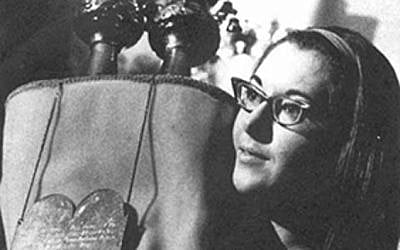
In 1971, Sally Priesand served as a rabbinic intern at Isaac M. Wise Temple while studying at Hebrew Union College. The following year, on June 3, 1972, she was ordained at Plum Street Temple, becoming the first woman ordained as a rabbi by a rabbinical seminary in the United States. Her ordination marked an important milestone in both Reform Judaism and the history of women in the rabbinate.
In 1973, the Wise Center on Reading Road was sold, and regular Sabbath services returned to Plum Street Temple. In 1975, Plum Street Temple was added to the National Register of Historic Places. In 1976, the new Isaac M. Wise Center opened on Ridge Road in Amberley Village, becoming the congregation’s modern home.
Isaac M. Wise Temple continues to be an important part of Cincinnati’s Jewish community, bringing together history, worship, education, and community life. From the historic beauty of Plum Street Temple to the welcoming and modern Wise Center, the congregation provides meaningful experiences for people of all ages. Its ongoing programs, traditions, and commitment to community ensure that Jewish life remains active, connected, and vibrant for future generations.
Contact Information:
Isaac M. Wise Temple, 8329 Ridge Road, Cincinnati, OH 45236
Phone: (513)793-2556
Email: Welcome@wisetemple.org
Website: https://www.wisetemple.org/