
History Is a Kaleidoscope
A Question Deserves Another Question
A friend recently asked me whether I think we are living through the “Fourth Turning.”
Being Jewish, I will answer him in the traditional way: with another question.
Not “Are we living thought the fourth turning?”
But rather: How did the people living in each age understand the world they believed they inhabited?
The older I get, the more I suspect this is the more interesting historical question. We usually debate what happened. Increasingly, I think we should ask how people understood what was happening while they were living through it.
Philosophers call those background assumptions an ontology—our understanding of what is real, what counts as truth, who possesses authority, and who we imagine ourselves to be. Those assumptions then shape our lived experience. I have begun calling this the ontology–phenomenology pipeline: the categories we inherit become the world we experience.
Many large civilizations mistake its ontology for reality itself.
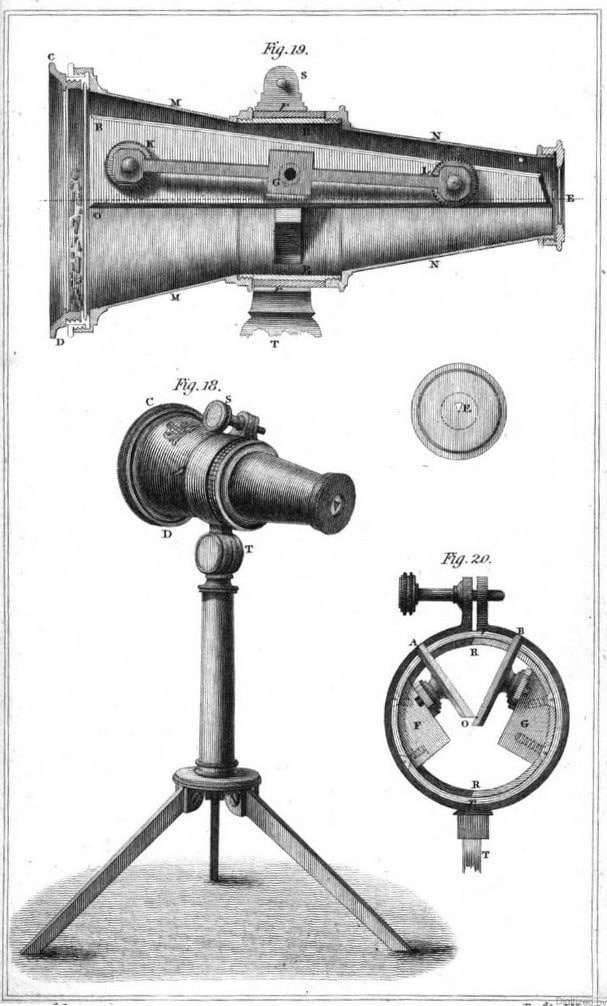
Why a Kaleidoscope?
Mark Twain once wrote:
History never repeats itself, but the kaleidoscopic combinations of the pictured present often seem to be constructed out of the broken fragments of antique legends.
That image strikes me as more profound than the familiar saying that history “rhymes.”
A rhyme suggests repetition. A kaleidoscope suggests accumulation. The same fragments remain inside the instrument, but every turn creates a different picture. Nothing disappears. The pieces are simply rearranged.
That image also captures something else I have come to appreciate. We are always tempted to explain history through a single pane of glass: economics, religion, technology, institutions, class, race, or generations. Each reveals something true.
But every additional pane complicates the image. The picture becomes less tidy, less ideological, and—if we are fortunate—closer to reality.
One of the oddities of learning history is that we are taught almost entirely through nouns.
Greece.
Rome.
The Renaissance.
The Enlightenment.
America.
Those categories are useful, but they freeze what were actually dynamic processes. The people living through those eras did not experience themselves as historical periods. They experienced slow transformations whose destination they could not yet see.
The six panes that follow are my attempt to recover a few of those forgotten processes.
Pane One – The Hellenistic Revolution: Cultural Synthesis
Alexander the Great is usually remembered as a conqueror. I increasingly think his greater achievement was beginning one of history’s great acts of cultural synthesis.
Alexander conquered the Achaemenid Persian Empire, but he also inherited it. Persia had already solved many of the problems of governing an enormous, multiethnic civilization. Administrative systems, roads, taxation, diplomacy, and an imperial imagination already existed before the Macedonians arrived.
As Greek civilization spread across this world, it was transformed by it. The result was not simply Greek. It was Hellenistic: Greek philosophy, Persian administration, Egyptian religion, and Near Eastern scholarship becoming parts of a civilization larger than any one ethnicity.
What fascinates me is not simply that Greek culture endured. It is that it eventually ceased to feel Greek. Its assumptions about education, politics, and philosophy simply became the way educated people understood reality.
Ontology had become invisible.
Pane Two – Rome: Inheritance Becomes Civilization
Rome did not replace the Hellenistic world. It inherited it.
To Greek philosophy and cosmopolitan culture it added Roman law, citizenship, engineering, military organization, and a remarkably durable political imagination. Christianity entered this Roman framework, transforming it while also being transformed by it. Out of this long accumulation emerged what we casually call the West.
Perhaps the strongest evidence of Rome’s success is how many civilizations came to understand themselves as Roman.
The Eastern Roman Empire never considered itself “Byzantine.” Its citizens called themselves Romans. Orthodox Christianity inherited much of that Eastern Roman imagination. The Holy Roman Empire claimed Rome’s western mantle. The Protestant Reformation did not reject Rome’s inheritance so much as contest who possessed the rightful claim to it, fracturing Western Christendom while leaving the Roman legacy itself intact. Moscow later proclaimed itself the Third Rome. Renaissance humanists revived Roman ideals. Napoleon borrowed Roman symbolism. Britain imagined itself through Roman imperial language. Even the American republic clothed itself in Roman architecture and republican imagery.
At some point, Rome stopped being merely an empire.
It became an ontology.
Pane Three – America Before America: Tidewater’s Moment
America inherited this Western tradition, but it did not begin as one people.
Colin Woodard’s American Nations helped me see early America differently. The colonies were not simply thirteen provinces waiting to become one nation. They were multiple regional civilizations, each carrying different assumptions about religion, authority, liberty, and community.
Yet plurality did not mean equality of influence.
In the early republic, Tidewater Virginia exercised remarkable political leadership. Washington, Jefferson, Madison, and Monroe all emerged from that world. John Adams later recalled urging Thomas Jefferson to draft the Declaration of Independence, explaining, “You are a Virginian, and a Virginian ought to appear at the head of this business.” Early America was ontologically plural, but politically it largely spoke with a Tidewater grammar.
Pane Four – Manifest Destiny: The Migration of Ontologies
Most Americans learn Manifest Destiny as the story of settlers moving west.
I now think that is only half the story.
What moved west were not merely people. Entire ways of seeing the world migrated with them.
Yankeedom expanded.
The Midlands expanded.
Greater Appalachia expanded.
The Deep South expanded.
Meanwhile, Tidewater largely stopped expanding, and its relative influence slowly diminished.
Seen this way, the nineteenth century is not simply a story of territorial expansion. It is a story of competing regional ontologies spreading across a continent and attempting to define what America would become.
The Civil War therefore represents more than a constitutional crisis. It becomes the decisive political moment in determining which of these expanding regional cultures would become America’s leading ontology.
Pane Five – From Regional Culture to National Ontology
The remarkable thing about successful ontologies is that they disappear.
Long before the Civil War, the Great Awakenings had already begun transforming American Christianity. The emphasis shifted toward individual conversion, personal faith, and voluntary commitment. The fragments remained Christian, but the picture had changed.
Then industrial communication transformed the scale at which ontologies could exist.
Railroads, telegraphs, mass newspapers, public education, radio, and television did more than spread information. They created the possibility of a national way of being. Communication technologies do not merely transmit ideas; they determine the scale at which shared moral vocabularies become possible.
The civic grammar that had originated largely within Yankeedom gradually spread beyond New England through schools, journalism, universities, and national institutions. This is one of history’s great ironies. The Yankee people slowly became less visible precisely because many of their assumptions became America’s assumptions.
The ontology survived, but the ethnicity faded.
Pane Six – The Digital Kaleidoscope
Today that national grammar appears to be fragmenting.
Marshall McLuhan famously argued that the medium is the message. If he is right, then the significance of social media lies less in its content than in its ability to reorganize how reality itself is experienced.
Print rewarded permanence and linear argument. Broadcast rewarded shared national attention. Social media rewards networks, immediacy, performance, fragmentation, and continuous reinterpretation.
Yet the new medium has not replaced the old. Governments still legislate. Courts still publish opinions. Universities still produce scholarship. Newspapers still investigate. Legacy television still shapes public conversation.
Instead, we inhabit all of these media simultaneously.
The digital world sits atop the broadcast world, which sits atop the print world, which itself rests upon much older traditions of communication. We are not witnessing one ontology replacing another. We are living through their overlap.
Looking Through the Kaleidoscope
So, are we living through a Fourth Turning?
Perhaps.
But I suspect that question asks too little.
The Fourth Turning is one pane of glass. It may illuminate something important, but no single pane can capture the whole picture. History becomes richer when we ask different questions: How do civilizations inherit rather than replace? How do ontologies migrate? How do communication technologies change the scale at which people imagine themselves? How do successful ways of seeing the world disappear precisely because they become common sense?
Alexander did not erase Persia.
Rome did not erase Greece.
America did not erase Europe.
The internet has not erased print.
History advances less by replacement than by inheritance, layering, migration, and transformation.
The fragments remain.
The kaleidoscope turns.
And for a brief moment, before the new picture hardens into common sense, we are given the rare privilege of seeing that what once felt like reality was only one arrangement of the glass.