Mother. Googler. Community Builder. Succeeded at Aliyah the Hard Way.
Featured Post
Hitler marriages and ‘Happy Place’
Like the show's protagonist, I'm the granddaughter of a match that was arranged by history, survival, and grief, acting out a script that was written before I was born
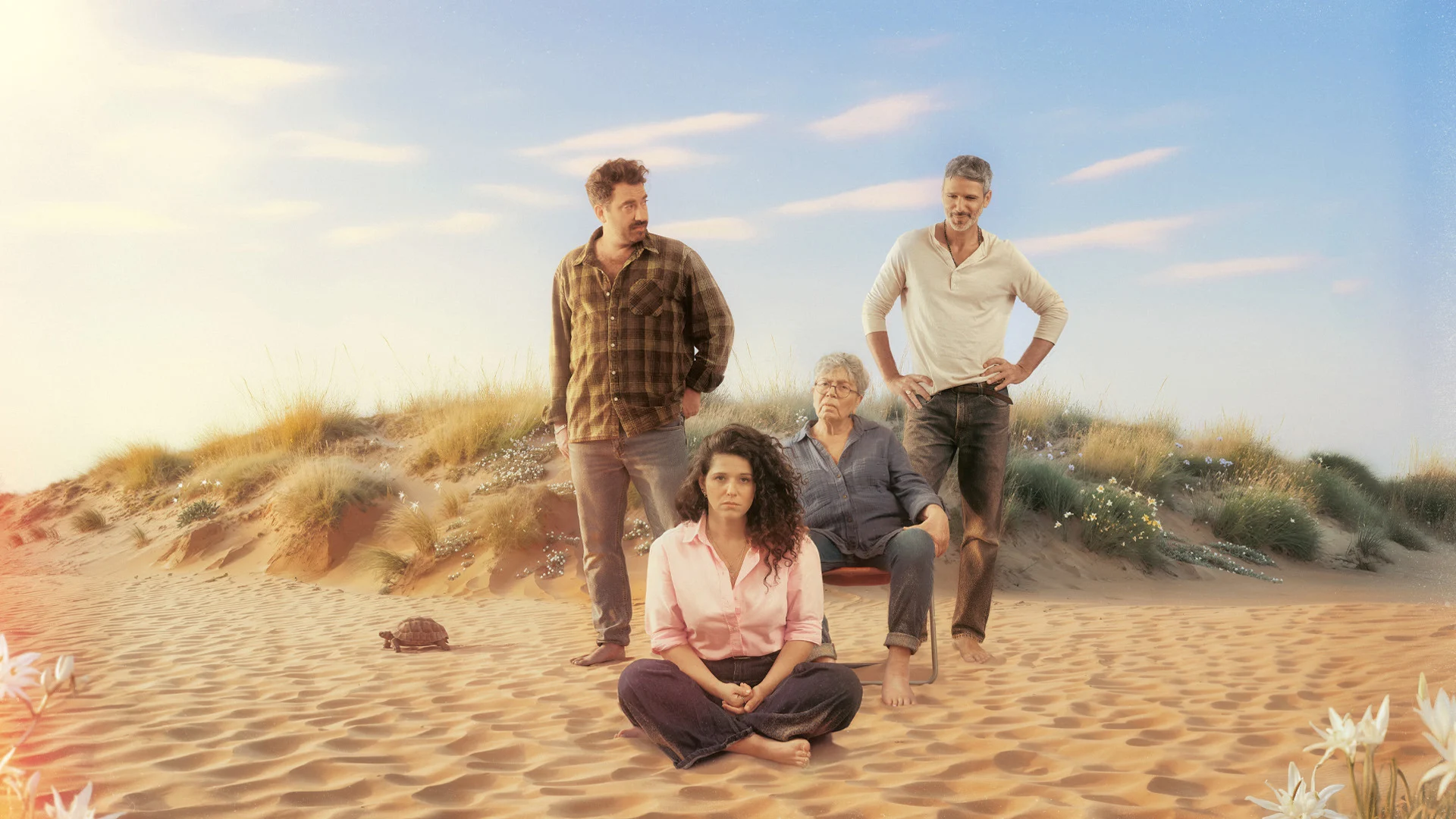
Credit: Kan 11
If you live in Israel right now, you are probably watching Happy Place (Makom Sameach).
The show follows Vered (played by Noa Koler), a speech therapist in the throes of a midlife crisis, who is trying to “save” her depressed, aging mother, Nomi (Tiki Dayan), by dragging her to a positive-thinking “happiness workshop.”
I don’t want to give it a rave review. There are enough of those. I want to talk about how, for the first time since living here in Israel, I finally saw a character I could relate to. As an immigrant, I usually feel “other” compared to Israeli women. They seem to possess a code I haven’t cracked. But Vered? With her neuroticism, her messy boundaries, and her desperate need to make things okay? I think we could be great friends.
The show is funny, painful, and deeply uncomfortable, mostly because it refuses to lie to us.
There is a scene that stopped me cold. Vered and her mother are arguing in the car, and Nomi starts picking at the seams of Vered’s marriage. She dismisses Vered’s husband as “emotionally challenged.” Vered immediately gets defensive, spiraling into a desperate attempt to prove that he is a good man and that her life is happy. And then, Nomi shuts her down with a quiet calm.
“Mamaleh,” she says. “I just want you to realize that you are not in a Hitler Marriage.”
Vered, stunned by the brutality of the term, asks what a Hitler Marriage is.
“After the Holocaust,” her mother explains, “people married just for the sake of it. One after the other, just to keep going, just not to be alone. They didn’t stop to wonder if they were right for each other. If they loved each other. None of that.”
And then she delivers the line that made me pause the episode:
“As if Hitler arranged the marriage for them.”
I sat there in the silence of my living room, staring at the screen. I knew exactly what she was talking about. I knew it because I am also the granddaughter of a marriage that was arranged by history, survival, and grief.
The ‘After’
My mother’s parents were Holocaust survivors. They came to Canada separately from Poland after the war, both carrying the kind of baggage that doesn’t fit in a suitcase.
They met in Toronto and didn’t waste time wondering if they were compatible or if their personalities matched. That kind of analysis was a luxury they didn’t have. There were sparks, and that was enough for two broken people finding their way in a new world.
My mother grew up in the shadow of this. She wasn’t just a daughter; she was the proof that they had survived. But their survival came with sharp edges, and the air in their home was often thick with the friction of two people who hadn’t healed. I think she felt like she had to be the anchor that held two drifting ships together, standing between them to keep the peace.
But there was another layer to the quiet sadness that wrapped around our family. Even if my grandparents didn’t talk about their past, we all knew, in our own way, that we were the “After.” Before the war, my grandfather had already started his life. He had a tailor business. He had a wife and a four-year-old daughter. And then, they were gone.
In my young mind, that was the “Before.” That was the primary text. We: my grandmother, my mother, and I. We were the post-script. The life that happened only because the original life was destroyed.
When I was sixteen, my grandfather told me that he didn’t even want to come to Canada. He told me that when the war ended, he travelled to Italy, where he registered at a displaced persons camp and waited desperately for an affidavit to board a ship to British Mandate Palestine. That was the dream. But the papers never came.
The invisible script
Watching Vered in Happy Place, I realized something sobering.
Vered isn’t just “neurotic.” She isn’t just obsessively trying to fix her mother because she’s a “good daughter.” She is acting out a script that was written before she was born. She is trying to heal a trauma she didn’t experience, trying to bring “happiness” to a generation that only knew survival. Her choice of husband, her career, her anxiety: it’s all a reaction to the “Hitler Marriage” she came from.
When I watched her, I looked back at my own life in Israel and saw the same threads. For a long time, I thought the choice to make aliyah was my own. But now I think that feeling of being a character in a sequel that wasn’t as good as the original movie is actually what led me here. Maybe I wasn’t just a young woman on a Zionist adventure. I was a granddaughter trying to finish a journey my grandfather started in 1945.
Happy Place made me think about how we can be driven by forces we don’t even know are there. We are propelled by the grief our grandparents swallowed, by the silence our parents kept, and by the marriages arranged by history.
The unfortunate truth is that these invisible scripts can steer us into lives we never really chose, into marriages, careers, or conflicts that don’t belong to us, long before we wake up and realize what happened.
I just wish we didn’t have to spend half our lives playing a role written for someone else, before we finally realize we can put down the pages.
Related Topics
Related Posts