


Holding All Sides Accountable in Gaza’s Humanitarian Crisis
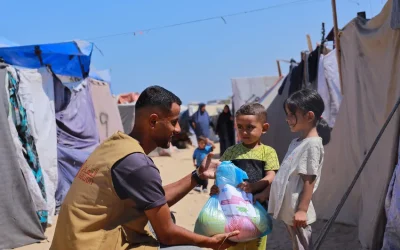
The humanitarian disaster in Gaza is undeniable. Images of starving children, collapsed hospitals, and families digging through rubble have shocked the conscience of the world. Public outrage is justified. But in the global rush to respond, many have turned this moment of moral urgency into a political weapon, seeking to assign total blame to a single actor. This is a mistake.
Israel, as the primary military power involved in the current conflict, undoubtedly bears significant responsibility for the suffering. The blockade it has imposed for years—tightened dramatically since the October 7 Hamas attacks—has deeply impacted daily life in Gaza. Food, water, fuel, and medicine are scarce. Aid convoys face frequent delays and restrictions, and basic infrastructure has been shattered. Under international law, Israel must allow humanitarian assistance to reach civilians. It has not done enough.
But focusing solely on Israel’s role ignores the larger, more complicated picture—and risks undermining efforts to actually alleviate suffering. The grim reality is that Gaza’s crisis is the result of multiple, overlapping failures.
First and foremost, Hamas cannot be ignored. As the governing authority in Gaza and the group that initiated the current war with its October 7 massacre of Israeli civilians, Hamas has exploited its own people as pawns in a political and military campaign. It has built tunnels beneath homes and hospitals, stored weapons in schools, and deliberately used civilian areas as shields. Even worse, it has diverted desperately needed aid—food, fuel, medicine—for its own use or propaganda. According to credible reports from aid workers and journalists, Hamas has hoarded supplies while civilians starve. These actions are not only morally bankrupt—they are war crimes.
Egypt, which controls the Rafah crossing into Gaza, also bears responsibility. Though Egypt has legitimate security concerns about destabilization and smuggling, its heavy restrictions and red tape have blocked or slowed vital humanitarian convoys. Cairo’s reluctance to open its borders to fleeing Gazans and its failure to fully facilitate aid deliveries reveal a troubling contradiction between public solidarity with Palestinians and actual humanitarian action.
Then there is the broader Arab world. While many leaders have voiced fierce condemnation of Israel, few have offered real solutions. Material support and sustained diplomatic pressure on Hamas to release hostages, demilitarize civilian zones, or accept temporary truces have been conspicuously absent. Oil-rich Gulf states, in particular, have the resources to meaningfully aid Gazans—but have largely stayed on the sidelines.
The international community also shares blame. For all its concern and condemnation, the United Nations has been unable to ensure secure aid corridors or implement an effective ceasefire. Powerful nations—including the United States—have been more focused on defending or criticizing Israel’s military response than on forging meaningful consensus on how to protect civilians and de-escalate the conflict.
This is not to suggest that blame should be distributed evenly. Israel has disproportionate power and therefore greater responsibility under international humanitarian law. But exclusive focus on Israel while ignoring the destructive role of Hamas, Egypt’s border policies, and the broader failures of the international community only obscures the truth. And that truth is necessary if we want to prevent even greater catastrophe.
Gaza’s civilians are not combatants. They are not responsible for the actions of their leaders, nor are they responsible for the geopolitical paralysis that has allowed this crisis to spiral. What they need now is less finger-pointing and more aid, less outrage and more action, less politics and more humanity.
The humanitarian crisis in Gaza did not emerge in a vacuum, and it will not be solved by slogans. Starvation is not just a symptom of war—it is a failure of leadership, diplomacy, and compassion across the board.
Holding all sides accountable is not a deflection — it is a moral necessity. If the world truly wants to help Gaza, it must stop simplifying the narrative and start demanding responsibility from everyone with the power to save lives.