The loss of loss
Tuesday, January 27th, marks the observance of International Holocaust Remembrance Day. I wonder how much memorial will be part of it.
In fact, Holocaust remembrance without the dead has been going on for some time. American television coverage of the First World Gathering of Jewish Holocaust Survivors, held in Jerusalem in 1981, left out the dead almost completely. The focus was on survivors. In the first broadcast of the series, the commentator said of the survivors:
These heroic people who are gathered here today have not come to resurrect the nightmares of the past. They have not come to mourn. They have come to celebrate life. To bear witness. And to pass it on to their children and their children’s children. This is more valuable than any of the material assets they could pass on. This is their true legacy.
From the start, we might wonder how it is possible to “bear witness” without resurrecting “the nightmares of the past” and without “mourning.” What is one “witnessing”? Either way, we are told that the survivors came to Jerusalem to “celebrate life.”
Some survivors object to such celebratory rhetoric. Henry Starkman, a survivor whom I knew over 30 years, described many survivor accounts — or accounts about survivors — as “almost adventure stories, about how they outwitted the Germans, and other heroic achievements. Sort of Superman scripts.” Henry also recalled that his rabbi “always approaches me for Holocaust Remembrance Day. Invariably, I refuse. I don’t think that the sort of inspirational address that he wants is sharing with anybody the reality of the Holocaust.”
Sally Grubman, also an Auschwitz survivor, rejected the heroic narrative — devoid of the dead — even more insistently:
American Jewish teachers invite me into their classrooms, but they don’t want me to make the Holocaust a sad experience…. There is this book they use, “The Holocaust: A History of Courage and Resistance.” But the Holocaust was never a history of courage and resistance. It was a destruction by fire of innocent people. And it’s not right to make it something it never was.
We are not heroes. We survived by some fluke that we do not ourselves understand. We went through fire and ashes and whole families were destroyed. And we are left. How can we talk about the joy of survival?
Of course, there were instances of genuine heroism and resistance during the Holocaust. But none of these alter the reality of genocide: the intended erasure of a people. In the case of the Holocaust, that erasure mostly succeeded.
In recent years, celebrating survivors while ignoring the dead has accelerated. My local Holocaust remembrance institution, which used to be called the “Holocaust Memorial Center,” was recently renamed the “Holocaust Center.” Other Holocaust centers, such as the one in Montreal, have also deleted “memorial” from their names.
I have seen a draft of the “re-branding memo” about the name change of our local center. Like many contemporary such institutions, it is relentlessly forward-looking, emphasizing “future generations,” passing “legacies,” and engaging a perceived youth market. That is, getting on with it. Following an FAQ format, the memo reads:
What is the rationale for the re-brand?
A: We believed that it is necessary to move forward, to create a clearer brand identity that communicates The Holocaust Center as a destination where stories are brought to life. Our audience has expanded and shifted over time to a younger demographic, and we see a definite need to engage and reach out to this age group.
Just this week, I received a mailing for an upcoming dramatic program at the Center which echoes the same themes: “Brought to life on stage, these voices speak to heroism, healing, and hope.”
Over the past 50 years, I have pursued deepening conversations with individual Holocaust survivors: collaborations sustained over months, years, and — with some survivors — decades. There is no way to summarize what I have learned along the way. But Agi Rubin, my closest survivor-friend and co-author, came closest:
We survivors are bundles of contradictions. When we are here, we are also there. It is not that our joys are not real. They are entirely real. It is just that they never exist simply by themselves. They are always in reference to something else, something that can consume them in an instant.
And then there are simply the blank spaces. The spaces where things were that are not anymore. Even when home and life are recreated, the losses are never made whole.
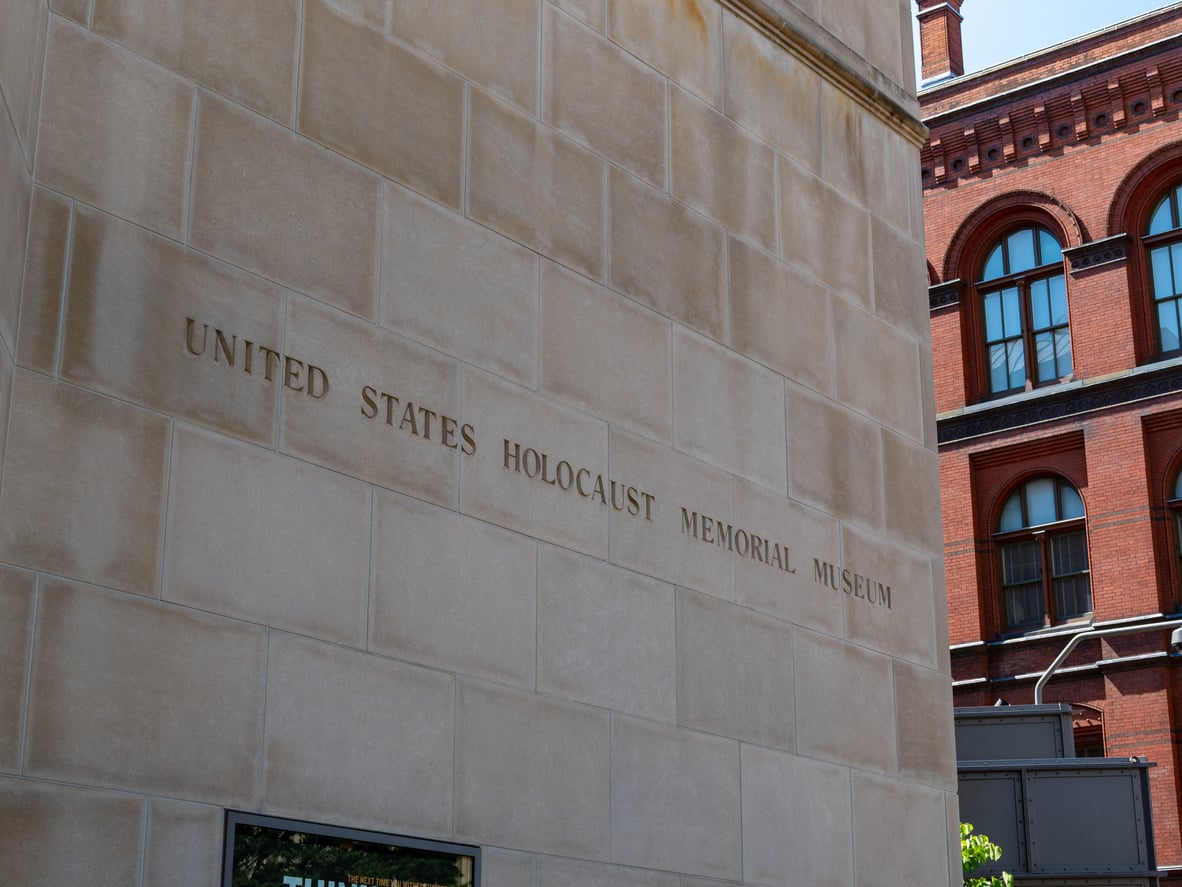
Like many other survivors, Agi hoped that some of the Holocaust remembrance institutions might at least retrieve a remnant of the lost. I was with her at the opening of the US Holocaust Memorial Museum in DC. It was a brutally cold and windy day on the mall in front of the new museum. Agi reflected:
For years, I saw my mother floating in the air, in the smoke, and in the wind, and I couldn’t reach her. I couldn’t bring her down. We want to feel that our dead are somewhere, and what happened to them is somewhere and not simply erased…. We want to believe that the museum is a place to remember, even a grave, even a cemetery. But I must tell you that this is improvisation, this is pretending, and we know it. We want to believe it, even as we are reminded that it is cold and it is raining and the wind still blows.
What role memorial should play in Holocaust remembrance is a genuine and challenging question, especially as those with direct memories of the people who were, and the worlds that were, are increasingly few. We ought to be thinking hard about this, and especially because survivors themselves spent so much of their lives remembering the lost, including the lost who had no one to remember them. But the rhetoric of heroism, celebration, and witnessing without grief gives no hint that there even is such a question.
Meanwhile, as Holocaust centers “re-brand” themselves for a “younger demographic,” Holocaust survivors move in the opposite direction. I have been with many toward the end of their lives; sometimes, on their last day. Invariably, they think less about the future than about the world that was and — in the best cases — in which they were most unambiguously cherished. That was also a world in which the dead were still in cemeteries and not in air and smoke. At the end of their lives, survivors find or fashion their own memorial centers.
In a commentary on Life on Fire, a documentary about Elie Wiesel, the reviewer notes: “Towards the end of the film, we see Wiesel back in Sighet walking among the broken down and decaying tombstones in an ancient Jewish cemetery. This, he says, is where he feels most at home.”
Tuesday, January 27th, marks the observance of International Holocaust Remembrance Day. Survivors will be acclaimed. But how many will feel more at home?