Home Front Partnership Trounces Iran
Iran didn’t stand a chance against Israel’s exemplary military effort combined with the resilience of our people. The strength demonstrated by the country’s citizenry can be traced in no small measure to the public-private partnership that supports them.
While this dynamic has coalesced ever since the Hamas invasion, Tehran seemed oblivious to such a key element of our resilience – to its detriment.
In another era I, too, might have missed it. Throughout my professional dealings with the Iran issue – half of my diplomatic career – I was understandably laser-focused on the essentials: its nuclear, missile, and terror activities. My shift to the social impact field seven years ago widened my lens.
What I saw during the 12 days of Operation Rising Lion went far beyond the impressive discipline of civilians, rightly praised 24/7 on our news outlets. Indeed, lessons learned since October 7, 2023 generated the social impact essence of what transpired on the home front.
The best example of this occurred on June 19, when an Iranian missile hit the Soroka Medical Center in the south. This is the very same hospital whose Arab, Jewish and Bedouin medical staff found themselves at the epicenter of saving lives when Hamas attacked. With Iranian missiles raining down they again found themselves joining hands in an extreme emergency, bringing patients to safety and tending to their needs.
Many consider the Health Ministry’s decision to evacuate the hospital’s main surgical wing just one day before an Iranian missile demolished it as no less than miraculous. That decision illustrated the enhanced foresight that this prolonged wartime period has granted decision makers, while also ensuring that the hospital was quickly back on its feet and ready to receive those injured in the June 23 missile attack that murdered four Israelis.
As to be expected, Israel’s world-leading health system proved to be a strong civilian partner on the frontlines. In addition to its first-responder role, the medical system’s war involvement – particularly for those evacuated (estimated at some 12,000) – has included providing mental health treatment, guaranteeing access to required medicines, maintaining care for autistic children, and ensuring proper nutrition.
The thread connecting all these activities: implementation of lessons learned at the height of combat with Hamas and Hezbollah.
While the Soroka case stands out for obvious reasons, during the war there were numerous other incidents in which critical emergency situations were handled smoothly thanks to experience.
The June 22 attack, in which an Iranian missile caused damage to a Tel Aviv senior living facility, ranks high among them. That strike, too, demonstrated not only how Tehran was uninhibited in targeting innocent civilians – but also how it would be foiled by a well-oiled dynamic.
In the first instance, the early warning system operated by the IDF’s Home Front Command (HFC) ensured the immediate safety of the 155 senior citizen residents. They could then be moved to various protection solutions in a coordinated effort of the HFC, Tel Aviv municipality, the retirement home and the Social Services Ministry.
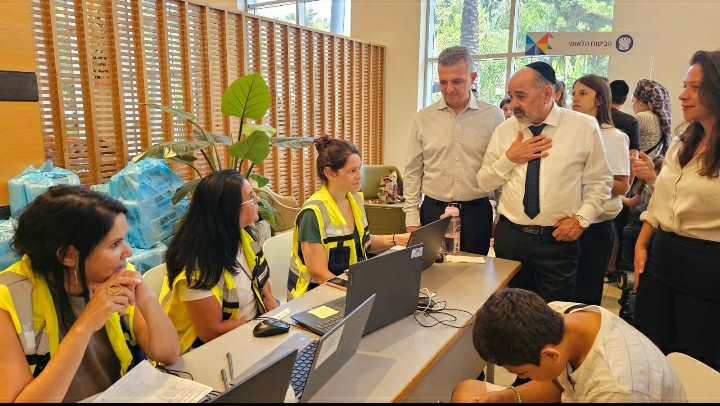
Having already accumulated its own valuable experience in the aftermath of the Hamas attack nearly 19 months ago, the Social Services Ministry wasted no time in enlisting the critical assistance of social workers. They carried out vital work in providing emotional assistance and material help, as well as guidance in navigating the relevant government authorities.
Israeli efforts to make sure no one is left behind were seemingly endless from the very start of the war with Iran. Various government measures, including financial compensation, to help citizens get quickly back on their feet now feature prominently as we move forward. Volunteer organizations and unions are among the non-governmental bodies also providing active support.
Alongside mutual assistance, the war with Iran also offered another opportunity to witness the cohesiveness of Israeli society. Nowhere was this more evident than in the Arab town of Tamra, where a missile from Iran killed four young women from one Muslim family. Condolences were issued from all walks of society; personal visits were made by the President, government ministers, rabbis, and others who emphasized Israel’s commitment to the safety of all its citizens.
I’m proud of my past work with the many Israeli officials who for decades kept the Iranian danger on the international agenda until the time came for Operation Rising Lion. I’m equally proud to serve today as a voice for our public-private social impact partnership, which ensured a resilient home front that contributed to victory over an Iranian leadership threatening the security of both Israel and the world at large.