


Honest Stones, Honest Hearts: A Teaching for Parashat Ki Tetze
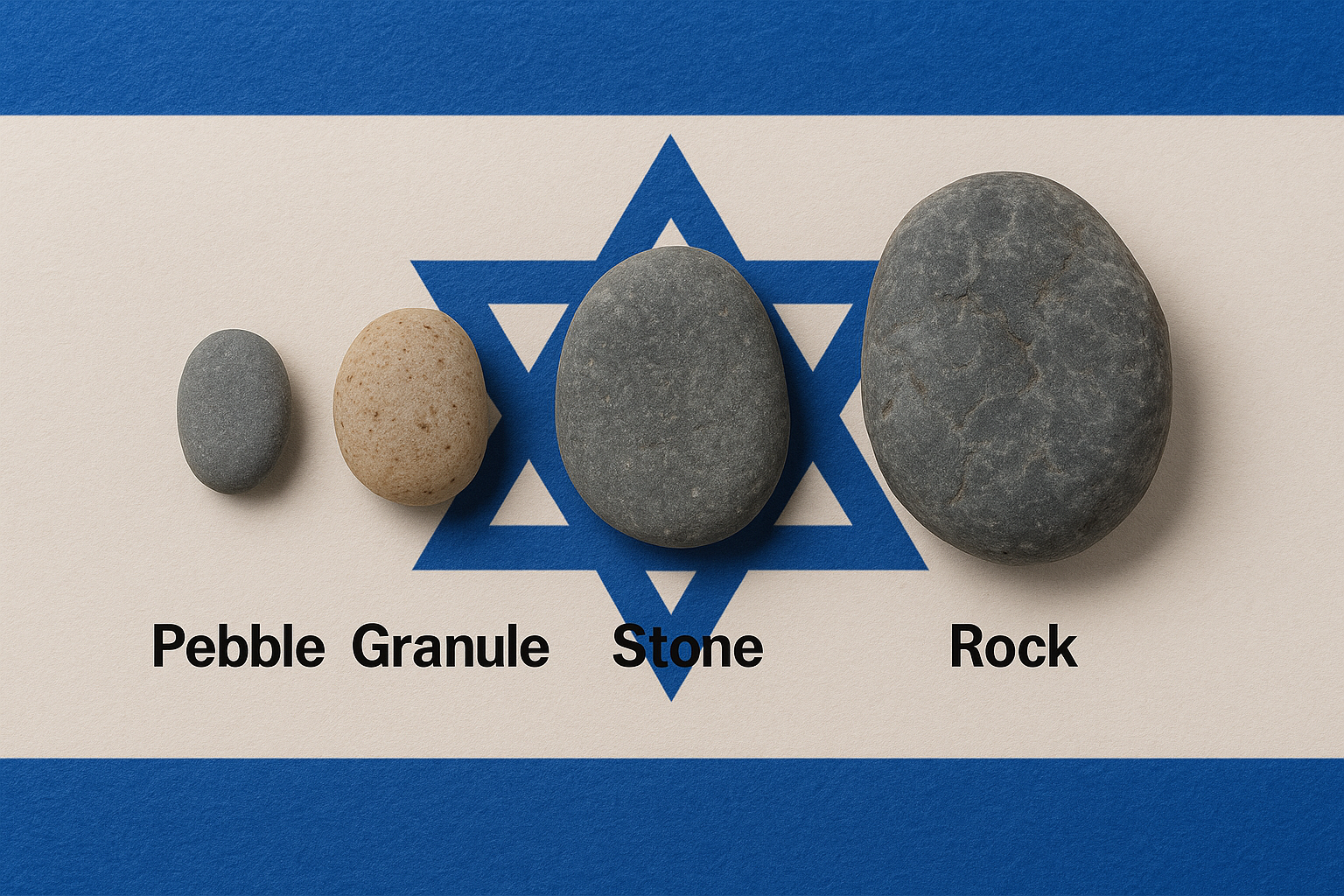
“You shall not have in your pouch alternate weights, larger and smaller. You shall not have in your house alternate measures, larger and smaller. You must have completely honest weights and completely honest measures, if you are to endure long on the soil that your God is giving you.” (Deuteronomy 25:13–15)
This week’s Torah portion, Ki Tetze, closes with what may seem like a small law about business ethics as we see above. At first glance, it’s consumer protection in the ancient marketplace. Don’t rig the scales. Don’t cheat your customers. Straightforward enough. But if it were only that, it would remain a niche law for merchants. Instead, the Torah insists this commandment is about survival itself—“that you may endure long on the soil.” Honest stones and measures are not just about economics. They are about the moral fabric of a people.
More Severe Than We Think
Rashi, drawing on the Sifrei, explains: “A great and a small—that one must not buy with the larger and sell with the smaller.” It’s about double standards: using one measure when it benefits you, another when it benefits someone else. The Talmud goes even further: “The punishment for dishonest weights and measures is worse than the punishment for illicit relations” (Bava Batra 88b). And even more the Mesilat Yesharim who calls cheaters “unjust, hated, abominable, condemned, and abhorrent.” Harsh words—but meant to awaken us to the corrosive power of duplicity. Why the extreme language? Because dishonesty in commerce is rarely private. It poisons trust, corrodes relationships, and breaks the glue that holds society together.
The Uneven Stones We Still Carry
Don Isaac Abrabanel sharpens the insight. He notes that the Torah forbids not only the use of corrupt weights but even their possession. Why? Because keeping false measures at home makes us complicit, even before a single transaction takes place. And so, while few of us today weigh out flour with stones and scales, we still carry “large and small measures” in our pockets.
- We weigh our own mistakes lightly, but drop boulders on the mistakes of others.
- We forgive easily those we like, but unleash harsh standards on those we resent.
- We magnify the faults of political rivals, while brushing off the failings of our allies.
- And as a Jewish people, we rightfully cry out that Israel is judged by the world with a double standard. But how often do we ourselves judge each other with uneven measures?
The Torah’s demand is stark: Even shlemá ve-tzedek yihyeh lach—“You must have a stone that is whole and just.” Not fractured. Not tilted. Whole. Balanced. Honest.
Elul and the Cleaning of Stones
The Midrash Sifrei adds a poignant image: merchants had to clean their stones regularly, because dust and debris would cling to them, making them heavier. This is our spiritual work in Elul, the month before the High Holidays. To clean our stones. To scrape off the resentments, prejudices, and habits that quietly tilt our judgments. To arrive at Rosh Hashanah with one true, balanced measure—between law and love, justice and compassion.
It is no coincidence that these verses come to us now, in the season of soul-accounting. The Torah is asking: what false measures do we still carry? Which ones do we need to throw away? Which ones need polishing before we can stand honestly before God?
A Message for Our Times
If ever there was a season in Jewish history when we felt the sting of uneven measures, it is now. Israel is scrutinized with a severity that no other nation endures. We feel the weight of hostile courts, skewed headlines, and hypocritical moralizing. And yet, the Torah doesn’t let us off the hook. The question turns back inward: do we apply double standards within our own communities?
- Do we measure religious and secular Jews by different stones?
- Do we judge with different rocks orthodox, conservative or reform Jews?
- Do we judge Jews in the Diaspora differently than Jews in Israel?
- Do we allow our political loyalties to excuse behavior in one camp that we would never forgive in another?
Uneven measures in the public sphere are just as dangerous as rigged scales in the marketplace. They corrode trust and unravel the bonds between us. If we want to demand fairness from the world, we must start by practicing fairness with one another.
The Measure We Receive
The Talmud teaches: “In the measure with which a person measures, so they are measured” (Shabbat 127b). If we want God to judge us with mercy in these Days of Awe, we must extend that mercy to others. If we want the world to treat Israel with fairness, we must model fairness in our own discourse. If we want to be taken seriously as a people of integrity, then honesty must be the stone we carry in our pockets—and in our hearts.
Honest Stones, Honest Hearts
So as we enter Rosh Hashanah and Yom Kippur, let us not come with double standards rattling in our bags. Let us carry one stone only: A stone polished by truth. A stone balanced with mercy. A stone that, when placed on God’s scales, shows that we tried to live with fairness, humility, and compassion. For it is written: “A perfect and just stone you shall have” (Deut. 25:15). And may it be that when God weighs us this year, we too will be found whole and just.