
Journalist & Author of Ghosts of a Holy War: The 1929 Massacre in Palestine that Ignited the Arab-Israeli Conflict
Hope from Hebron, or Another Mirage?
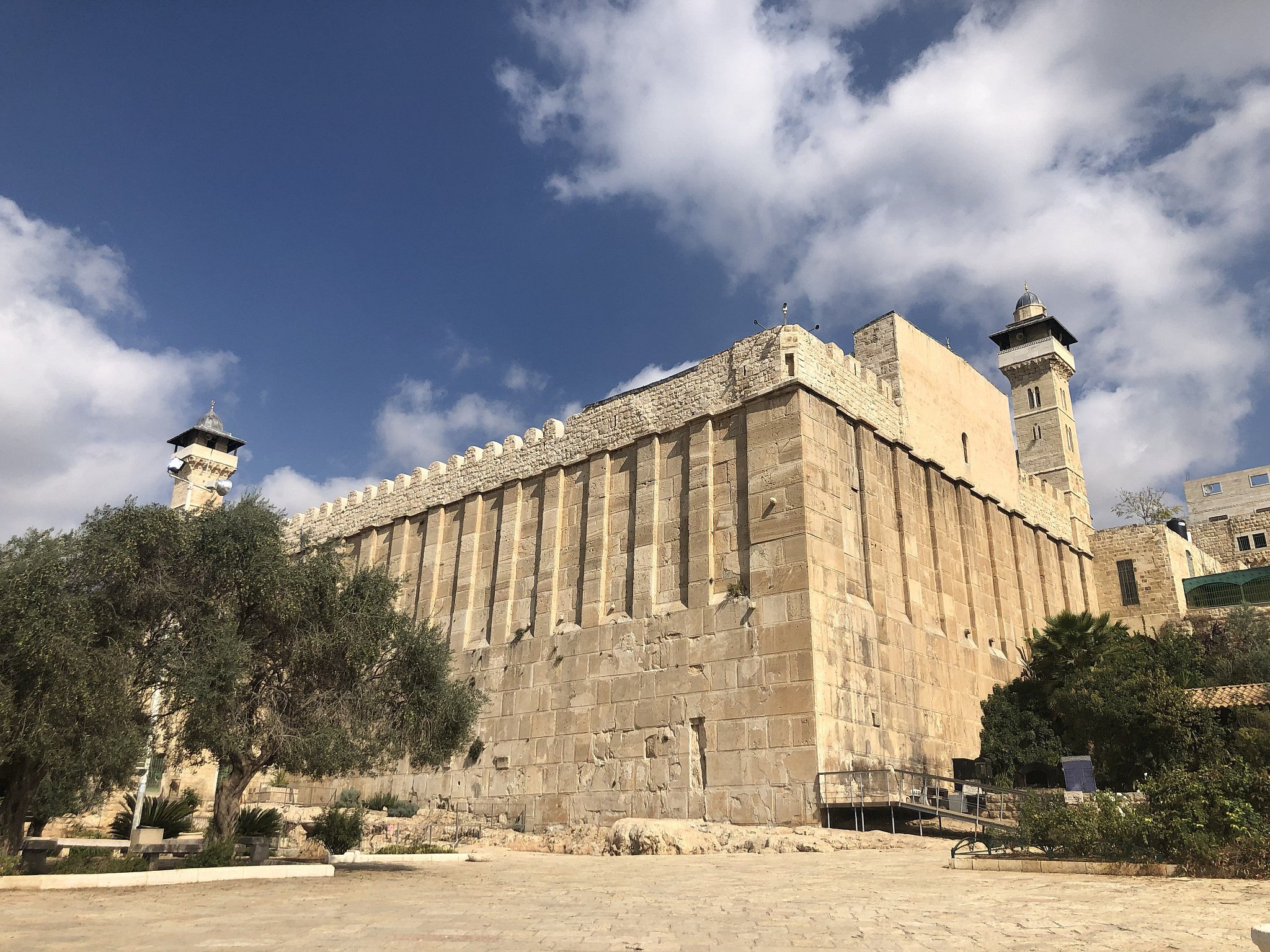
The Tomb of the Patriarchs and Matriarchs in Hebron. Photo by Yardena Schwartz
Ever since October 7, 2023, the idea of peace between Israelis and Palestinians has felt like a fantasy. Which is why even the faintest sign of progress can seem like a lifeline. So when news broke this weekend of a potentially groundbreaking peace initiative from Hebron, the largest Palestinian city in the West Bank, it was hard not to hope.
But this plan is not what it seems.
In a letter first reported by The Wall Street Journal as “A New Palestinian Offer for Peace With Israel,” five sheikhs claiming to represent Hebron pledged support for peace and recognized Israel as a Jewish state. They proposed breaking away from the Palestinian Authority and joining the Abraham Accords as an independent entity called the “Emirate of Hebron.”
Yet there is no Emirate of Hebron. And the men behind this proposal are not recognized leaders of the city, one of the most volatile flashpoints in this conflict. While clan loyalties are strong in Hebron’s highly traditional society, the sheikhs who signed the letter are largely unknown among residents. Sheikh Wadee’ al-Jaabari, the public face of the initiative, claims to represent Hebron’s largest and most powerful clan, the Jabaris. Yet family leaders quickly disavowed him, saying he is neither their leader nor a resident of Hebron. In my years of reporting in Hebron for my book, Ghosts of a Holy War, I never heard of any of these sheikhs.
Their letter, addressed to Israel’s Economic Minister Nir Barkat, appears to be a project of Minister Barkat, who has reportedly been advancing this concept, the brainchild of Israeli scholar Mordechai Kedar, for years. It fits into a long-standing strategy by Prime Minister Benjamin Netanyahu to fragment the Palestinian national movement—empowering Hamas in Gaza while weakening the Palestinian Authority in the West Bank. We have all seen the catastrophic consequences of that strategy, whose goal is to prevent Palestinian unity from achieving statehood.
This initiative is a continuation of that approach. And it comes at a dangerous cost. Both the IDF and the Shin Bet reportedly oppose this initiative, favoring continued coordination with the Palestinian Authority, whose security forces have long helped thwart terror attacks and arrest terror operatives. This plan risks further destabilizing an already explosive region, potentially opening yet another front for overtaxed Israeli soldiers to confront.
Though it addresses one central issue — embracing peace with the Jewish state — it ignores the other core factor of any peace plan: Palestinian freedom. Even if implemented, Hebron’s 350,000 Palestinian residents would remain stateless, living under Israeli military control. The status quo—where Jewish residents of the West Bank live under civil law while Palestinians live under military law—would persist.
Proponents of the plan foresee Hebron being the first among several Palestinian cities in the West Bank that would break away from the PA to establish emirates, likening the concept to the United Arab Emirates. A simple look at a map illustrates how absurd that comparison is. The UAE is a contiguous, fully connected group of emirates with a population of 10 million people. The Palestinian emirates would neither be contiguous, nor part of an independent country like the UAE. These emirates would be more like Palestinians islands in a sea controlled by Israel.
What this unworkable peace plan gets right is the urgent need for a new generation of Palestinian leadership—one that focuses on peace rather than political survival. One intent on building a state rather than destroying another.
Palestinian leaders have rejected every two-state solution over the last century, from the 1937 British Peel Proposal to the 1947 UN Partition Plan, and the 2000 Camp David Summit. Each rejection deepened Palestinian suffering and hardened Israeli skepticism. The Palestinian Authority is still led by 89-year-old Mahmoud Abbas, who turned down Israel’s last major statehood offer in 2008, and has yet to hold an election since. Meanwhile, Netanyahu’s own rejection of a two-state solution has fueled further despair.
If Israeli leaders are serious about peace, they should not be working with fringe figures who lack popular support. Instead, they should engage with emerging Palestinian leaders who believe in coexistence and oppose violence. These leaders do exist and they have more support and credibility than these unknown sheikhs in Hebron.
If the Palestinian Authority has proven itself to be a reliable security partner in the West Bank, Israel should agree to the many calls from within and without to support the rehabilitation of the PA so it can become a more effective system of government that is credible in the eyes of Palestinians, who deeply distrust it due to years of corruption and nepotism. If Israel’s leaders are truly interested in uprooting Hamas, a viable alternative needs to be strengthened. A reformed Palestinian Authority is the only existing alternative. Reforms would not only address corruption and good governance, but also the PA’s controversial “pay to slay” program and the highly problematic Palestinian education system, which is in need of a complete de-radicalization process.
This latest plan may not be real. But the hope it briefly stirred is. That hope should not be squandered on hollow proposals. It should be channeled into building the foundations for a lasting peace—grounded in justice and mutual recognition.
It is telling that this initiative came from Hebron, which has long been a microcosm of the Israeli-Palestinian conflict. In 1929, a massacre of Jews by their Arab neighbors marked a bloody turning point, setting the stage for the conflict as we know it today. In 1994, a massacre of Muslims by a Jewish extremist at the Tomb of the Patriarchs reinforced resentments and divisions. Today, Hebron remains a place where dueling narratives collide, and where the daily realities of military occupation on one side and incitement on the other are most visible.
Yet for centuries before the massacre of 1929, Hebron was a symbol of coexistence—a holy city where Jews and Muslims had lived side by side in relative harmony. That history need not remain buried. With courageous and credible leadership on both sides, Hebron could again offer a model—not of separation or domination, but of partnership.
Related Topics
Related Posts