

Hope in Defiance: Women Leading change in the Middle East
Alongside Trump’s 20-point peace plan, the Women Champions for Change (WCC) summit held in September offered a shift from gridlock to imagination, hope and faith.
Rabbi Jonathan Sacks defined the difference between Optimism, Hope and Faith.
Optimism is the belief that things will get better. Hope is the belief that if we work hard enough together, we can make things better. Faith is the belief that whatever happens, life has meaning and God is with us.
Faith sustains hope even in the darkest times. Where optimism can fail when facts disappoint, and hope can falter when human strength seems insufficient, faith anchors both in the trust that we are not alone.
These words echoed through the WCC Summit 2025—but more powerfully, they were embodied by the women who chose to show up.
In mid-September, as tensions rose across the region, women originally from Iran, Lebanon, Syria, Afghanistan, the Emirates, Tunisia, Morocco, Saudi Arabia, India and Japan boarded flights to Tel Aviv—many in defiance of family fears, public pressure, and personal risk. They didn’t come for recognition or publicity.
They came with purpose.
They crossed borders—geographic, cultural, emotional—to stand together in a moment that was anything but certain. And their courage didn’t just light up the room.
It sparked momentum.
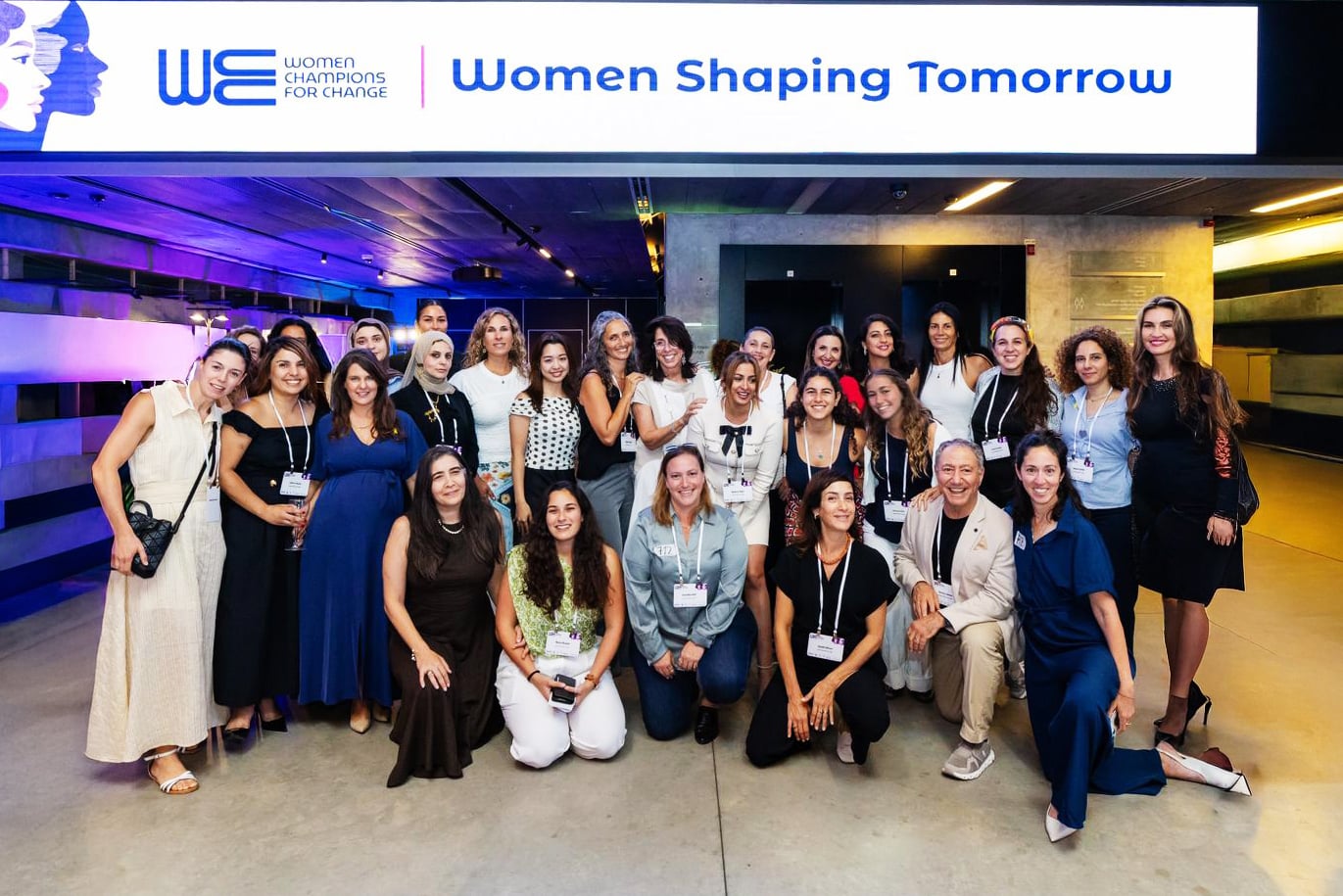
From September 16–18, 2025, thirty extraordinary women gathered in Tel Aviv ( and 20 online) for the inaugural Woman Champions for Change summit– timed five years after the signing of the Abraham Accords and just before the Days of Awe in the Jewish calendar.
These women came not as politicians or celebrities, but as athletes, artists, educators, social innovators, journalists, and activists. Many were attending as individuals, yet collectively, they represented more than 20 women-led organizations from across the Middle East and North Africa (MENA) region and beyond.
Among them were Israeli and Palestinian women from Bedouin, Druze, Ethiopian, Christian, Muslim, and Jewish communities, each bringing their own lived experience and fierce desire for change.
We didn’t come to admire peace from a distance. We came to explore what it might take to build it together.
Nazanin Afshin-Jam Mackay, an Iranian-born human rights activist, shared how this space offered something she hadn’t seen in traditional diplomacy:
“The conflicts tearing through the Middle East today are overwhelmingly driven and negotiated by men. Since October 7, not a single woman has been at the negotiating table in efforts to end the war. I didn’t want to be a passive observer anymore.
She knew the risks of coming to Israel—and came anyway.
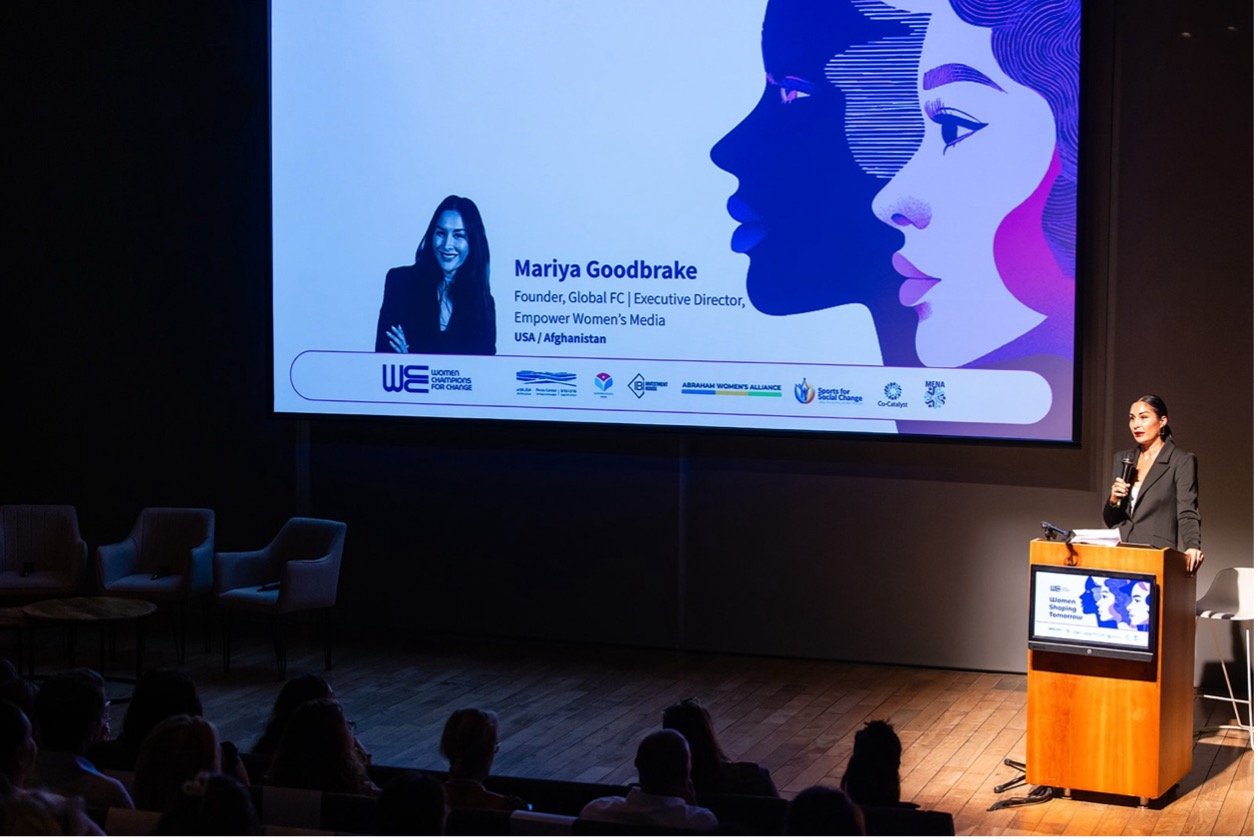
Mariya Goodbrake, an Afghan-born refugee speaker who emceed the closing event, was equally honest:
I got a lot of backlash, anger and resistance from my own Afghan community and friends over the fact that I dared to come to Israel.
Yet she came—with open eyes and a heart ready to hold contradiction.
That’s what this summit was about.
It was about honest human encounter—and showing up anyway.
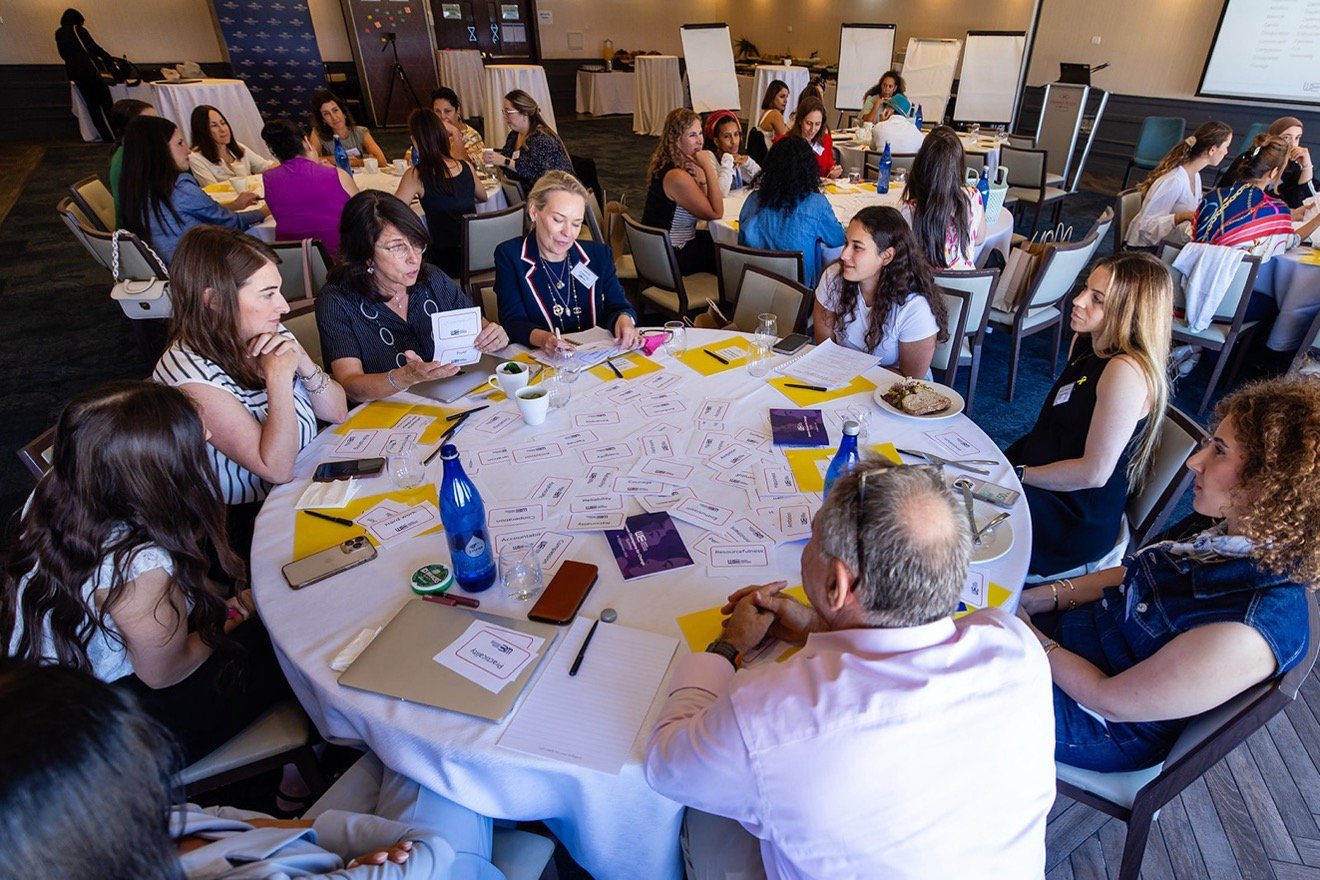
The summit moved through stories, shared meals, tears, laughter, and courageous conversations. We held deep-dive workshops, storytelling circles, a walk through Jerusalem’s Old City, and encounters with ambassadors and Chemi Peres, son of Shimon Peres.
One of the highlights of the summit was meeting Michal Herzog, Israel’s First Lady. Though her role is non-political, she showed deep interest in the delegates’ efforts to build civil society and lead grassroots change across the region.
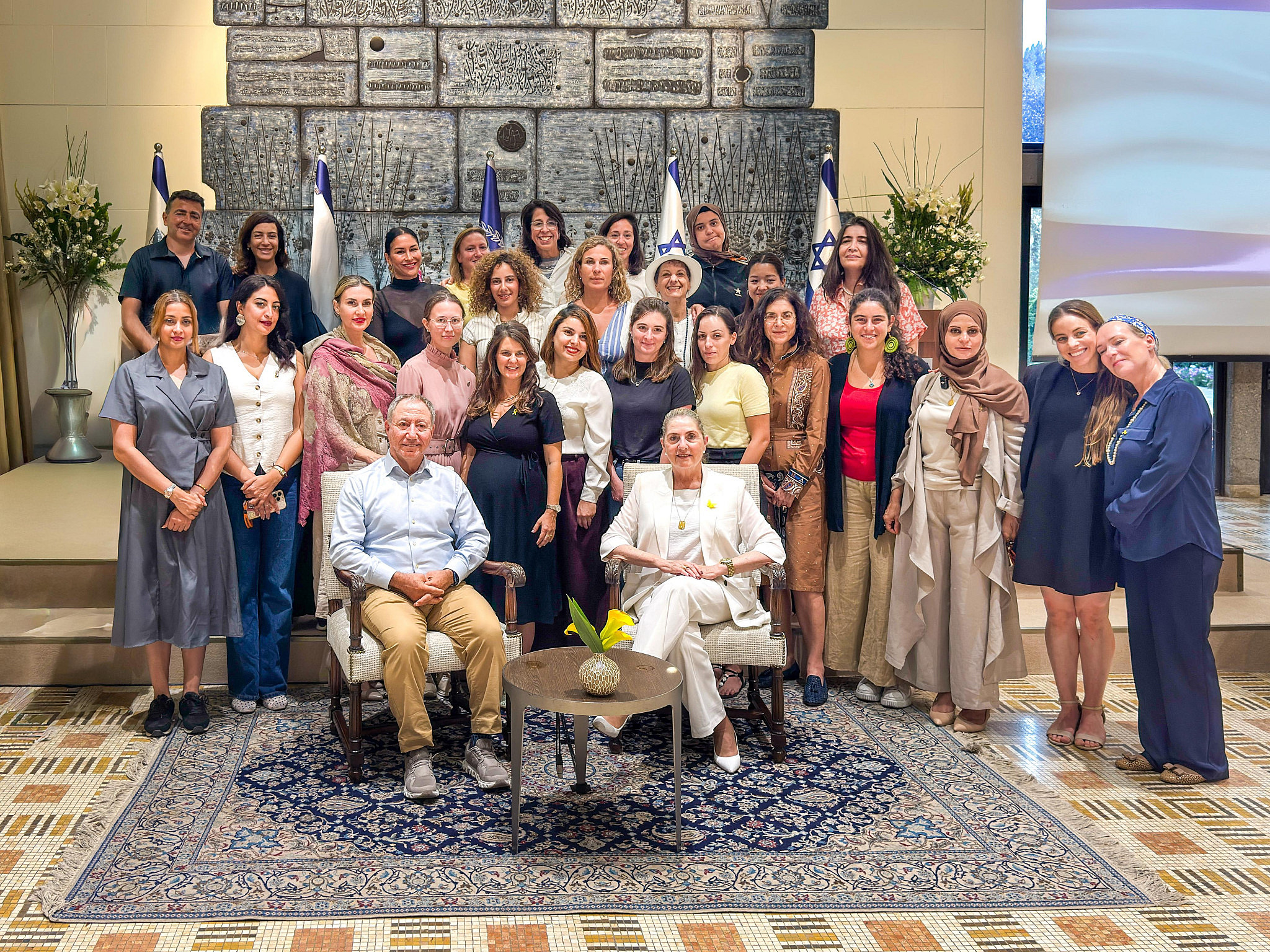
But the magic was between the formalities—where women opened up about trauma, resilience, and the weight of leadership.
As the founder of WCC, I addressed the 200+ women attending the closing event “Women Shaping Tomorrow,” held at the Peres Center for Peace and Innovation. I shared a Japanese parable that has guided me for years.
Why does the Buddha of Opportunity wear his ponytail on the front of his head?
Because when an opportunity comes towards you, you can grab it. But once it passes, there’s nothing to hold on to.
This is exactly how Trump’s 20-point Gaza peace plan can be seen.
The plan, bold and contentious, may never unfold as written. But it signaled something rare in this region: a shift from gridlock to imagination. A blueprint that, whether fully accepted or not, challenged us to envision a new architecture for peace grounded in shared interests, economic investment, and regional cooperation.
This summit was our answer to that call. Not through weapons or declarations, but through soft power—through presence, dialogue, and trust-building. While world leaders debated maps and mandates, fifty women crossed invisible lines of fear, history, and identity to stand together.
We didn’t wait for permission. We showed up. We seized the ponytail of opportunity before it passed.
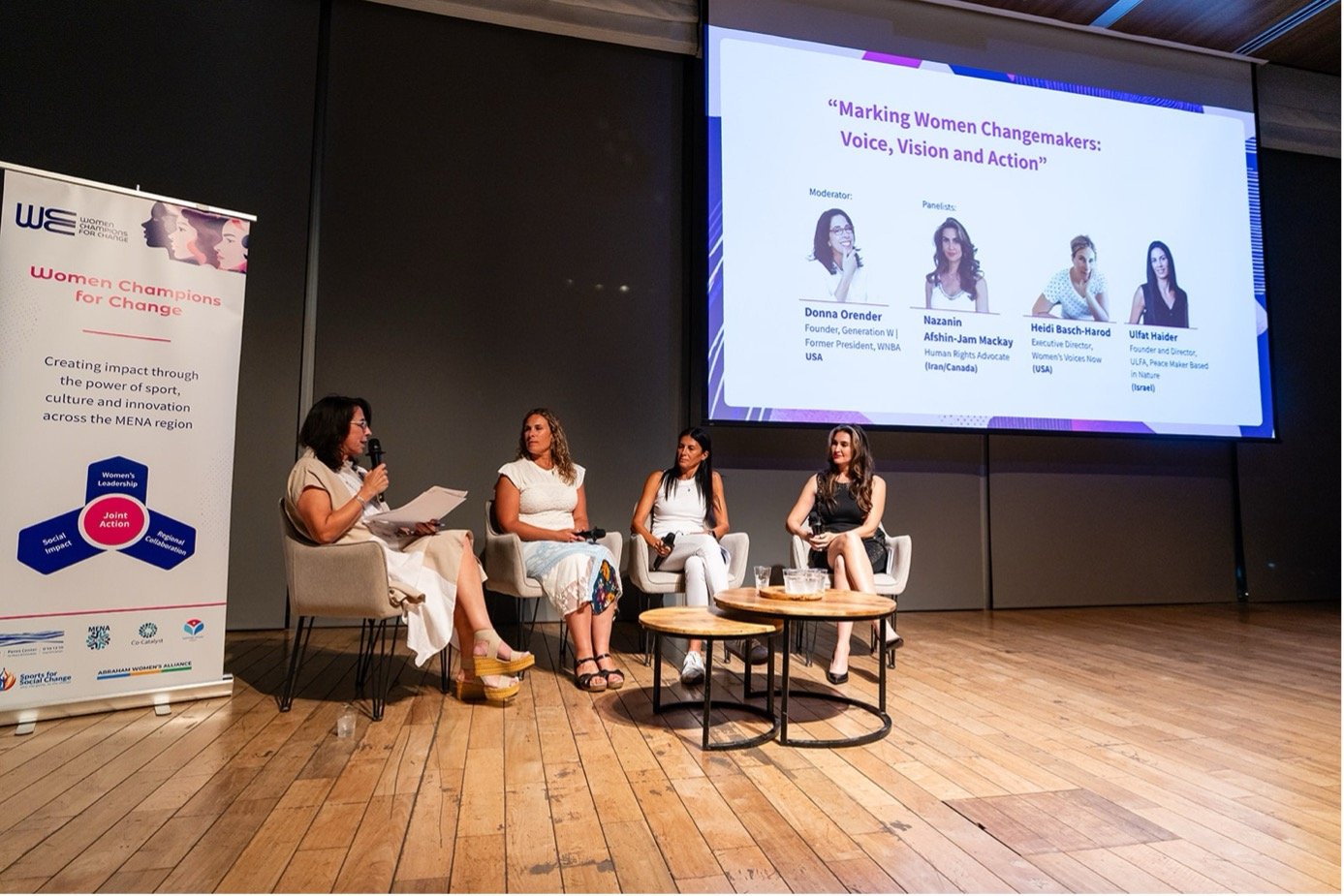
Among our guests were ambassadors from Canada, Sweden, Norway, and Japan and diplomats from the US, UK and Australia. They came not simply to observe, but to listen and witness the courage of women crossing borders to build something new. Philanthropists and impact investors also attended, moved by the stories they heard and ready to invest in new opportunities these women are creating and leading.
We anchored our discussions in four themes:
Sport & Wellbeing – Building trust, promoting health and teamwork
Culture & Interfaith Understanding – Bridging traditions
Media & Storytelling – Rewriting narratives
Innovation & Connection – Scaling grassroots impact
Each woman brought something different. An Ethiopian delegate shared a model for trauma recovery through organic gardening. An Israeli delegate spoke about coaching Muslim and Jewish girls on the same football team. The Iranian delegate created a podcast platform for Middle Eastern women’s voices. The Lebanese delegate had launched safe spaces for storytelling in conflict zones.
These weren’t speeches. They were seeds. And you could feel them beginning to grow.
We didn’t solve the region’s problems. But we created a space where possibility could breathe—where soft power showed up not as theory, but as action.
In a region long shaped by the hard power of tanks and warplanes, it is time for women, civil society, diplomats and ethical businesses to step in together and build a peaceful, productive, and self-sustaining future for Gaza and the middle east region.
We left not with slogans—but with a shared promise to keep going:
- Launching cross-border pilot projects in health, education, and sport
- Creating a regional mentorship network for emerging women leaders
- Hosting rotating WCC summits across the Middle East and North Africa
This is not an institution. It is a movement.
A spark carried by women who dare to lead—even in uncertainty.
To the women who showed up with courage, humility, and fierce love—thank you.
To our partners—Abraham Women’s Alliance, MENA 2050, The Peres Center for Peace and Innovation, and others—your belief made this possible.
This wasn’t just a conference. It was the beginning of something no border, fear or cynicism can stop.
As Yom Kippur calls us to reflect and renew, Sukkot invites us to rebuild — to dwell in a fragile shelter open to the wind and the stars. It reminds us of life’s uncertainty, especially as we mark the second memorial of October 7. This year, we feel that fragility in every breath. And yet, from that brokenness, new bonds are forming — communities choosing compassion over fear and hope over despair.
Even in fragility, there is faith: light enters through open walls.
The sukkah, with all its vulnerability, is also a place of welcome. It calls on us to open our hearts and homes — to invite others in, including those from different backgrounds and beliefs — and to share one canopy of peace.
This is the spirit of Women Champions for Change — a shared sukkah of humanity, open to all who believe that peace begins when we truly sit together.
If you are interested in joining or knowing more about the Women Champions for Change network, go to https://wcc-global.org