
Writer, Host, & Podcast Host to Thousands of Israelis in Japan
Hosting Guy: One Year of Remembrance and Freedom
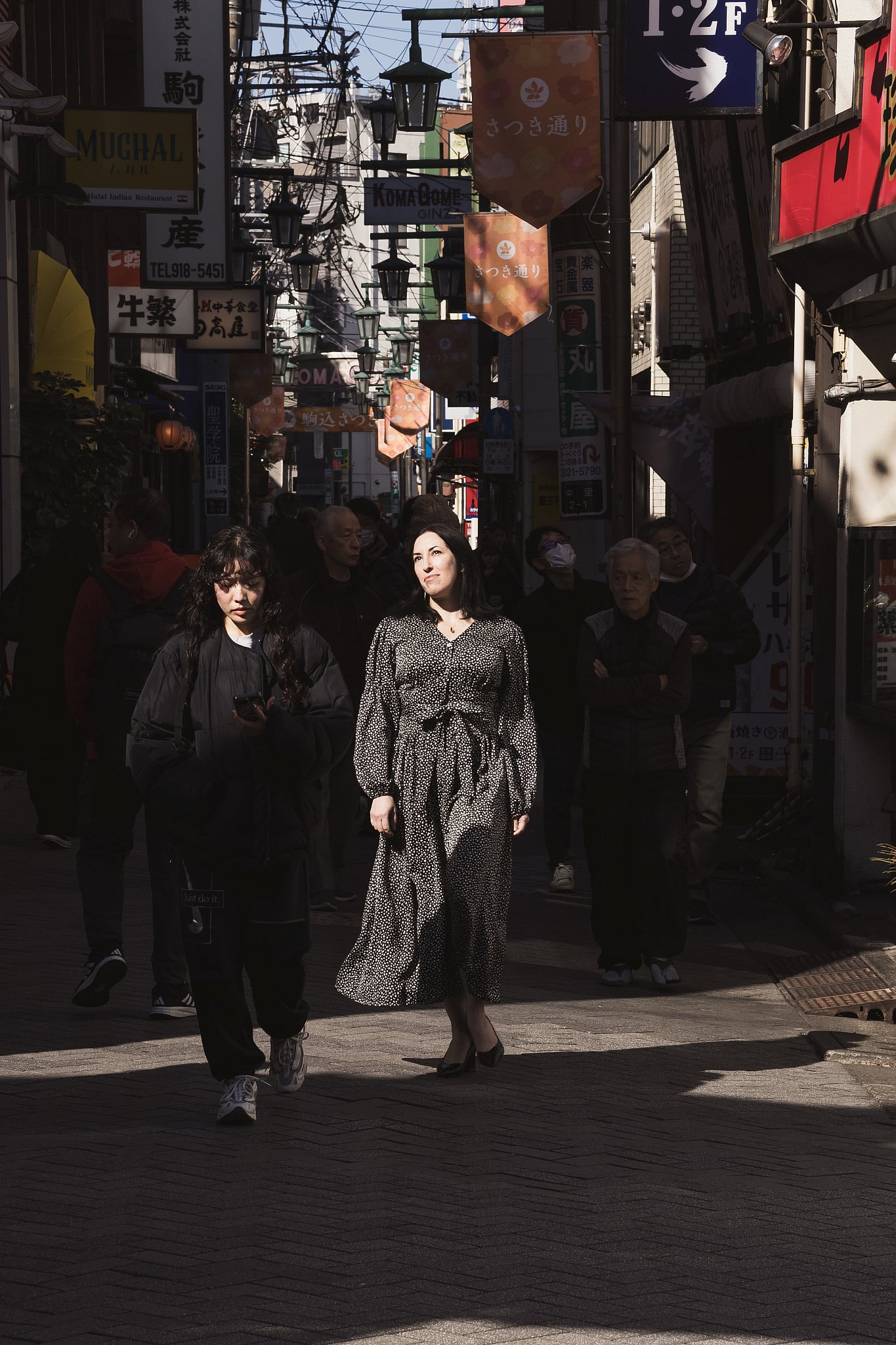
Photo of the author in her Tokyo neighborhood taken by visiting Israeli photographer, Yam Bloom, https://www.yambloom.com/.
It’s Tuesday morning. And there is a guest sleeping upstairs. A guest you should know, too.
His name is Guy. It’s a common Israeli name–in fact, I show 24 Guys in my WhatsApp contacts.
But it’s been precisely one year since our Guy was freed. One year of sunshine and family after 738 days of torture. One year of speaking and getting stronger.
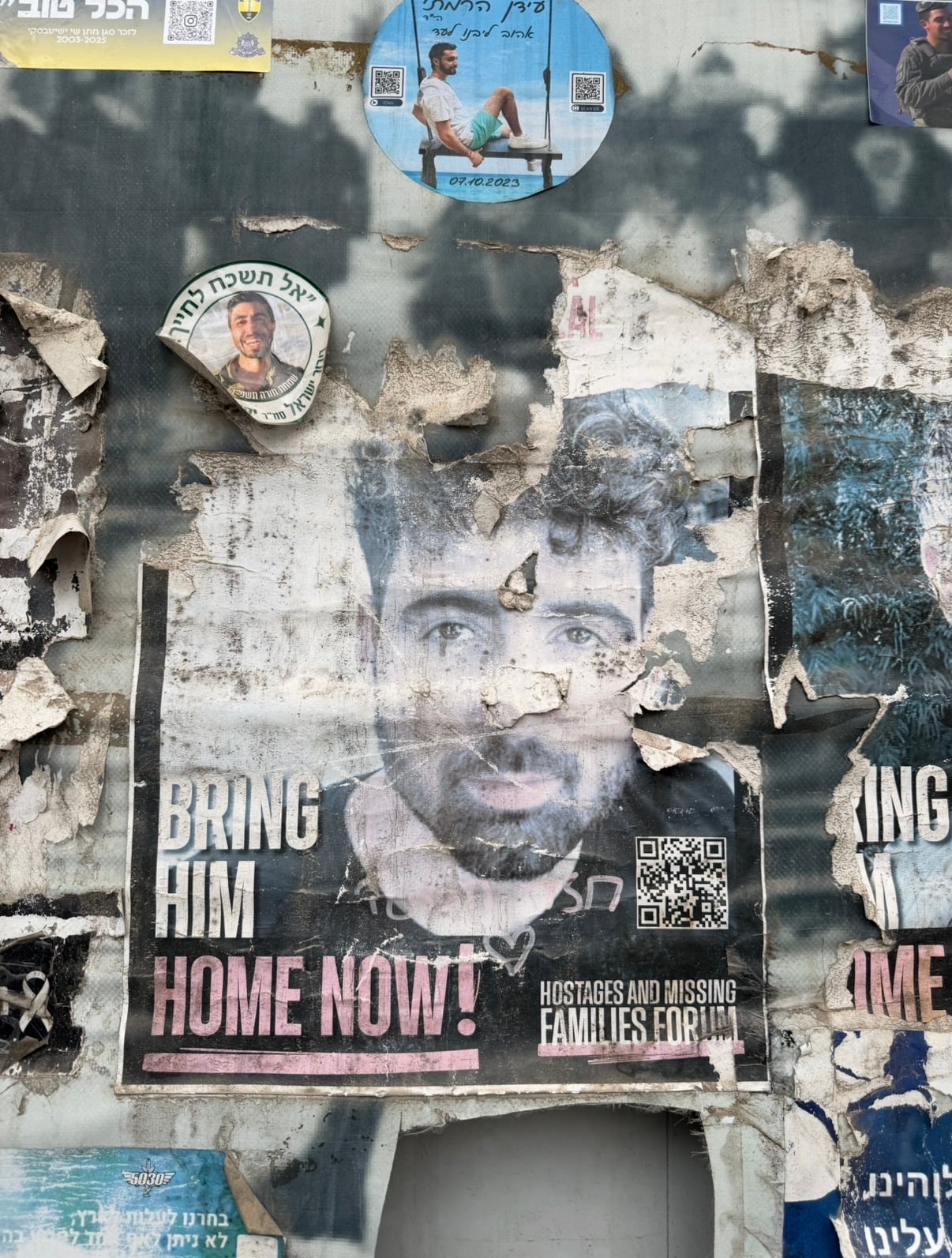
Abducted October 7, 2023, and released October 13, 2025. And here now, in our home of all places, in Tokyo. Guy Gilboa-Dalal is here, sharing his voice of what he experienced, even as he finds himself giddy at times to be in Japan.
How incredible to be able to hug Guy and his siblings, Gaya and Gal, every time we see them, outside our door, when we meet at the station, or at the start of our Friday night, Shishi/Shabbat dinner. To hear him laugh about the capybaras in Harajuku or see him looking around, taking it in.
What a wondrous thing to actually get to eat and laugh with someone you prayed daily for. Someone your heart ached for. Not that I thought I would actually have friendship with.
Just this past Friday, we make the chocolate balls/kadorei shokolad, that Gaya made all the time for her big brother, Guy, from the age of 13 and throughout his captivity. They were the sweets the world, perhaps, or at least the Jewish world, and those tuned into Guy and his family’s story, also longed to make for Guy. They were brought with Gaya onto the helicopter that brought Guy into freedom. We could see them in their plastic container there on the news. These kadorei shokolad are embedded in the podcast episode I created with Guy’s father and brother when they visited Japan and swore they’d return one day soon with Guy. We made platters of them then, and we did so now to celebrate.

I eye the last two kadorei shokolad as I type this–the surviving two from our huge batch using four or five sleeves of the necessary biscuits, Petit Beurre, and lots of melted butter and chocolate, to celebrate Guy and his family here in Japan, and their joy and freedom, overall. Free people get to eat when and what they want. Free people get to speak about their experiences or not, and at the times they feel most comfortable. And Guy knows the power of his voice.
“Even though it is so important, even though it is hard for me and overwhelming”, he says in a voice message, “it’s important that I will speak. I know it has a big meaning, and I hope, also, that it will have a big impact,” he says.
Guy was one of the first to voice the abuse he endured in Gaza, particularly the sexual abuse. Tal Shoham, one of the hostages freed in an earlier hostage deal (at 500-something days), shared some of the specifics of Guy and Evyatar’s abuse.
Not only were they bound hands and feet with a sack over their heads for the first two weeks, he said later that for one whole week, Guy never spoke.
How does my friend, my guest upstairs, reconcile the brutality he endured and speak about it now?
Those who followed Guy’s story also know his connection with Japan. How he even wore an orange kimono to the Nova festival. I’d even say that his connection with Japan is supernatural, considering how that relationship helped him overcome 2 years, one week, and a day of deprivation in Gaza.
My husband and I sat in the room when he shared with a journalist how he would create a long-running anime in his mind and share it with his childhood friend, Evyatar, when they would sit with their half-pita for the day. And how, with the camera always on them in their narrow place in hell, their Hamas captors would watch that they follow every rule given. That Guy would not speak about his specific abuse.
Guy shared in this meeting that the camera would transform for him. Instead of fear, that camera would turn on for him and ignite a sense of magnitude that this was for him to show his family and future children what it looks like to overcome.
This is something spectacular, especially considering what Tal Shoham later reported: an explosive device pointed at them, positioned just next to the camera, threatening to explode and destroy everything in the dark tunnel if certain rules were broken or if the IDF intervened. Oh, my dear friend.
Over their scrap of food, there in front of the camera, Guy would share the next episode of his long-running anime with Evyatar, their world briefly transformed.
You know Evyatar. Maybe only from the hollowed-out man flickering in the Hamas video they shared. Maybe you knew him before October 7, 2023, before the Nova festival they attended with their two other best friends and Guy’s big brother.
Evyatar was not born to dig his own grave. He, like Guy, is a young man of substance and grace. Humor and love. Yet he appeared frighteningly gaunt, a man on borrowed moments.
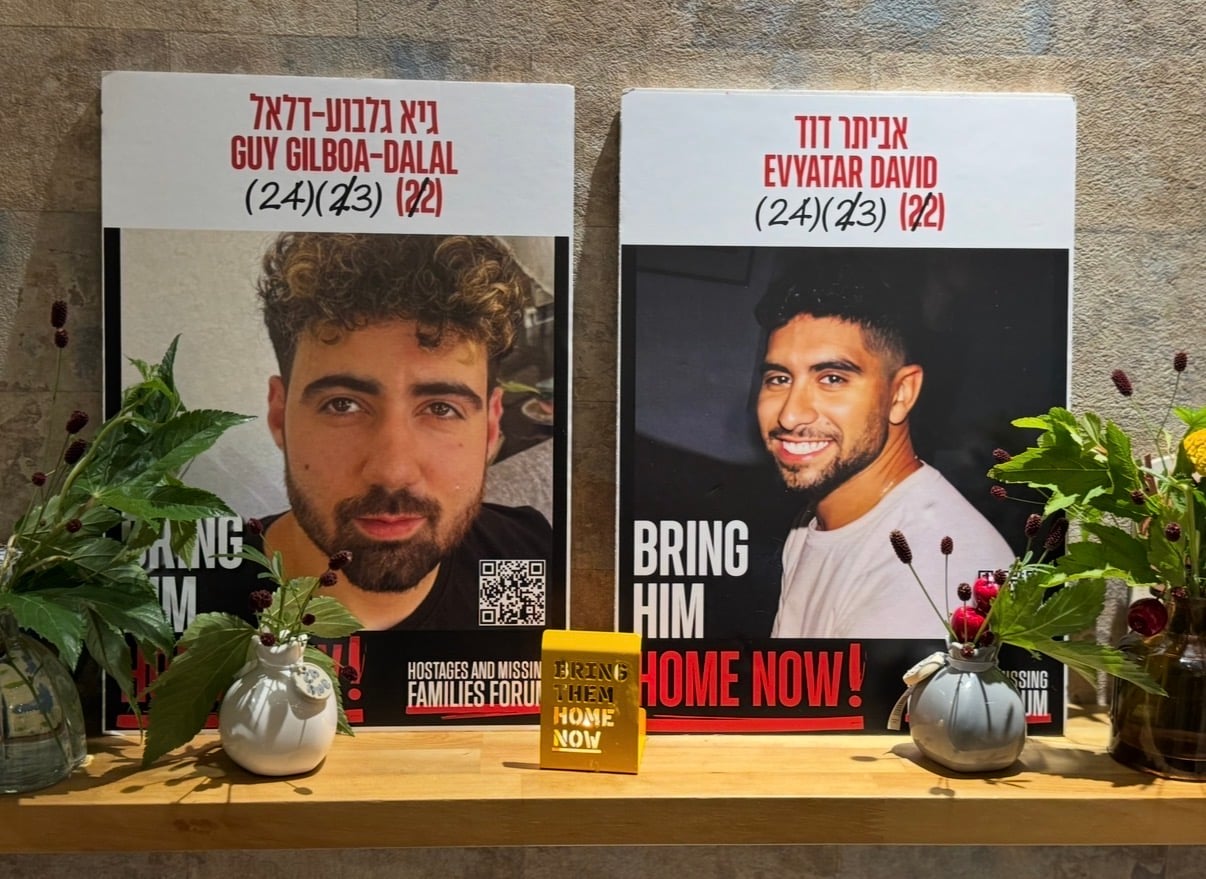
We learned later how Hamas had separated these friends, moving Guy. How we longed to see both Guy and Evyatar emerge from their torture and begin to heal.
One year ago, today, October 13, at Rabin Medical Center in Petach Tikvah, Israel, they did. Video footage shows them grabbing onto each other with such love. Two brothers-two friends alive and together again.
Guy shared with the reporter some stats about their weight and the conditions centered around food. It was perhaps easy for the journalist to hone in on this—Our human condition is very much in rhythm with hunger, eating, fulfillment, and desire. We use what we take in. We laugh around tables. We spend our lives like this, wondering what it is that we are craving, and then we go from there.
Guy shared with the reporter some statistics about their weight and the conditions surrounding food. It was perhaps easy for the journalist to hone in on this. Our human condition is very much in rhythm with hunger, eating, fulfillment, and desire. We use what we take in. We laugh around tables. We spend our lives wondering what we are craving, and then we go from there.
But some things, like weight, are calculable, and therefore, help others see or imagine a bit of what was lost. The Japanese journalist sat with wide eyes, trying to get the numbers right.
“I’d like to confirm your body weight again–so before the abduction, you had seventy-three kilograms, right?”
“Exactly.”
“And soon after the release, it was fifty-three, right?”
Guy nods. “Yeah. Fifty-three.”
“And two weeks after the release, sixty-nine.” He scrawls notes while the recorder runs.
“Sixty-nine kilograms. No, sixty-eight,” Guy says.
“Okay, perfect.” What did you eat so much at that time? So what are your favorite two dishes or menu?”
“Well, my favorite, uh, dishes are Israeli dishes. It’s, uh, shawarma.”
“Shawarma?”
Guy is describing now a classic Israeli dish, just a few moments after telling such shocking numbers.
“Yeah, you know shawarma?”
“No.”
My husband and the embassy Spokesperson begin to explain before Guy interjects, “And they put a lot of, uh, like sauces, hot sauce, like, uh, you know, things and, uh, vegetables, salad. It’s very tasty. But this is my favorite by far…but what did you mean? What do I eat? Like, what do I eat usually, or what do I eat when they…”
The reporter clarifies: “When you got back”.
“Oh, in the hospital?”
“In hospital, yes.”
Guy tells him about the dining room.
“They would give breakfast and, and lunch and dinner there. And they always, like, gave us, you know, uh, normal food, but it was very good. It was, uh, could be noodles or, uh, rice and chicken and ham-hamburgers, burgers, and meat, a lot of meat, soups, everything. They gave us everything. But there are also a lot of friends that came to visit me, and they gave me food from outside, like shawarma or, like, you know, pizza and, and, and I would eat a lot, a lot, a lot of sweets. A lot of sweets because I didn’t have sweets for two years, so now I ate tons of chocolate and cakes and everything that they gave me. There were a lot of people that donated–like, they gave a lot of packages with sweets to the hostages who returned, so they gave it to us in the hospital.”
It was two weeks in the hospital before Guy went home.
Prior to Oct 7 and their capture, Guy weighed 73 kilograms.
Evyatar, appearing skeletal in the propaganda video, weighed 40 to 45 kilograms (around 88 to 99 pounds) at his worst, according to the medical report released by the Health Division of the Hostages and Missing Families Forum. Prior to captivity, Evyatar weighed 76 kg (167 lbs). This is a loss of nearly half his body weight.
At Guy’s lowest inside of that insidious place, doctors figure that he weighed a mere 42 kilos. Three weeks before release Hamas heavily fed his fragile body, giving him 10 kilos to mitigate any human rights outrage at the obvious sight of starved, emaciated bodies.
Guy told us how those few weeks prior to his release, they fed the two of them so much.
It reminds me of geese–the ones who cannot hold it, who cannot do well. Their bodies shoved underground while only their heads are above the ground. It doesn’t make sense to me, still, that I grapple with horrible metaphors when all of this really happened to him.
Just two weeks after release, Guy weighed 68 kilograms. It was impossible, he tells us, to make his brain not eat. Suddenly he had options. And he would vomit in the night.
“I felt terrible. And they always told me, “You need to reduce the amount of the food that you are eating because it’s too much.” But you can’t do it. Your brain won’t let you. After two years that you didn’t see food, and you had no certainty of what you are about to eat, then you go back to life, and you have so, so many options to eat. You can do what you want. You can’t tell your brain, “No, don’t eat.”
One cannot simply begin eating normally as they did or as any person expects. After such harrowing intentional starvation and quick, harmful weight gain before release, per Hamas’ propaganda and manipulation of the media, it takes time and expert help.
And here Guy is in Japan, the place of Instagram feeds that don’t quit and influencers that showcase the fluffy pancakes, Wagyu, gold-foil bedecked soft cream cones, fluffy egg sando, and on and on.
Since seeing the first captive released, I’ve wanted to find the person who helps these former hostages begin to eat again. It’s very much on my mind as I hear stories of survivors we host. I heard it starts with an iota of gentle food to do it right. One of our guests/friends knows this kind of schedule well from her friends that survived their captivity, too. She told me that the medical professionals start with the smallest bits of nutrition; I picture droplets of chicken stock; this is how degrading forced, long-term starvation is on the body. I read how a normal, full meal given too quickly poses great harm to malnourished bodies.
I picture Guy and the other 167 living hostages in their transition from captivity to life. From abuse and food scraps like half an orange or pita for a day or days with no water, clean or dirty, to the arms of family, to the hospital dining room and plastic trays holding broth and tasteless mush at first. And the realities of what happened or who else was hurt or stolen. The tension between gentle refeeding time and their whole selves hungering for shawarma, cakes, and bowls of their mother’s best meals.
I have yet to meet and interview one of these professionals assigned to helping former hostages begin eating and gaining healthy weight in the right increments. But I realize, suddenly, that I am one of the people getting to serve Guy. It happens when Guy pronounces the b’racha/blessing over the challah at our big Friday night/Shishi dinner with a room full of Israelis here in Tokyo. Then he rips the braided loaf apart and passes it out to our table.
“Melissa! You made this?”
They tell me it could rival any bakery in Israel. Here I am, getting to feed my friends.
Part of Guy coming to Japan was that he would speak at the Embassy’s Third Oct 7 Memorial service. He did so well. And what an honor I had–just prior, Guy sent me his speech so that I could type it up.
After the welcoming applause stopped, Guy began sharing that he would not use his time to speak about what he endured, but about two of his best friends, Idan Haramaty and Ron Zarfati. Taken from their beautiful lives and relationship. Both of them, just 22. We looked on this young man who lit up the room by the simple fact that he is alive, that he is here, and that despite such tragedy and stolen time, Guy is using his voice to uphold their memory. To speak with honesty, tenderness, and truth.
And he’s hopefully sleeping well upstairs. I tell him, I hope it is not a disappointment in any way finally being here in Japan. Maybe he had it so built up. I think of all the ways our towels or some part of our home, some part of the overall trip may fail him.
Guy says it’s even better than he thought it would be.
Even while he still recognizes a deep need to know when and where he’ll get more food–it helps that here in Japan, 7-Eleven is everywhere and just underneath the hotel room where they stayed before coming here to our home.
We eat lunch at our same neighborhood ramen shop, Gancon Noodle, two days in a row and order extra chicken on top on Day 2. He also loves my husband’s favorite thing: Coke Zero. Guy models his new red plaid pants with silver stud detailing. “Yeah! From Harajuku,” he says, smiling.
While walking to the ramen shop and back, I record Guy speaking Japanese and send it to his parents—he’s using some of the Japanese he had learned pre-Nova, pre-Oct 7, before it was forcibly replaced by Arabic.
His dad immediately writes back. “What is the translation, please?”
“My name is Guy, and right now I am in Tokyo.”
Guy is here, and I sense his joy at reading signs and seeing Japan jump out at him.
“Ramen,” he reads with a huge smile.
We eat taiyaki, the sweet cake hot out of the fish mold. I think his was custard-filled.
Normally, I go up and check on our guests more, check on towels and spray the mirrors and such, but I am trying to give them more space and autonomy. Maybe Guy and his family are still sleeping, too. And they need rest and energy to do all that they wish to see and all that they will choose to eat.
How can it be, I marvel as I nibble on a chocolate ball—that Guy is upstairs? That just upstairs is the family we have loved and come to know. All of them. Last time, they were fighting and advocating for Guy, still somewhere in a dark tunnel. This time, they are all here, together. Waking up in Japan.
Related Topics
Related Posts