


How a bat mitzvah girl decolonized our Holocaust museum
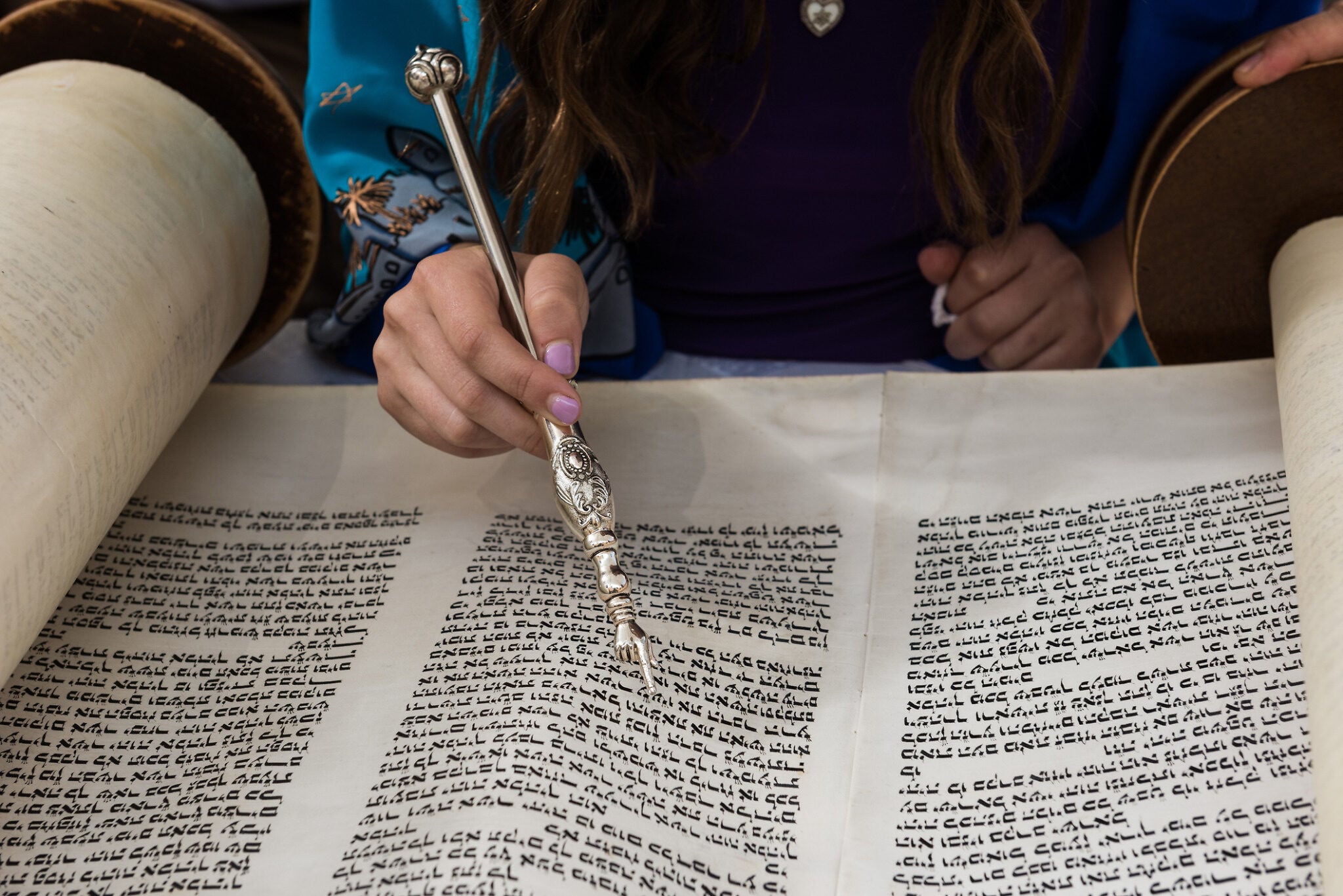
A few years ago, a young girl preparing for her bat mitzvah made an unusual request of Holocaust Museum LA at the Goldrich. Her family were Holocaust survivors from Lodz, and she wanted to read a Torah scroll in our collection that had survived the Lodz Ghetto.
There was just one problem: museum collection teams do not typically lend their artifacts for one day, in a non-gallery space, to a pre-teen.
The Torah, more than 100 years old, had been hidden in the Lodz Ghetto, desecrated by Nazis, and recovered and restored by survivors. It was now safely preserved in our museum’s collection, where, for religious reasons, it could not be displayed as an exhibit piece.
This experience came to mind when I heard the phrase “decolonize Holocaust museums,” which sparked a flurry of ire, debate, and impassioned outrage.
Colonization involves the exercise of power by an outside authority that exploits and extracts resources to send back to the ruling power. If applied to museums, it raises questions about institutions that removed objects from their original context and imposed authority over their interpretation and use. Decolonizing museum practice, then, would ask us to reconsider who has the right to determine their meaning and how the communities from which they came can continue to engage with them.
Therefore, decolonizing Holocaust museums should not mean decentering Jewish history or flattening the complexity of the Jewish experience to fit broader social justice narratives. If we are serious about examining what decolonization means, perhaps we should begin by asking how museums can reconnect cultural objects with the living communities and traditions for which they were created.
Somewhere along the way, museums decided that the best way to honor an object was to stop using it, and we can begin to see the relationship between collecting, cultural ownership, and institutional authority that is part of the decolonization conversation of today. In the 16th and 17th centuries, wealthy European collectors and aristocrats assembled collections of objects ranging from shells and fossils to scientific technologies to objects from unfamiliar places. These “cabinets of curiosities” laid the foundation of modern museums.
Over the centuries, museums and archives developed sophisticated standards and systems for preserving art, objects, and artifacts. And for good reason. Museums safeguard the remnants of civilizations, traditions, and even species that are gone. But what happens when the culture that created an object is still very much alive?
When the bat mitzvah request reached our collections team, their concerns were legitimate. Museums are entrusted with protecting irreplaceable objects, and a one-day loan to a synagogue without museum-standard environmental controls was far outside conventional collections practice.
But here was an opportunity to return an object, however briefly, to the very purpose for which it had been created.
A Torah is not simply an artifact to be preserved in an acid-free box. It is a living religious object, and part of its meaning comes from being read, held, and celebrated by the community to which it belongs.
I consulted colleagues specializing in Judaica, as well as museum professionals working to provide Native American communities with access to ceremonial objects held in institutional collections. Our team considered how to honor both our responsibility to preserve the Torah and our responsibility to the community whose heritage it represents.
Ultimately, we approved the loan. In fact, we have now done so twice.
To me, this is what the concept of decolonizing a Holocaust museum can look like. It asks us to reconsider whether the traditional structures of museum stewardship always preserve our own community’s traditions. It does not mean asking Jewish and Holocaust museums to diminish their own histories in pursuit of a more universal narrative.
Which brings me to a contradiction in the current debate. There is a profound irony in calls to “decolonize Holocaust museums” by moving beyond the Holocaust to broader social justice issues. If decolonization is about incorporating the communities whose histories are being preserved, then imposing an external framework for what Jewish history should represent reproduces the very dynamics decolonization claims to dismantle. There is an important distinction between drawing socially relevant lessons from Jewish history and requiring Jewish history to justify its relevance through other causes.
We must also recognize that Jewish civilization originated in the ancient Near East, thousands of years before the emergence of modern Western political and social frameworks, and its history and identity cannot always be neatly contained within contemporary categories.
At a time when our country feels increasingly polarized, we have become remarkably comfortable speaking at one another rather than with one another. Conversations about communities bringing life, celebration, and joy back to their cultural artifacts are important to have, and I hope that moving forward we can engage in respectful conversations that center around activating cultural identity without erasure.
And may we draw inspiration from this. Holocaust Museum LA at the Goldrich’s archive preserved the Torah scroll so that a young Jewish girl could read from it as she became a bat mitzvah. And that is true stewardship.