


How a poem let Soviet Jews remember in public
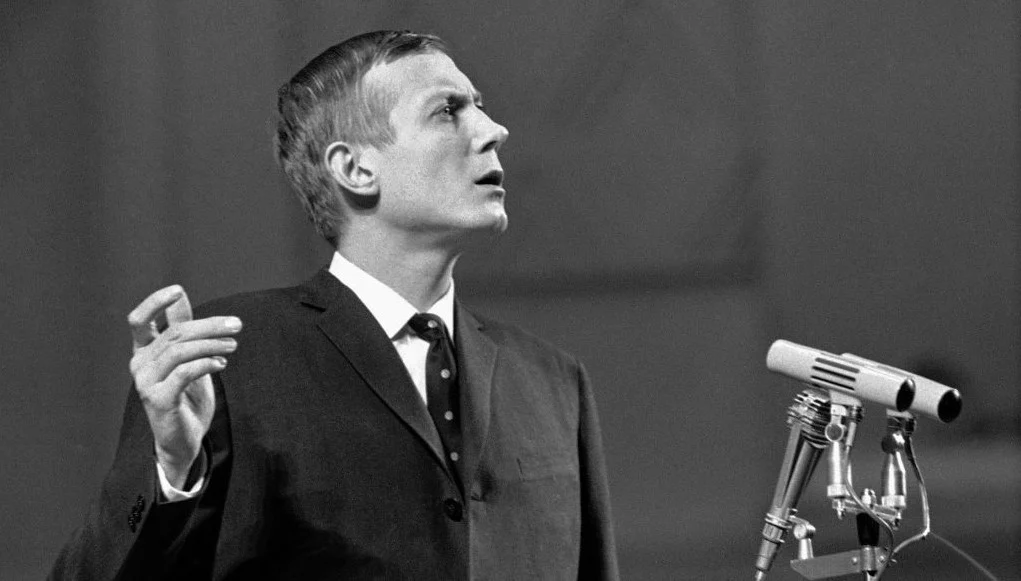
Imagine being a young Jew in the Soviet Union in 1961.
Your internal passport identifies you as Jewish. The state knows who you are, and there are circumstances in which that single word can affect your prospects. Yet much of what might give Jewishness a history, a culture and a collective memory has been pushed to the margins of public life.
The worst years of Stalinist terror are over. The Jewish Anti-Fascist Committee has been destroyed, its leading figures arrested, and 13 defendants associated with it were executed in 1952. The antisemitic Doctors’ Plot conspiracy ended after Stalin’s death. But the change of political climate did not restore Jewish public life or eliminate anti-Jewish discrimination. Under Khrushchev, and later under Brezhnev, its forms changed, while Jewish culture, religion and public expressions of Jewish identity remained constrained.
Perhaps your grandparents once spoke Yiddish. Your parents may understand it but seldom use it. Jewish schools and much of the cultural world that once sustained Jewish life have disappeared. The synagogue survives, but for many Soviet Jews it has become distant from everyday life.
And there is the war.
Perhaps relatives disappeared in Ukraine or Belarus. Perhaps their names are connected with a ravine, a forest or the edge of a town. At home, you know that they were murdered because they were Jews. In public, you encounter another language. They are Soviet citizens, peaceful civilians, victims of fascism.
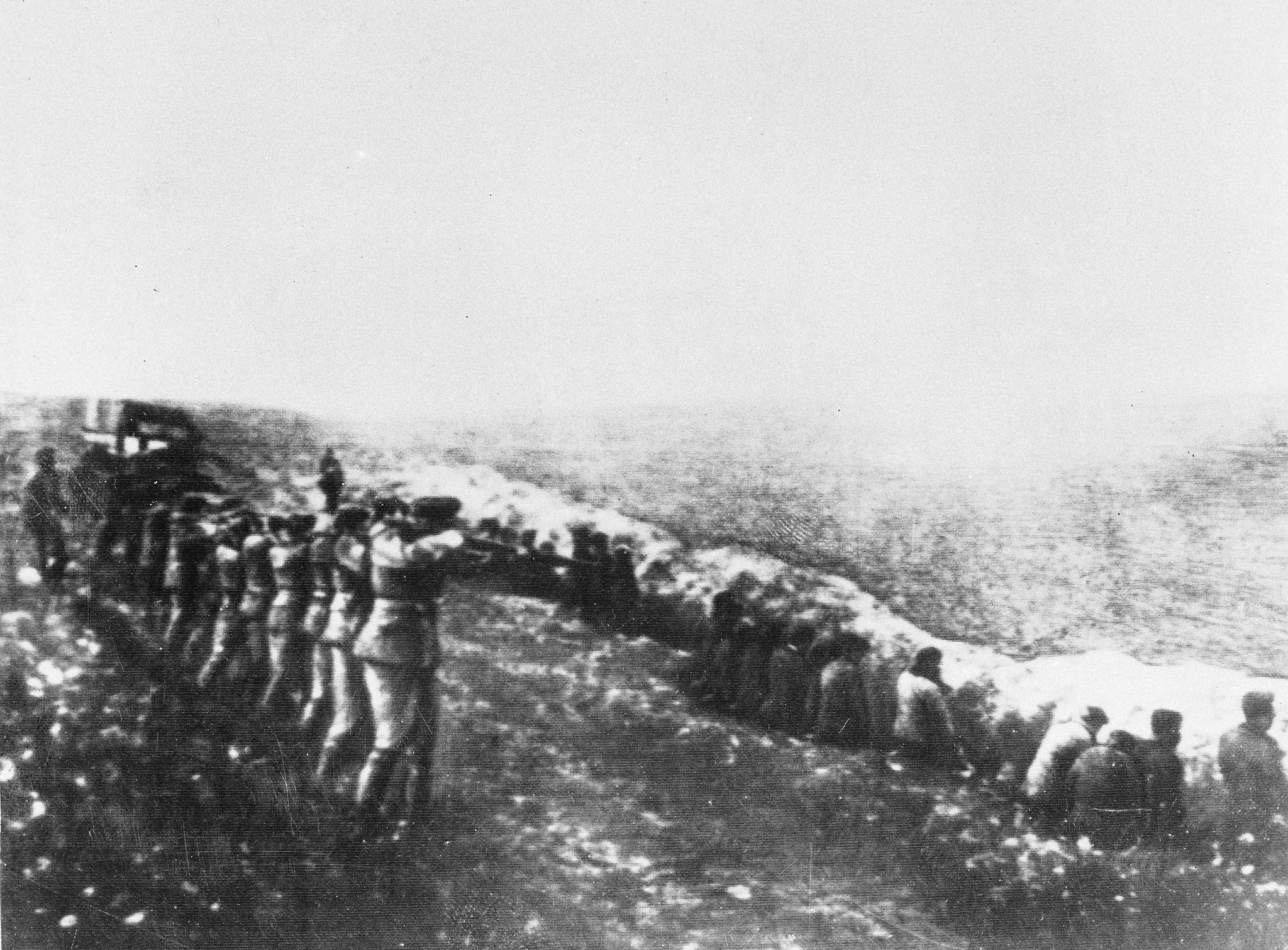
The Soviet Union did not conceal the enormous scale of Nazi atrocities. It commemorated wartime suffering and victory everywhere. What its official narrative had difficulty accommodating was the specifically Jewish character of the Holocaust. At Babyn Yar, where 33,771 Jews were murdered on September 29 and 30, 1941, the victims were absorbed into the broader category of Soviet citizens.
A Jewish family could therefore live with one memory of its dead while encountering a different version in public.
Then, on September 19, 1961, Literaturnaya Gazeta published a poem called “Babi Yar”
Its author, Yevgeny Yevtushenko, was 28, already famous, Russian and not Jewish. Yet here, in a Soviet newspaper, he wrote openly about antisemitism. He invoked Dreyfus, a child in a pogrom and Anne Frank, and identified himself imaginatively with the Jews murdered outside Kyiv.
For Soviet Jewish readers, the significance was immediate.
Yevtushenko was not telling them that Babyn Yar had happened. Families already knew. Survivors remembered, as did relatives of those who had been murdered. Jewish writers and artists had struggled to preserve that history.
What was unusual was seeing part of this private memory enter legitimate public language.
The distinction is difficult to appreciate in a society where Jewish history can be discussed openly. In the Soviet Union, public acknowledgement mattered precisely because Jewishness occupied such a contradictory position. The state could classify a person as Jewish and sometimes discriminate against him on that basis, while restricting many of the institutions through which he might understand and express that identity.
Letters sent to Yevtushenko after the poem appeared to show how personally some Jewish readers responded. They wrote about murdered relatives and thanked him for speaking about antisemitism. The poem was copied, saved and passed from one reader to another.
A year later, composer Dmitri Shostakovich continued the recognition. He made “Babi Yar” the opening movement of his Thirteenth Symphony. Yevtushenko’s words were now sung by a bass soloist and male chorus with a full orchestra.
The political reaction confirmed how sensitive the subject remained. Nikita Khrushchev criticized Yevtushenko’s emphasis on Jewish victims, and under pressure the poet later altered several lines. Yet the original poem had already appeared in print and Shostakovich had given it another public life.
For Soviet Jews, such moments could have a meaning larger than literature or music.
Jewish memory had often survived through small things: a family story, a photograph, a newspaper cutting kept inside a book, a text copied for a friend, a recording passed from one home to another. None of these replaced the institutions that Soviet Jewish life had lost. They helped preserve connections that official culture could weaken but never entirely extinguish.
This is also why we should be careful not to turn Yevtushenko into the man who gave Soviet Jews their memory. Jewish families had carried that memory through war, Stalinism and the quieter restrictions that followed.
His contribution was both more modest and, in its circumstances, remarkable. He allowed something long known in private to be recognized in public.
Sixty-five years later, this may be the most enduring meaning of “Babi Yar” for Soviet Jewish history. A people’s memory does not live only in archives, museums and monuments. It also depends on whether people can recognize their own family history in the language of the society around them.
For many Soviet Jews in 1961, Yevtushenko’s poem created one of those rare moments of recognition. The history they carried at home had appeared, unexpectedly and unmistakably, on the printed page.