
International Political Consultant
How AI is Changing Election Campaigns
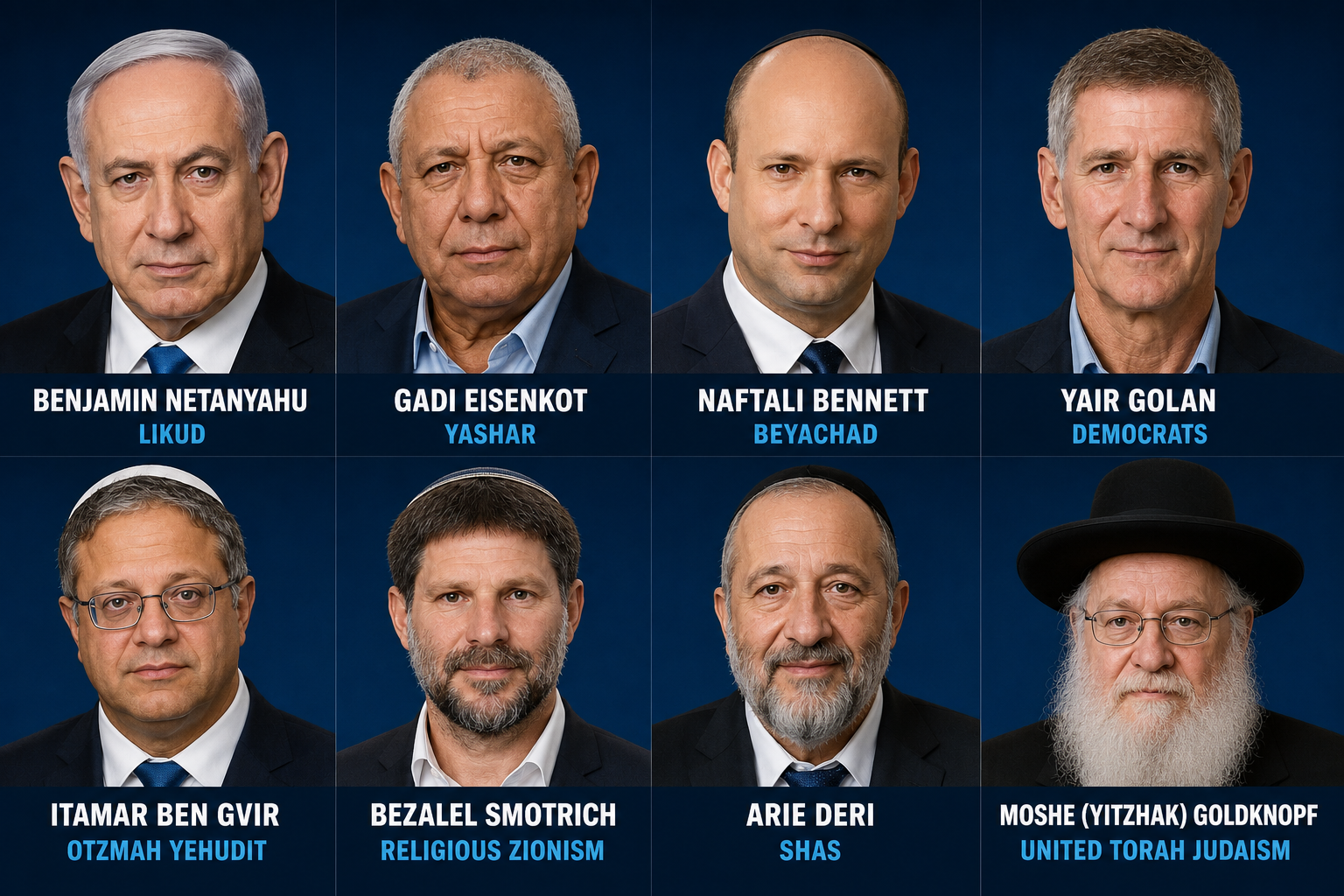
(AI generated photo by author)
Artificial Intelligence is about to completely transform election campaigns. Not by changing democracy itself, but by changing what campaigns choose to compete over.
Traditionally political campaigns have been judged on the quality of their ideas, the discipline of their messaging, the effectiveness of their ground operation, and the strength of their candidates. Today, as the new technological revolution continues another competition is emerging which is who can create the most compelling AI-generated content.
The early signs are already impossible to ignore. Social media is filling with AI-generated campaign videos, satirical clips, dramatic cinematic trailers, and perfectly edited attack ads that would have cost tens of thousands of dollars to produce only a year ago. And the campaigns have barely begun.
Despite the recent Likud attack ad on “Yashar” leader Gadi Eizenkott, and the subsequent answer from the Blue and White party, this is only the beginning.
As the election cycle gathers pace, political parties and candidates will flood every platform with increasingly sophisticated AI-generated content. Every announcement can become a Hollywood-style trailer. Every policy launch can be turned into an emotionally charged short film. Every attack on an opponent can be packaged as a viral meme within minutes.
The danger is that campaigns will begin competing to produce the best video rather than the best vision.
Policy, already an afterthought in many modern campaigns, risks becoming almost irrelevant. Why spend weeks refining an economic platform when an AI-generated 30-second video can generate millions of views. Why explain complicated healthcare reforms when a dramatic animation, complete with cinematic music and emotionally charged narration, captures infinitely more attention.
Politics has always rewarded good communication. AI threatens to reward spectacle over substance.
To be clear, artificial intelligence is not inherently a negative force in politics. Quite the opposite. Campaigns are expensive, and AI dramatically lowers the cost of producing high-quality content. Smaller parties suddenly have access to creative tools that were once reserved for those with enormous budgets. AI can generate graphics, translate speeches, create subtitles, analyse voter sentiment, draft communications, and automate countless routine tasks. It reduces costs, speeds up production, and removes many of the logistical barriers that have traditionally favoured well-funded campaigns.
It also reduces the human bottlenecks that often slow campaigns down. Ideas that once took teams of designers, editors, and videographers can now be produced within hours.
Those are genuine advantages and begs the question, if all this can be done so quickly and effectively, do campaigns need to last so long? But efficiency is not the same as democracy.
The greatest campaigns in history succeeded because they persuaded voters through ideas, leadership and vision. Their advertisements supported the message; they did not become the message and AI risks reversing that relationship.
Campaign strategists will soon spend more time prompting image generators than debating tax or defence policy. Consultants will argue over visual styles rather than legislative priorities. Success will increasingly be measured even more so than ever in shares, likes and engagement instead of convincing voters why one set of policies is better than another.
The irony is that AI may actually reduce creativity even as it makes content easier to produce. If every campaign has access to the same tools, the same visual styles, the same voice generators and the same cinematic effects, politics could become an endless stream of polished but remarkably similar content.
Everyone will look impressive but few will actually say anything meaningful.
There is also a more troubling consequence. AI-generated content blurs the line between authenticity and performance. Voters may find it increasingly difficult to distinguish genuine moments from manufactured ones. Was that emotional speech delivered to a real crowd and was it even emotional at all? Was that dramatic footage filmed at all? Did the candidate actually say those words?
As synthetic media becomes indistinguishable from reality, trust, already a scarce commodity in political. Campaigns, will become even harder to preserve.
Political campaigns have always evolved alongside technology. Radio rewarded great speakers. Television rewarded candidates comfortable in front of the camera as we saw when JFK defeated Nixon in what was the first televised presidential debate. Social media rewarded speed and constant engagement as it did with President Obama.
AI will reward those who can manufacture attention on an industrial scale.
That does not necessarily make democracy weaker, but it does change the incentives. Campaigns increasingly risk becoming entertainment products competing in an endless algorithm rather than contests of ideas competing for the public’s confidence.
Ultimately, elections should not be won because one campaign produced the most cinematic AI video. They should be won because one side presented better solutions to real problems.
Artificial intelligence will undoubtedly become one of the most powerful tools in political campaigning. The question is whether it remains a tool that supports ideas, or whether it becomes a substitute for them.
If the latter happens, voters will find themselves watching the most visually impressive election in history, while learning less than ever about the people asking for their vote and what they’re going to do once they get elected.
Related Topics
Related Posts