
How I Became a Sabra
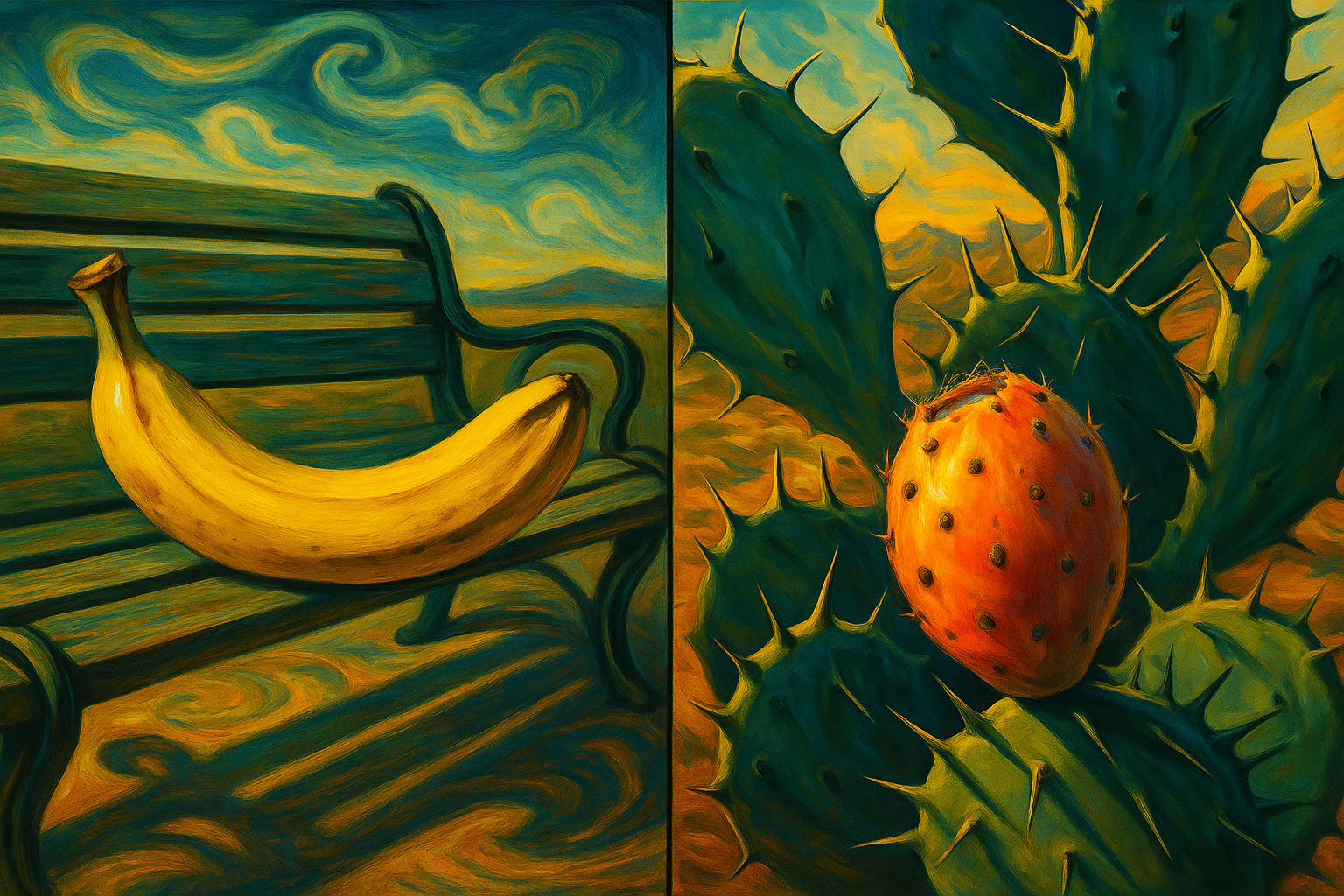
Sabra [n.] — slang for an Israeli born in Israel. Like the prickly pear cactus it’s named for: sharp, blunt, and defensive on the outside, but surprisingly sweet once you get past the spikes.
Every now and then, I long for a banana.
An English banana.
Well, like all things English — including Rossi’s ice cream and Chinese takeaway — it’s not really English. But the thought of this giant yellow snack, perfectly peelable and ready to eat, reminds me of the Old Country. Even with climate change, England isn’t growing its own bananas.
But wherever they imported them from, Israel literally missed the boat.
Several years ago, my husband and I took our bikes up north and cycled through a banana plantation. It is quite amazing what we manage to grow in a country consisting of a combination of malaria-ridden swampland and arid desert less than a century ago.
But Israeli bananas are poor relatives of the manna of my childhood.
The first time I spotted them in the supermarket, I was elated — and then deflated. This must be a mistake, I thought. These guys are green! A few days later, bananas were on sale again, but they looked like British rejects: stunted, a brownish yellow, and soft. The best scenario for these impish fruits was to be mashed unceremoniously and shoved into a banana cake.
No, Israel doesn’t import them. Maybe out of spite. Or maybe because here, our fruit is a national treasure — not a silly snack.
If I’d been a fruit in my British incarnation, (prior to coming to Israel) I’d probably have been a (British) banana. Find the right park bench, where pigeons peck at scraps of bread and the wind isn’t whipping your face, spot a tiny patch of sunlight that matches your mood, peel the thing, and sink your teeth into its soft, reliable flesh. The only effort required is the act of peeling. The banana was genetically designed and imported for your leisure and pleasure. Nutritionally balanced and available in the UK all year round. Unexciting, but dependable. It’s so benign you can even eat it after a root canal.
I lived in a country of upheavals, for sure — the coal miners’ strike, the threat of the Cold War, IRA bombings, and a week snowed in by an errant Arctic storm. It wasn’t a bed of roses. But roses have thorns — not bloody spikes.
I would describe myself as tough and hardy. I have been known to be combative on occasion. Yellow could certainly have been my colour. I liked to draw attention to myself — writing, public speaking, going on stage with acting, improv, and stand-up. But underneath I was (and still am) vulnerable and far too trusting.
Banana Ella.
And then I came to Israel.
Change of fruit.
For those of you who don’t know, the national fruit of this country is the sabra — the Indian fig prickly pear. I heard it so many times, usually when I felt I’d had it with the brashness of homegrown Israelis. Don’t take it so personally, Ella, veteran olim would tell me. This is what Israelis are like: rough and prickly on the outside but soft and sweet within. You just have to get to know them.
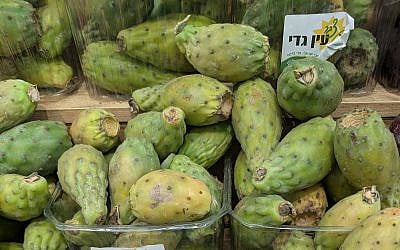
Sabras aren’t even the most popular fruit here. The ones in the supermarket have been de-prickled for easier handling, but the boxes mostly sit untouched, unless someone has a mind for an exotic fruit salad.
Israelis prefer seasonal fruit: plums, nectarines, peaches, and grapes in the hot months. Macho Israeli men lugging huge watermelons under their arms is a common sight — nothing is more cooling on a summer day. Best of all, thanks to Israeli genetic engineering, our melons are seedless. In autumn come the sweet figs, then mangos, each bite like heaven.
Winter is the time of citrus — pomelos and pomelits (I’m blessing the scientists again), grapefruits, mandarins, and fleshy, juicy Jaffa oranges. Get your vitamin C here.
As with everything, patience is a virtue. Whereas in Britain, most of the produce you buy know no season, in Israel the fruit and vegetables you sink your teeth into are time-sensitive. There are even months when decent tomatoes all but disappear from our shelves.
Back to sabras.
When did my metamorphosis begin? And why the hell did Israel choose this fruit as its national emblem?
Curiously, the sabra isn’t even indigenous. Like all great foods this country is famous for, it was imported — probably from Mexico- around 200 years ago — likely introduced to support a dye industry from the aphids that live on the plant.
The first time I came into contact with sabra fruit was when my husband — who has been here since the tender age of sixteen and will always be twice the sabra I am — took me on a hike in the North. It was early autumn. The sun was bright but not ferocious, the sky cloudless, and we were walking alongside impossibly green and dauntingly tall sabra cacti. The orange fruits, growing like tiny infant hands on the edges of the cactus leaves, were ripe and plentiful, but far from welcoming — the spikes forming a metaphorical keep out sign.
Undaunted, and armed with a long-sleeved shirt and gloves, my husband climbed through the grove and picked several sabra fruits. The process required care and patience. He passed them to me, warning me not to let them touch my bare hands. Afterwards, we checked his shirt for tiny spikes.
But it wasn’t over yet. He hadn’t picked the fruit just for me to admire.
Holding it oh so gently, he peeled it expertly with his Leatherman knife, paying careful attention to the micro-spikes that could easily lodge under the skin. After what felt like an eternity of painstaking peeling, he proudly handed me a slice of juicy yellow fruit, dotted with small edible seeds. I’ll never forget that moment. Was it the thorny journey that made the fruit taste so sweet?
This wonder of nature — a pale yellow (or red) miniature succulent that not only survives an unforgiving sun but thrives on it — nestles deep in a forest of thorns. Modest in its simplicity. Almost inaccessible, hiding its sweet flesh from the probing public eye. If you want to taste it, you need forward thinking, courage, and, above all, patience. Nature has taught it to be tough.
An outgoing nature and a can-do attitude don’t quite cut it here. I had to grow quite a few protective thorns to survive in this tiny patch of the Middle East. My Hebrew now is not just fluent in vocabulary and grammar — I know when and how to yell back, when to defend my turf. I am less afraid than I used to be. Above all, I have found my place among the cactus grove.
When foreigners come here for the first time, they find the people aggressive, rough, and impatient. They expect niceties and get coarseness and far too much honesty instead. Voices rise here, but eyebrows don’t. Bro, this is the Middle East.
They don’t understand that they are dealing with people who wear a tough armor of coping mechanisms. They expect to find something soft and ready to peel. They forgot to bring their gloves.
They don’t understand why “Would you mind if…” is not a verb form that exists in Hebrew.
But the sabra isn’t just the skin. It’s what’s underneath.
If you are lost here, someone will show you the way. If you are broke, someone will lend you money. A wandering and wailing child will be returned to his or her mother by a perfect stranger before you can say ‘prickly pear’.
The brashness, the unbearable honesty, the public outbursts shouldn’t alarm you — they are reminders we are one family. We feel comfortable with the thorns and each other.
The harshness is a protective mechanism programmed into our DNA after two millennia of persecution and displacement.
We don’t need anyone’s pity. But it would be nice to be understood now and then.
One month ago, we were at war with Iran. Right now, we are still in the middle of a horrendous war in Gaza. People are dying. People are still captives under the ground.
And our enemies are making plans. They are always making plans.
As for us, we might exchange colorful insults in a heated row, but two seconds later we’ll hug each other and bless one another, we will sigh and say, amen, that it should all end soon.
We, the people who wear prickles as a second skin, dream of a more peaceful world. We wish to grow, bud, blossom, and bear fruit on earth that is clean of bloodshed.
We sometimes ask ourselves if we can take any more.
But the sabra fruit thrives in extremes. The sun beats down. Long, rainless summer months come and go. But deep underground, it draws on hidden resources, coping mechanisms passed down from plant to plant. If there’s one thing we’ve become experts at, it’s adaptation.
And even as the fruit hardens and shrivels, seeds are germinating — stronger, tougher, and yet sweeter.
I am still a hybrid. One part of my soul still inhabits a country that no longer exists, where bananas are large, yellow, and easy to peel. Thirty-one years here have not been long enough to cover me with thorns entirely. I sometimes forget the rules of play. I sometimes forget to be hardened yet hopeful.
But that tiny sabra part of me is growing. It laughs at misfortune, climbs toward the light, demands less, and surprises me with its resilience.
I’ve even established my own root system.
Some of my best friends are Israelis — sabras born of sabras.
I face the sun now, rather than shying away from it.
And I hope.