
How I Spoke Fluent Tennis in Guatemala
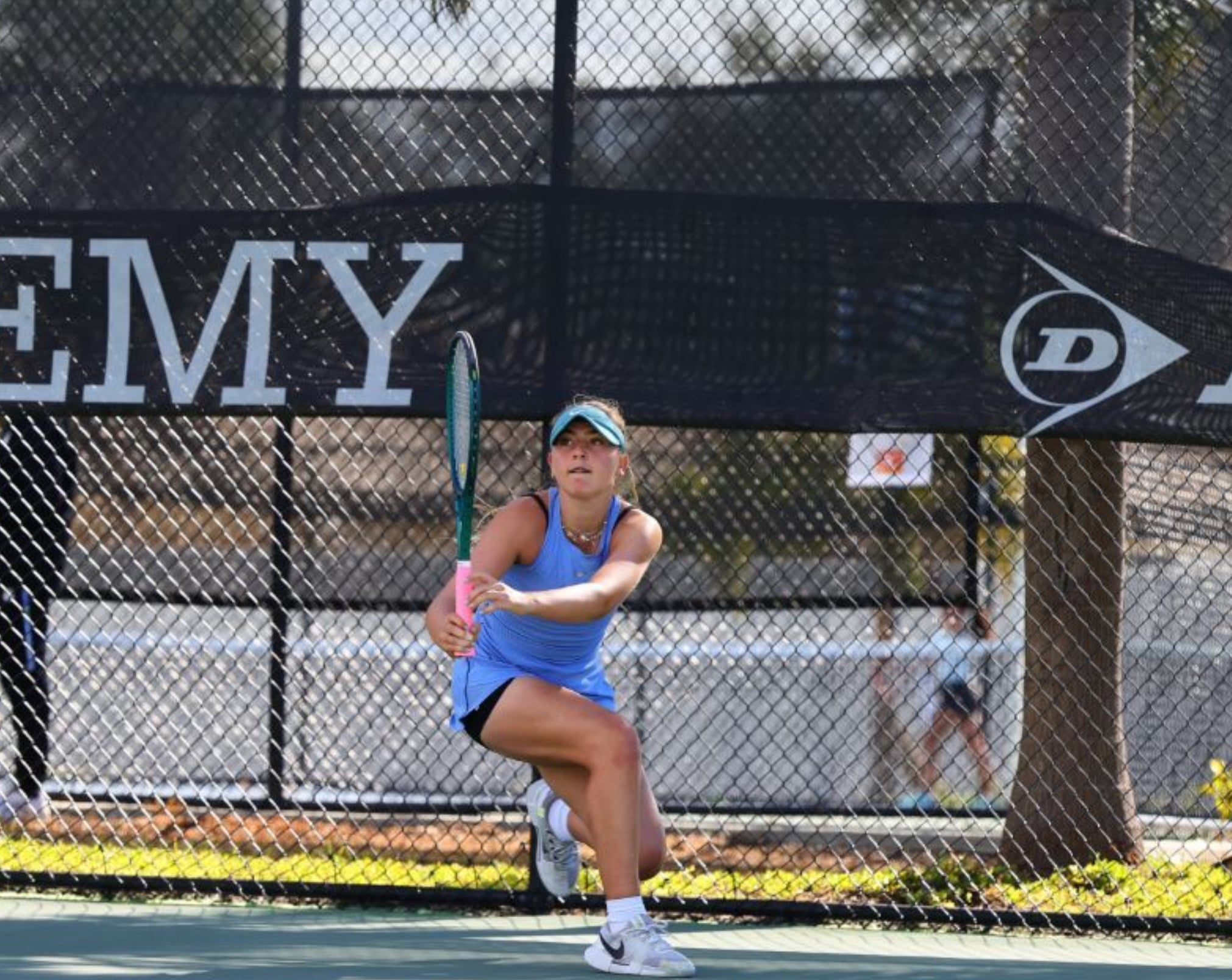
On court three in Guatemala, I realize I do not need words to understand my opponent.
It is my first international tennis tournament and I am thousands of miles away from home. All of the sudden, a voice booms through the loudspeaker: “Gabriella Rosenberg from the United States of America.”
My heart flips and my stomach drops. I sling my bag over my shoulder, give my coach a fist bump, and head to the court. As I walk, I feel every muscle in my body start to wake up. I have been training for this moment.
But when I hear my opponent speaking rapidly to her coach in Spanish, I freeze: could the language barrier interfere with my game?
Both of us hear the “pop” of the can, the crisp smell of fresh tennis balls. The referee hands us the balls and I run my hands over the soft seams. I know each line on the tennis court like the back of my hand – but are these lines different?
I bounce the ball three times, take a deep breath and throw it into the air. That’s when I realize: my opponent and I aren’t speaking different languages. On this court right here and right now, we understand each other perfectly. We’re speaking Tennis.
At the International Tennis Federation junior tournaments, young athletes from every corner of the world come together to compete and push each other to the limit. Every participating competitor has a flag drawn next to their name: Canada, Guatemala, America, Mexico, Colombia, Russia, Czech — I even see one player who has come all the way from Israel.
With so many languages and cultural norms, it can be easy to focus on the many differences between us. But what ties us together is stronger: the discipline, love and commitment to this sport that overpowers all the differences.
When I watch a girl run off the court after losing, tears streaming from her eyes, I understand her. I know how it feels to give your all and still come up short. So many hours of practice go into even getting into the tournament, not to mention the travel and expense of actually being there. A loss can make you feel like you want to give up or even question if all the preparation is worth it.
At the same time, when I see another player pump their fist in triumph, I also understand without further explanation. When a peer succeeds, I can feel their happiness radiate off them as they walk off the court. There is nothing better than seeing all your work pay off. There is no better feeling than a win. I have been on both sides.
If Tennis is the universal language that breaks through our cultural differences, Judaism is the accent that makes a version of that language my own. I didn’t fully notice this “accent” until I played in another country. After matches, when the players gather at the on-site cafe to chat and exchange stories, I don’t eat alongside everyone else because I hold strict standards of kosher. While my competitors enjoy omelettes and paninis with melted cheese, I snack on blueberries. This choice reminds me about the importance of preserving my own unique cultural identity even in such a diverse group. I refocus on the values that matter most, and on the identity that will accompany me beyond the tennis court.
While Tennis unifies us all and breaks down cultural and language barriers, this is still a competition, and none of us are going down without a fight.
During one of my last match ups of the tournament, I see my opponent has a small Russian flag next to her name. She is older than me, taller than me and clearly prepared to dominate. I bounce the ball, take a deep breath in, throw the ball into the air, jump and hit the ball midair into the service box. The match has started. The points fly by, sweat rolls down my face, as the games add up.
Match point already? I can see the finish line. I whack a forehand — my opponent can’t get to it. I won the match! I walk up to the net and shake her hand.
It’s beautiful to come together across borders and boundaries to play a sport we can all understand. It’s also beautiful to win.