


How Noble Is the Nobel?
With some distance now, María Corina Machado’s decision to hand her Nobel Peace Prize to Donald Trump reads as a bold and startling act. The Norwegian Nobel Committee’s response—formal, disapproving, quick to school her—feels small by comparison. The contrast is hard to miss: someone acting in the middle of a political struggle and an institution focused on decorum. It highlights the gap between the controlled setting of a prize ceremony and the far messier reality of confronting a dictatorship.
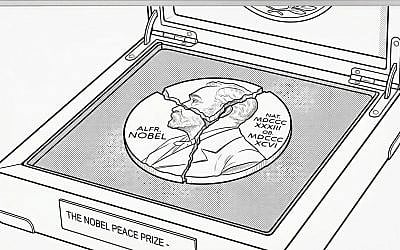
The Nobel Peace Prize carries a reputation for moral authority—but its record is uneven, and often more performative than consequential. The prize often reflects the hopes and preferences of the committee as much as the consequences of the choices it rewards. Aung San Suu Kyi was honored for her nonviolent resistance, then later defended actions widely condemned as ethnic cleansing. Abiy Ahmed was recognized for making peace with Eritrea, then oversaw a devastating war in Tigray. Barack Obama received the prize early in his presidency, before any of the hardest decisions—and their consequences—had even unfolded.
These cases aren’t exceptions. Yasser Arafat was embraced as a partner in peace only to continue lionizing violent attacks against civilians. Cordell Hull was celebrated for building international institutions, even as the U.S. policy he enforced turned away Jewish refugees on the SS St. Louis. Rigoberta Menchú was recognized for a memoir of her life and struggles, later revealed to contain significant fabrications.
Seen through a wider lens, the committee’s scolding on propriety feels profoundly misplaced. Machado’s gesture was unconventional, yet rooted in a real and urgent political moment. In publicly scolding her on the terms of the prize, the committee revealed a censorious, self-absorbed mindset and a profound disconnect from the real, messy work of peace-making.
A more confident institution might have said nothing and watched what followed. Instead, the committee fell back on rules—who the prize belongs to, and when—as if those processes and formalities address any of the hard challenges of advancing peace in the real world.
Ms. Machado’s gesture didn’t diminish the Nobel Peace Prize—it exposed its limits. Whether or not you agree with her choice, Machado reminds us that real courage and consequence often lie outside the confines of rules and ritual. Peace is rarely tidy and it’s almost never “proper.” The reality of breaking a dictatorship doesn’t fit within polite boundaries. In short, the reality of advancing peace rarely fits within the boundaries that the Nobel—or any elite institution—stage for it.