

How October 7th Led Me Home
A friend mentioned a while ago that she was entering a writing contest inviting Israeli women to share their October 7th experiences. As we spoke, I found myself reflecting on that day and whether my story counted.
I wasn’t Israeli on October 7th, 2023. I was a Jewish woman living in Toronto, watching events unfold from thousands of miles away.
But the more I thought about it, the more I realized that October 7th profoundly impacted my life as well. It changed something in me forever. In many ways, it set me on a path that would eventually lead me to Israel and, ultimately, to making aliyah.
October 7th is a date that will forever be etched into my memory.
I was spending the second half of Sukkot at a friend’s home in Toronto when a neighbor mentioned she had heard “something happened in Israel,” and that my friend’s sisters were okay. We had no idea what that meant. We spent the rest of the Chag in a strange state of anxiety and uncertainty, sensing only that something terrible had happened.
Once the holiday ended, we all reached for our phones trying to piece together the reality. At first it came in fragments — messages, social media posts, phone calls from Israel. It took days to fully grasp the magnitude of the horrors of October 7th. The brutality, the massacres, the hostage-taking, the videos filmed by the terrorists themselves — it felt impossible to comprehend that human beings could commit such atrocities and proudly record them. To me, it felt like a modern-day pogrom, a mini-Holocaust unfolding in real time.
The cruelty felt so depraved and inhuman that I struggled to even find language for it. Along with the horror came an overwhelming feeling of helplessness. I kept asking myself: What do I do now? How do I help?
At the time October 7th happened, I was already carrying profound personal grief of my own. In the years prior, I had lost my brother in a tragic accident, my mother to cancer, and then my father unexpectedly less than a year before October 7th. I was emotionally exhausted and navigating deep loss.
I started researching volunteer missions to Israel, but most were only for a few days or a week, and that didn’t feel like enough to me. I remember speaking to a close friend in Israel and telling her how strongly I felt the need to come help somehow. I asked her about organized volunteer programs, and she told me that since October 7th she had been receiving nonstop requests for volunteers from organizations, communities, and individuals looking to help in every possible way. Then she simply said to me, “Just come. You will have what to do.”
And so I did.
Following that conversation, I immediately booked a flight to Israel for December 19th, 2023. I didn’t have a detailed plan, and I didn’t know exactly what I would be doing once I arrived. But I knew there was more than enough work to be done, and I trusted that once I got there, I would find ways to help.
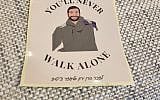
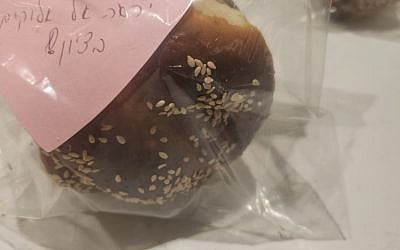
I split my time between staying with a close friend and an Airbnb in Jerusalem, and immediately immersed myself in volunteering efforts. One of the first things we did was spend an entire day baking challah, muffins, and other baked goods for chayalim. We baked from morning until night, and at the end of the day everything was collected and brought to one of the army bases for the soldiers. We also included little handwritten notes with hearts so they would know they were loved, thought of, and cared for. It felt small compared to the enormity of the tragedy, but at the same time deeply meaningful.
Another day, my friend and I volunteered at a hotel housing displaced families from the Gaza border communities who could no longer return home after October 7th. We worked with young girls making dolls out of pipe cleaners, wooden beads, fabric, and markers. Each child had to decide what expression their doll would have — happy, sad, angry, scared. What amazed me was that every single little girl chose to make her doll smile. In the face of upheaval and trauma, these children still chose happiness. Their resilience deeply affected me.
I also volunteered at a senior activity center where elderly Israelis spent their afternoons. The rooms were divided by language — Hebrew, English, and French — and I spent time in the English-speaking room helping serve lunch, doing exercises and activities, and simply talking to people. Some were sharp and engaging; others struggled with dementia or confusion. It was both heartbreaking and beautiful. Sometimes the greatest thing you can offer someone is simply your presence.
One of the most difficult experiences was visiting Kibbutz Be’eri and Kfar Aza. Walking through the destroyed homes and communities devastated me. Bullet holes covered walls, ceilings, furniture, and appliances — reminders of unimaginable terror frozen in time. Some homes displayed enlarged printouts of the final WhatsApp messages sent by victims before they were murdered or kidnapped. Everywhere there was grief, destruction, and silence.
What especially broke my heart were the traces of children’s lives left behind — children’s books scattered in the open, plush teddy bears tossed among the destruction, toy trains and little cars abandoned where they had once been played with. Seeing these ordinary childhood objects surrounded by devastation made the horror feel even more real and impossible to process.
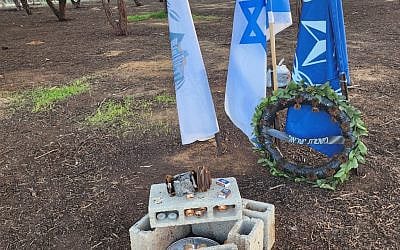
We also visited the Nova festival memorial site, where photographs of those murdered lined the area. That experience felt like a gut punch of grief. These were young people who had gathered for music, peace, joy, and human connection, and they were brutally massacred. The senselessness of it was impossible to comprehend. I remember davening Mincha there because I felt such a strong need to do something holy and meaningful in their memory.
Later that same day, we visited a base of female soldiers. We had each been asked to bring little things — candies, snacks, treats, comforts from home — and we handed them out to the soldiers. Their gratitude and smiles brought a small moment of warmth after such an emotionally devastating day. It reminded me how much even the smallest acts of kindness matter during times of collective pain.
Through all of this, I felt a profound need to bear witness.
That need to bear witness was not new to me.
I had felt something similar years earlier when I traveled to Poland to visit the concentration camps and Holocaust sites. Standing in the devastated kibbutzim after October 7th awakened many of the same emotions I had experienced walking through Auschwitz and the crematoriums — disbelief, grief, and the desperate attempt to understand how human beings could inflict such cruelty on one another.
I had wanted to visit Poland since I was in eighth grade, when one of my teachers introduced “book talks” in class. For whatever reason, that was the first time I truly learned about and understood the Holocaust. It wasn’t something deeply discussed in my family, likely because my family came from Morocco and did not directly endure the Holocaust in Europe. But hearing survivor stories and reading those books impacted me profoundly.
More than anything, I could never wrap my head around how human beings could reach that level of cruelty and hatred. How could people become so consumed by antisemitism that they viewed Jews as less than human? At the time, it felt impossible for me to understand.
I personally found myself continually drawn to Holocaust literature and testimonies. Those stories stayed with me for years. Not long after my trip, I remember having a conversation with my grandmother and discovering that she and my grandfather had once traveled to Poland to visit the concentration camps as well. I had never known that before. There was something deeply meaningful to me in realizing that, without even discussing it, we had both felt the same pull to go, witness, remember, and honor those who suffered.
So when I finally had the opportunity in 2019 to travel to Poland and bear witness to the places where some of the worst atrocities in human history occurred, it felt deeply meaningful and important to me.
Even walking through the crematoriums and standing before the ovens, seeing with my own eyes the physical spaces where these horrors took place, I still struggled to fully comprehend it. It brought history to life in the most painful way, yet I remember standing there thinking over and over again: How? How could human beings do this to one another? I had no words for the magnitude of that evil.
As I write this in 2026, I sadly understand far more than I once did. I now see how propaganda, misinformation, and the constant repetition of lies can shape public perception — and how social media magnifies it all in ways that did not exist in the 1930s. Watching antisemitism spread so openly after October 7th made me realize how easily hatred can become normalized when people blindly absorb narratives without questioning them or seeking truth for themselves.
That same feeling I carried in Poland returned after October 7th — the need not to look away, but to witness, remember, and stand beside my people through unimaginable pain.
Looking back now, it amazes me that somewhere inside my own grief, I still found the strength and determination to come to Israel and help in whatever way I could. But in many ways, being here helped me too. I arrived in a country collectively mourning devastating loss, and somehow, through volunteering, witnessing, praying, and simply being present, I found connection, purpose, and healing within my own grief as well.
Being in Israel after October 7th changed me profoundly. I came because I wanted to contribute in whatever small way I could, but the experience awakened something much bigger inside of me. There was something deeply meaningful about contributing to your own people, your own nation, and building a life connected to that purpose.
Somewhere between the grief, the volunteering, the witnessing, and the resilience of the people around me, Israel stopped feeling like a place I was visiting and started feeling like home.
In memory of the beautiful souls we lost on October 7, 2023, and in the war that followed. May their memories forever be a blessing. יהי זכרם ברוך.