Rabbi Hauer Taught Us How to Disagree
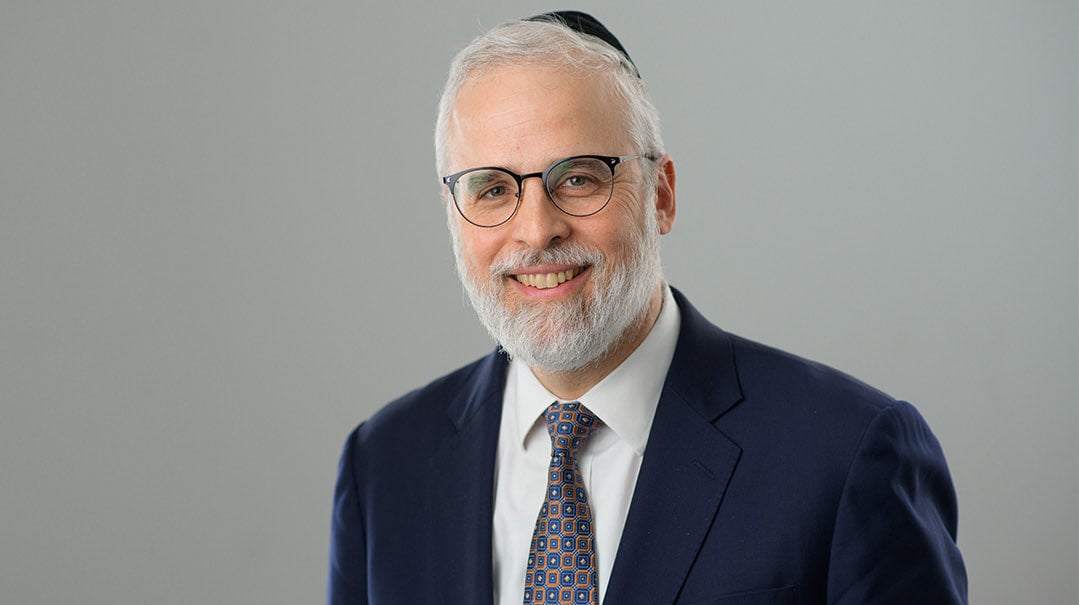
I am not a student of Rabbi Hauer nor a congregant of his Shul. I have listened to several of his lectures, followed his career with interest and spoke to him a couple of times, something I have with many other Rabbis. However, his death hit me in a way that I couldn’t explain. It was just last week when I realized why.
I am a literal person to a fault and get disturbed when I hear certain rabbinic rhetoric. While I can truly respect every rabbinic leader’s Torah, dedication and passion, if his comments about others or institutions in the community strike me as overly harsh, exaggerated or insensitive, it bugs me. I recently complained about a few such statements to a friend, and he reminded me to calm down. In life one must take such rhetoric with a grain of salt. People often use hyperbole to make a point. Such outlandish comments are not to be taken literally, and the negativity is there to challenge and drive, not to judge.
Of course he is right. I used to be disturbed by the loud and often illogical rhetoric made by politicians and other public figures. Analyzing what was said, I wondered how people could be convinced by such biased and baseless statements. I was surprised that influential people could make major decisions based on poor reasoning without considering other consequences or considerations.
As I have grown older, I have learned that decision makers frequently consider factors not openly discussed. Behind closed doors, there are many nuanced discussions, involving deeper understanding and calculated trade-offs. However, they promote their decisions through bumper sticker slogans and rash statements. Why? Because most people lead their lives and offer their support based on their hearts, not their heads. Deciding should be done with logic, but driving people needs emotion, passion and yes sometimes the distasteful tools of exaggeration, hyperbole and negativity.
But that is what was different with what I heard from Rabbi Hauer.
Rabbi Hauer was a man of conviction and influence. He built a Shul, changed a community and led the OU through numerous projects and initiatives. He pushed, opined, disagreed and challenged. But he did it with such precision, respect and honesty that you were moved by the sincerity and truth of his statements, not the rash emotion. You were uplifted to a passion instead of stirred up to rage. Some need to tear down to build, but not him. This is what I miss.
One of the first times I heard him speak was a rally held in Baltimore to try to keep the JCC closed on Shabbos. He was given the difficult task of speaking to the “other side”, addressing those who were not at the rally and in favor of opening the institution. With a voice choked with emotion, I remember his respectful and loving attitude as he explained his position. I remember him saying that he cannot change his stand because “you wouldn’t want me to.” I remember his testimony to congress about antisemitism. He did not berate the politicians for failing to act but challenged them to bring liberty back to the country and make the United States of America that one country that does not spit us out. This is how we truly influence people – by bringing them up, not pulling them down.
Responses to his passing have repeated this theme, over and over again. Compliments rolled in, not from people who approved of his actions but from those who disagreed. I have heard many say that his words were always precise, whether describing numbers and figures or views and opinions. Not everyone can have such influence sticking to such a code, but he could and he did.
Politics and leadership can be a messy business, destroying the integrity of even the most well-meaning individuals and annoying those of us who like to take every word literally. But every so often someone comes along and reminds us that it doesn’t have to be. They are examples of what we can accomplish with honesty and how we can disagree without degrading or making our opposition into enemies. Not all of us will have the level of influence as Rabbi Hauer, but all of us will encounter on our own level the same challenges. I pray that we too can learn from him to be able to be push while retaining precision and respond while retaining respect.
Yehi Zichro Baruch