Therapist and Clinical Director of Jerusalem Therapy Mental Health Clinic
How to Escape the Prison of Your Own Portrait
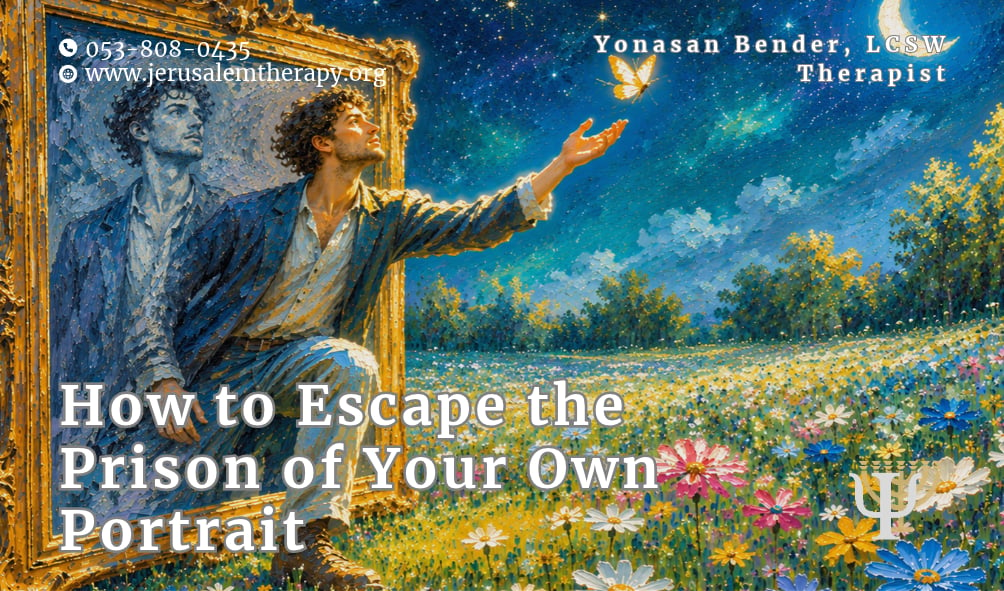
We have a habit of treating living dynamic people like unchanging portraits. Ask someone who they are, and they’ll dutifully produce a collection of labels: father, failure, introvert, perfectionist, successful businessman. Each image adds another brushstroke to the picture we call our identity. Some portraits are flattering, others considerably less so, but they share the same limitation. They’re still pictures. However faithfully a portrait captures its subject, it cannot capture the extraordinary business of being alive. Yet we become remarkably devoted to these self-portraits, carefully arranging our lives to resemble them. The anxious person notices every occasion they’ve been afraid. The failure remembers every disappointment. The strong one learns to conceal every vulnerability. Eventually, what began as a description becomes a prediction, and the prediction becomes an instruction.
Our minds are magnificent categorizing machines, constantly searching for patterns that make an otherwise complicated world manageable. Research on self-schemas shows how our beliefs about ourselves influence what we notice, remember, and expect. Once you’ve decided you’re a coward, every hesitation becomes another brushstroke confirming the likeness, while every act of courage becomes an inconvenient detail that doesn’t quite belong in the picture. Labels aren’t necessarily inaccurate, and some, including clinical diagnoses, provide genuinely useful explanations. The trouble begins when we mistake a useful description for an exhaustive definition. A different, more useful, perspective would be that we’re not finished portraits but living unfolding stories, continually responding to relationships, circumstances, and possibilities that no single description can contain. We’re not simply courageous or cowardly; we’re embracing of some things and retreating from others. We’re not loving or unloving; we’re reaching, withdrawing, risking rejection, offering affection, and occasionally behaving like complete idiots toward the people we cherish. Our identities aren’t discovered within us. They’re continually expressed and reshaped through our encounters with the world.
Consider the difference between saying, “I’m a coward,” and “I’ve been avoiding a conversation that frightens me.” The first delivers a verdict on your character. The second describes something you’re doing, which means there’s something you might do differently. That’s no small distinction. One invites resignation; the other invites responsibility. Of course, changing a sentence won’t magically change a personality, and some limitations are stubbornly real. But it can interrupt the habit of treating yesterday’s behavior as tomorrow’s destiny. So perhaps the most important question isn’t whether the portrait you’ve painted of yourself is accurate. It probably is, at least in part. The question is whether you’ve begun mistaking it for the person it depicts. After all, the purpose of a portrait is to represent a life, not to regulate one. And you can spend your entire existence trying to remain faithful to the person in the picture, forgetting that you’re the one who’s supposed to be alive.
Related Topics
Related Posts