
Time for Positive Change...
How to Fuel Terrorism and Weaken Israel’s Security
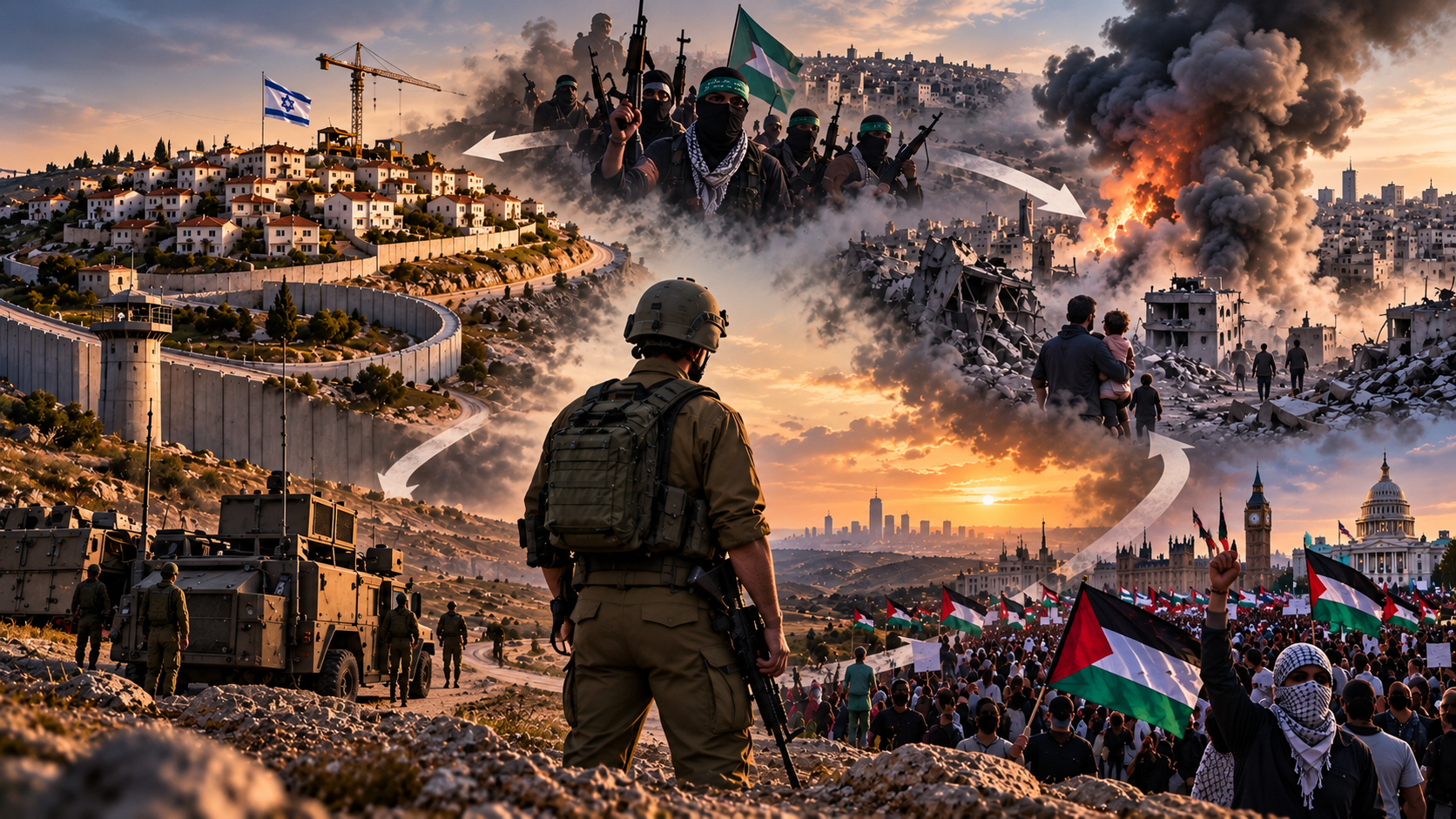
Imagine Israel's situation in 2028 if the current government is re-elected.
Imagine Israel’s future if annexation replaces civil separation, and the warnings of its senior security experts are ignored (again).
The following is a hypothetical scenario, not a prediction or a suggestion that these outcomes form part of anyone’s deliberate plan. Its purpose is to explore how current policies could trigger a self-reinforcing cycle of unintended consequences, progressively undermining Israel’s security.
Israel, 2028. Imagine this:
Netanyahu won the October 2026 election. His new coalition, dependent on Smotrich, Ben-Gvir and the religious parties, accelerated its West Bank policies.
E1 construction progressed. Satellite settlements multiplied. Palestinian communities became increasingly fragmented. De facto annexation expanded, while the Palestinian Authority (PA), financially strangled and politically discredited, was failing. Efforts to reform the PA had failed.
For the 42% of Palestinians who favored negotiations over armed struggle in the October 2026 PCPSR survey, what credible future remained for peaceful nation-building?
Hamas, Palestinian Islamic Jihad and other armed groups had their answer: We told you so. Negotiations achieve nothing. Only armed resistance works.
Recruitment increased. Weapons proliferated. PA security cooperation deteriorated. Attacks on Israelis escalated.
The perverse cycle begins
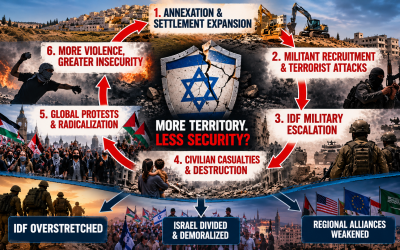
A third intifada erupted.
Israel responded with military operations, arrests and tighter restrictions. Militant groups increasingly operated among civilians, some employing Hamas-style human-shield tactics.
Civilian casualties mounted. Images of deaths and destruction reinforced allegations of war crimes and genocide, intensifying international condemnation.
The global pro-Palestinian protest movement was re-energized. While many demonstrators demanded an end to civilian suffering, many also celebrated armed “resistance,” further encouraging Palestinian militants.
A self-reinforcing cycle had taken hold:
Palestinian despair fueled extremism. Terrorist attacks triggered Israeli military operations. Civilian casualties fueled international outrage and further Palestinian radicalization. Militant recruitment increased, producing more attacks and escalating military responses.
Meanwhile, the IDF became increasingly overstretched protecting expanding settlements, confronting armed groups and compensating for the deteriorating PA security apparatus.
Repeated reserve mobilizations, mounting casualties and seemingly endless operations weakened IDF readiness, morale and national cohesion.
Inside Israel, divisions deepened between those demanding harsher military action and those questioning where it would all end.
Israel was winning individual battles while strengthening the conditions for the unfolding war.
And Ben-Gvir?
His proposed ‘voluntary emigration’ of Palestinians from Gaza had failed to attract countries willing to receive them on the scale envisaged, while further inflaming Palestinian anger and international opposition.
Ben-Gvir, who had already demanded the PA be treated like Hamas in Gaza, viewed the war as an opportunity for even harsher measures.
The consequences spread
Jordan, with its large Palestinian population, was alarmed by annexation and fears of Palestinian displacement, and was now dealing with growing domestic unrest. Security cooperation with Israel deteriorated, increasing risks along Israel’s longest border, including increased smuggling of weapons by Iranian-backed groups.
Egypt became increasingly hostile. Any possibility of Saudi normalization disappeared. The UAE reconsidered aspects of its cooperation. Türkiye and Qatar intensified diplomatic pressure, while Türkiye expanded its military support to Syria.
Iran and its proxies saw opportunities to exploit Israel’s growing difficulties. This uprising and Israel’s response incited attacks from Islamic terrorist organizations in surrounding countries.
Meanwhile, Democrats had won both houses of the US Congress in November 2026. Subsequent congressional resistance significantly restrained military support for Israel.
European sanctions expanded. International isolation deepened.
Israel controlled more territory but had become considerably less secure.
Could this really happen?
Supporters of annexation argue that permanent Israeli control is essential to prevent another Gaza and another October 7. These are serious security concerns.
But what if the policies intended to prevent another catastrophe actually help create one?
In September 2026, Commanders for Israel’s Security (CIS), representing hundreds of former senior Israeli security and diplomatic officials, warned of precisely these interconnected dangers.
The Institute for National Security Studies (INSS) has similarly warned that annexation could increase terrorism, overstretch the IDF and undermine Israel’s security.
Both have advocated forms of civil separation (INSS PELS – CIS Civil Separation) rather than continued annexation, while preserving Israel’s overriding security requirements.
Now imagine a different past
Imagine the last three years under a different Israeli government.
No divisive judicial overhaul. None of the enormous demonstrations that fractured Israeli society before October 7. Greater attention to the increasingly alarming intelligence warnings of a Hamas invasion, and maybe no reason for the October 7 inquiry Israel still needs.
Might October 7 have been prevented, or its consequences substantially reduced?
Might Saudi normalization have progressed, with Israel now enjoying stronger regional security partnerships rather than years of war, division and international condemnation?
We cannot know. But the warnings existed, and the consequences of failing to act were catastrophic.
Must Israel repeat its mistakes?
Now return to our imagined 2028.
Another prolonged conflict. More Israeli and Palestinian deaths. Another overstretched IDF. A divided and demoralized Israeli society. Greater international isolation.
And another generation of Palestinians encouraged to pursue terrorism rather than building their society alongside Israel.
Imagine looking back and asking:
If only we had learned from our previous mistakes. If only we had listened to our senior security experts and acted on their warnings.
Israel’s long-term security must be the overriding priority.
Before October 27, the question deserves serious consideration: Will annexation make Israel more secure, or help create the very threats it is intended to defeat?
Related Topics
Related Posts