


How to keep US-Israeli relations from going off the cliff
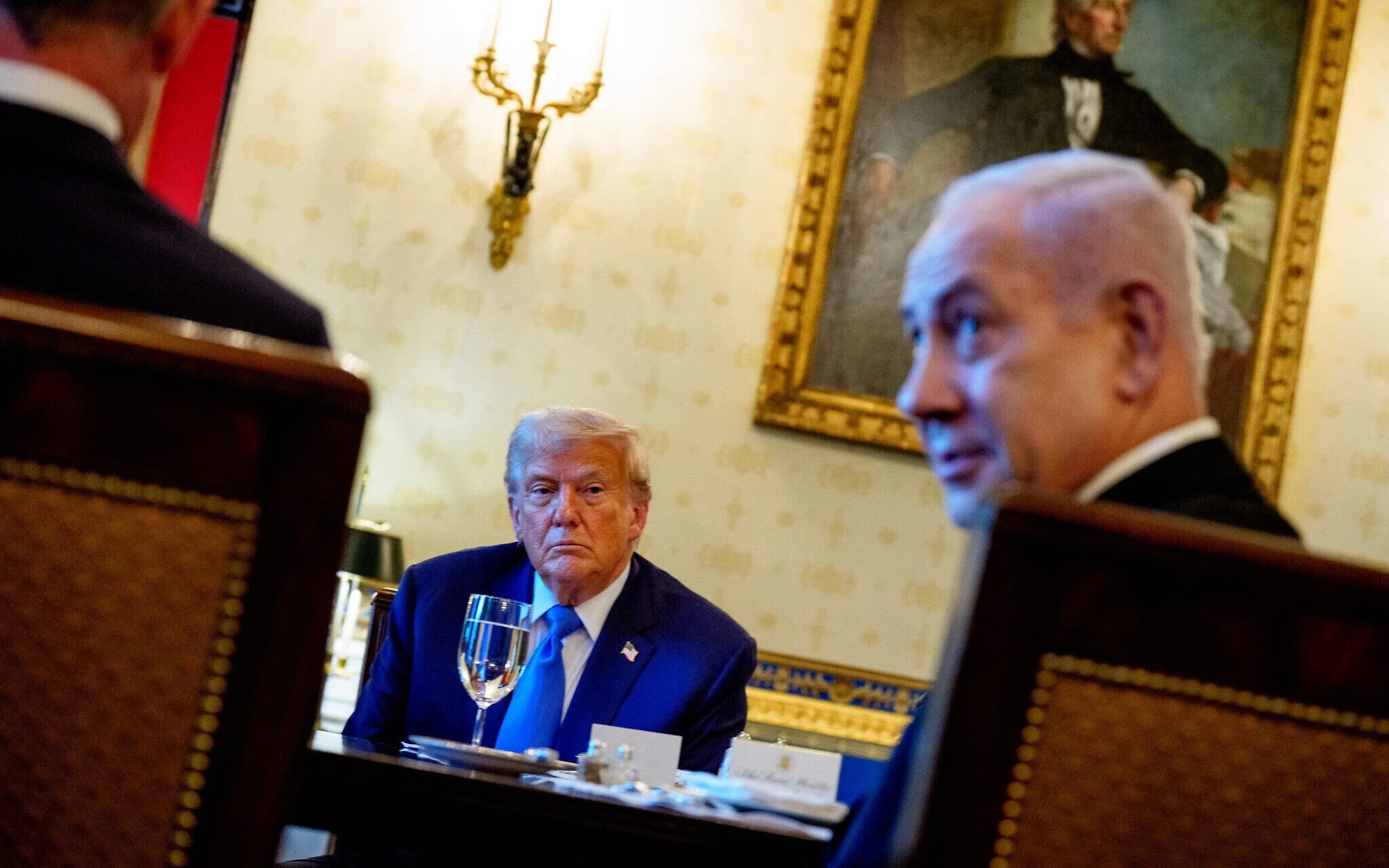
US-Israel ties are in a state of crisis, and Israel can no longer assume that the bipartisan consensus that sustained the relationship for 75 years will persist. While many in both US parties still believe Israel is vital to the safety of Jews around the world and that Israel is America’s most reliable partner in a crucial and unstable region, growing factions on both sides of the aisle question the relationship. Before a generational shift becomes irreversible, Israel needs to return to a basic tenet of its national security strategy during the first 75 years of statehood: maintaining stable bipartisan support in the US, even at the price of difficult political decisions in Israel.
As a powerful but small country, Israel’s security depends on continued strategic cooperation with the United States. After fall elections in both countries, it will be urgent for a new government in Israel to take quick action to begin repairing this vital relationship.
Israelis need to understand the generational transition that cuts across both parties in the United States. Younger voters and leaders did not experience the
Holocaust, Israel’s War of Independence, the Six-Day War or the Yom Kippur War. They came of age with Israel emerging as a regional power and a long-serving government confidently dismissing US concerns. At the same time, due partly to Israel’s own policies and partly to a concerted campaign by adversaries to reframe history, Palestinians came to be seen as victims, David to Israel’s Goliath.
Erosion on the Democratic side was marginal for a long time. But for decades, supporters of Israel who raised concerns about Israel’s policies regarding West Bank settlement expansion, treatment of Palestinians, its diplomatic and military strategy, or even disrespect shown to US presidents, were treated as naïve or hostile. Sadly, a young generation was ripe to be persuaded by a long-simmering settler colonial narrative that turns Israel’s real founding story on its head. For too many, the image of Israel as an oppressor and Palestinians as the oppressed replaced the idea that the establishment of the State of Israel enabled Jews to return to their historic homeland after millennia of displacement by one empire after another and the extermination of six million European Jews who had no country to turn to.
On the Republican side, isolationism is no longer a fringe issue, and justifying a one-country exception for Israel is challenging for many. There is a strong desire to avoid US entanglement overseas and to put America first by spending American resources at home. This is further amplified in the wake of an Iran War that is broadly unpopular in the United States, with many loud voices on the American right arguing that Israel pulled the US into war.
There was a moment of unity after Hamas brutally slaughtered 1,200 in Israel and raped or kidnapped hundreds more on October 7. President Joe Biden’s early visit offered comfort at a moment when Israel was frozen in trauma and could not begin to imagine healing; his promise of materiel support gave Israel confidence that it could prevail on the battlefield. From the outset, Biden also called on Israel to meet its obligation to protect civilians, which was always going to be hard. Israel was fighting an enemy that chose to hide behind civilians, including women and children, and to use hospitals and former schools as military bases. And with Israelis in a state of trauma, the idea of providing food and fuel that might support Hamas was a legitimate and understandable worry, even if withholding aid from civilians was an unacceptable policy.
In Israel, appreciation of President Biden’s support soon gave way to political reality. To maintain the support of hard right elements in his coalition, Prime Minister Benjamin Netanyahu frequently chose public conflict rather than private diplomacy to air and resolve differences with President Biden. These included how to handle humanitarian aid; accusing the US of not defending Israel at the UN; characterizing a dispute over one weapon system – when and where to use 2,000 pound bombs – as an “arms embargo”; and a refusal to compromise on issues like withdrawing from a narrow corridor in Gaza that Israel could easily retake within hours, if necessary, in order to reach a ceasefire and free the hostages. These cracks were evidence for the Israeli right that its prime minister would not bend to pressure from the United States and, at the same time, gave Hamas hope that the US would abandon its ally. Hamas was willing for Gazans to suffer greatly and saw public suffering as a strategic victory in a world turning against Israel, so these cracks stiffened Hamas’s insistence on terms it knew Israel would not accept.
In the end, the Biden policies made few happy, and the caricature painted by Israel’s prime minister contributed to criticism from all sides. Those in the US who wanted to end Palestinian civilian suffering said not enough was done, blaming a recalcitrant ally and an American president who did not push hard enough; those singularly focused on eliminating Israel’s enemies, and who believed that force alone could accomplish that elusive objective, saw too many limits on Israel’s freedom of action. And Israeli leaders seemed to ignore the damage being done to bipartisan support in the United States.
Burning through American goodwill
The urgency of dealing with the threats to the US-Israel relationship dominated the news of the past week.
On August 9, by outright rejecting the 15-point Gaza peace plan brokered by President Trump’s Board of Peace, Netanyahu dismissed a sincere and friendly effort to move forward in Gaza. The plan calls for phased disarmament of Hamas with gradual Israeli withdrawal from parts of Gaza. But Netanyahu has set the bar at a point that he knows cannot be cleared: no Israeli withdrawal until all Hamas weapons, large and small, are removed. This is reminiscent of the way he repeatedly raised the bar as we approached possible agreements on a ceasefire and the return of the hostages, taking a maximalist position to satisfy the right-wing faction in his ruling coalition that wants no compromise, delaying a ceasefire and hostage deal until it was too late for the six hostages killed in August 2024.
It is also reminiscent of Netanyahu’s treatment of the Iran nuclear deal under the
Obama administration. In that case, it was a mistake of historic magnitude in March 2015 to challenge President Obama before a joint meeting of Congress, heavily depleting an already diminished reservoir of goodwill with a new generation of leadership in the executive and legislative branches. Prime Minister Netanyahu, who typically avoids ad hominem conflict with President Trump, does not appear to appreciate the damage that can flow from summarily rejecting a major initiative of a US president, or the extent to which that depletes a reservoir of goodwill from both the executive branch and supporters in Congress and around the country.
Another example is a series of stories coming out of the West Bank over the past two weeks. Israel’s defense minister challenged the Israel Defense Forces major general commanding troops in the West Bank over the detention of Israelis who had attacked Palestinians. General Avi Bluth has supported using administrative detention orders against violent settlers; Defense Minister Israel Katz has moved to curtail the use of such orders against Israeli extremists.
In effect, Katz’s intervention sends a troubling message about whether settler violence will be met with meaningful consequences, and Maj. Gen. Bluth, who lives in a settlement and has been a tough defender of Israel’s security, has become a political target for standing up for the basic value of protecting Palestinian lives from vigilante violence.
Even more recently, Israeli settlers circled the home and threatened an American citizen living in the West Bank, and the current US ambassador, who is well known to support settlement activity, was forced to publicly call on the government of Israel and the military to take action to stop these attacks by “Israeli terrorists.” After an initial attempt to remove the settlers ended with the IDF withdrawing, the US Embassy pressed Israel to act. Israeli forces subsequently returned, dismantled settler encampments and detained at least one settler, but the Abu Ridi family remained fearful, with settlers still nearby and the threat not fully resolved.
There is a common thread to these news stories: The far right wing, which is a key component of the current coalition, wants no compromise. Not on Gaza, not on West Bank settlement, and not on violent extremism by settlers. Tolerating and pandering to this extreme and maximalist approach is continuing to damage the US-Israel relationship, and it should not be dismissed as the inevitable politics of an approaching election.
What the next government must do
It will fall to a new government in Jerusalem to chart a course to repair Israel’s most important strategic relationship in the world, and the new government needs to move quickly where it can. This requires difficult decisions, and at least some humility, not a trait typically rewarded in Israeli political life.
To stem the damage on the left, and prevent erosion on the right in the US, the first challenge is to demonstrate that Israel indeed respects the sanctity of life regardless of religion. It will mean returning to the founding principle in Israel’s Declaration of Independence, which sets forth a mission to “foster the development of the country for the benefit of all its inhabitants” and “guarantee freedom of religion, conscience, language, education and culture.”
Here are specific steps that can be taken quickly and be seen as meaningful change: restore funding for Israeli Arab education and public safety that was cut after October 7; resume revenue transfers to Ramallah, severely limited since October 7, and ensure that Palestinian banks remain connected to the banking system to get the economy moving again; and take immediate action to stop settler violence in the West Bank and bring those committing violence to justice. A new government will also need to take steps to preserve the status quo in terms of settlements, to leave open the possibility for longer-term negotiations to reach a solution acceptable to both Israelis and Palestinians.
Second, Israel needs to treat the already ongoing negotiation to renew the US-Israel Memorandum of Understanding as an opportunity to recalibrate how it addresses tough questions, rather than treating all challenging questions as hostile or as an existential threat. Unlike the 1990s, when I helped shape the original MOU in the Clinton administration, Israel’s economy is now fueled by a world-class technology sector, and the case for financial assistance is harder to make. Israel’s leaders recognize this fact. But the need for a close partnership remains vital, and as a small country in a tumultuous part of the world, Israel needs to maintain its qualitative military edge, which requires US support.
A new government in Israel must acknowledge that graduating from aid reflects the success of decades of support and is an act of friendship, not hostility. It must embrace the fact that the sale of US military equipment typically means complying with certain conditions on how weapons are used, and, rather than cast that as the demand of an adversary, work together to shape terms that permit Israel to retain its right to take unilateral action to defend itself. Finally, Israel has real advantages to offer through two-way transfers and joint development. As with Ukraine, Israel’s battle-tested technology is vital to the US and offers an opportunity to underscore that benefits flow in both directions.
It will take longer to address lasting regional peace and a long-term solution to the Israeli-Palestinian conflict, but Israel cannot wait to show that it understands the need for diplomatic progress. This means allowing Trump’s Board of Peace to do its job disarming Hamas and begin to rebuild permanent housing in Gaza. There must be an alternative to Hamas or the IDF governing Gaza, and this means working with Palestinians, including people with ties to the Palestinian Authority, to play key roles.
And finally, with an eye towards stemming further erosion of support among the isolationist right in the US, Israel must recognize that regime change in Iran will have to come from the inside, not the outside, and that diplomatic engagement will be needed to prevent Iran from developing a military nuclear capability.
Thankfully, the Abraham Accords, President Trump’s major first-term foreign policy accomplishment, remain in place after three years of war. Both Israel and the region would benefit from more countries joining. The steps I outlined should make it possible for Jerusalem to deepen regional cooperation. Since the outbreak of the Iran War and the closure of shipping lanes, Gulf and Arab countries have an incentive to deepen economic and transportation ties with Israel, and to build on mutual defense strategies that have protected them the past few years.
But all bets are off if Israel cannot repair the damage to the bipartisan support in the United States. And right now, it will take action to give Israel’s friends in the United States the ability to win this vital battle.