
How to stop the decline in US support for Israel

It has become a truism, and is perhaps understandable, that Israelis are too traumatized by the October 7 terrorist attacks, too wary of their neighbors’ weakness or malign intentions, and too anxious about their own security to ever talk seriously about Palestinian statehood. The more Israeli politicians say this and their supporters repeat it, the more likely it is to be forever true.
To be clear, few in America at this point expect any Israeli government to come out as champions of Palestinian statehood, desirable as that may be. But Israeli leaders who value sustaining a close partnership with the United States – including whoever aspires to succeed Benjamin Netanyahu – should recognize that the estrangement from Israel by American Jews, and young Americans more generally, now well-documented in polling, relates in large measure to Israel’s treatment of Palestinians in the West Bank, Gaza, and Jerusalem.
That is obviously not the whole story. There are certainly failings within the Palestinians’ own society and government And, sadly, antisemitism too often plays a role in Israel’s declining standing in the United States. But at the center of that growing American disaffection with Israel are the Palestinians – the impression, far too often real, of their harsh and indiscriminate treatment at Israeli hands, and Israel’s effective foreclosure of any viable path to Palestinian self-determination and equality.
And, so, while the next Israeli government won’t support Palestinian statehood, it should not take steps – as the current government has – to try to foreclose the possibility. And perhaps more importantly, it should not pursue an approach that not only dangerously demoralizes the Palestinian population, but also further alienates the Americans whose support Israel needs, but is fast losing. In short, when you’re in a hole, first stop digging.
None of this is likely to change as long as Benjamin Netanyahu is Israel’s prime minister. He is too beholden to his extremist coalition for his political and legal survival, and seemingly too comfortable with the fanatics in that coalition. He also appears confident that President Trump simply doesn’t care or doesn’t notice what is going on in the cities, villages, and war zones where Palestinians now live.
But after Netanyahu, there will be an opportunity, though probably a fleeting one. Even without Netanyahu, a continuation of the Netanyahu government’s policies toward the Palestinians, including their now routine dehumanization and degradation, will ensure that any honeymoon in the relationship is vanishingly brief.
So, those who aspire to be Israel’s next leaders, who care about their relationship with America, should be thinking now about how they might regain and retain some credibility in the eyes of Americans, young and old, Jewish and otherwise. If a relationship with the United States – including with the growing majority of Americans who value Palestinian rights – is important, there are a few things Israel’s leaders can do, well short of embracing a Palestinian state and without compromising Israel’s security.
Five practical steps
First, end what numerous Israeli leaders have described as settler terrorism against Palestinians in the West Bank. Don’t reduce it, study it, or monitor it, and certainly don’t deny it. End it. That is something well within the power and authority of the Israeli security services, and so the decision to act is a political one.
In recent years, there has been a clear Israeli policy to turn a blind eye to this violence, to the point that the tacit policy of the Netanyahu government is now seemingly to make the West Bank uninhabitable by Palestinians. Those extremist settlers, once marginal and few in number, now have deep connections with the current coalition. But indulging such a violent and racist constituency is simply not compatible with a long-term relationship with a growing majority of Americans.
Second, allow the Palestinian Authority (PA) to function, in both the West Bank and Gaza. The conventional wisdom is that Netanyahu doesn’t want a strong and internationally credible PA because that would create pressure to negotiate with the Palestinians on the core issues of statehood. But current Israeli policies, including denying the PA the tax revenues that Israel collects on the PA’s behalf, incapacitates Palestinian governance at a moment when Israel should welcome empowerment of a competent Palestinian partner.
Some in the current Israeli government may look forward to the collapse of the PA as a prelude to full Israeli annexation of the West Bank. But the only natural result of that would be a disaster of Palestinian public health, sanitation, and education, and a collapse of the Palestinian security coordination against Hamas that, against all odds, continues even to this day.
Likewise, keeping the PA out of Gaza risks dooming efforts to transition Gaza to some decent, if highly imperfect, post-Hamas governance model. Unlike any alternative that has been proposed, the PA brings a measure of international credibility, and the still nascent governing bodies that could – with adequate international support – be a viable alternative to the tyranny of Hamas.
The current “National Committee for Administration of Gaza” (NCAG) established by President Trump’s Board of Peace may be better than either Hamas or chaos. But it lacks legitimacy in the eyes of Palestinians, and in any event can make little impact as long as Israel prevents its members from traveling to Gaza. Prioritizing Hamas’ disarmament is understandable, but it will be aided by facilitating credible follow-on governance, which the PA, as it reforms, has a better chance to provide.
Third, allow the Palestinian private sector to breathe. Mobility restrictions in the West Bank needlessly cripple Palestinian businesses. The Palestinian banking sector is dangerously on the brink of collapse because of restrictions that have no apparent connection to fighting terrorist finance. And bizarrely, Palestinian cell phone providers are still only able to provide 3G service, even while 5G is the norm in Israel.
Fourth, revise the rules of engagement the Israeli military uses against Palestinians in the West Bank and Gaza. There can certainly be legitimate operations to confront terrorists. But the stories now coming to light from Israeli soldiers who served in Gaza are horrifying, and the devastating toll there in civilian casualties is perhaps enough on its own to rupture Israel’s relationship with many Americans for a generation.
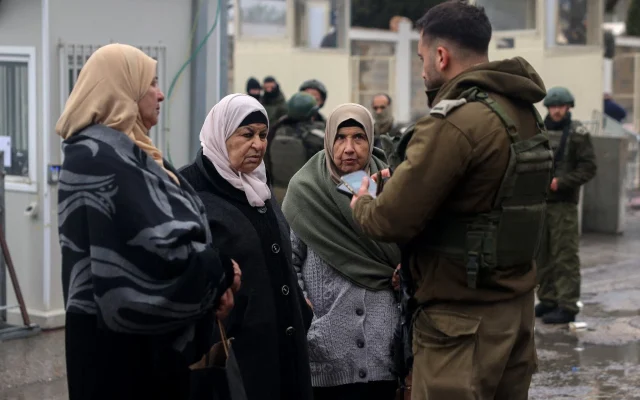
Fifth, end harassment against Christian Palestinians. Ask Christian clergy in the Old City of Jerusalem how they are treated and they will describe being spat on routinely by extremist Israeli Jews. For Jerusalem’s Christians, that is not the exceptional transgression; it is the norm. It is also something the Israeli Police could easily address.
Ask Christians of Bethlehem about their lives, and they will tell you that their towns are being encroached upon by Israeli settlers, their mobility is limited by Israeli checkpoints and roadblocks, and their daily lives are being made impossible by Israeli policies that render a decent livelihood nearly impossible. In short, they feel they have little option but to emigrate, to abandon towns and villages that have been their families’ homes since the time of Jesus Christ.
Big questions remain
Many Israelis will read this and respond, “but the Palestinians incite terror, reward terrorists, indulge corruption, and are unwilling to recognize Israel as a Jewish state.” From years of diplomatic experience, I am not blind to these problems, so, yes, let’s have a conversation about all of that. In fact, a viable plan to end the Palestinian prisoner payment system that compensates the families of Palestinians imprisoned by Israel has been in the works for years and should be fully implemented.
But absent a clear path to fundamentally better lives of equality and dignity that at least hold the prospect of eventual political self-determination, Palestinians who want to engage in good faith on those issues are badly weakened.
None of this answers the much larger question of whether a true two-state solution of the Israeli-Palestinian conflict is still possible or what that settlement might look like. But for the sake of Israeli and Palestinians alike, and for the sake of the future of Israel’s relationship with the current generation of Americans who should care about both, a new Israeli government, if not committed to Palestinian statehood, should at least not rule it out. Nor should it indulge the worst elements of its own society, or take steps that, even tacitly, make the lives of Palestinians more miserable.
That would be a modest, but useful starting place to rebuild a healthy relationship with the many Americans – Jews and non-Jews – who still believe – or could be convinced – that Israel should be a close American partner, but who worry what, on its current trajectory, Israel might become.