I write what I see
Humanitarian Theater: The UN’s Campaign to Cripple Israel
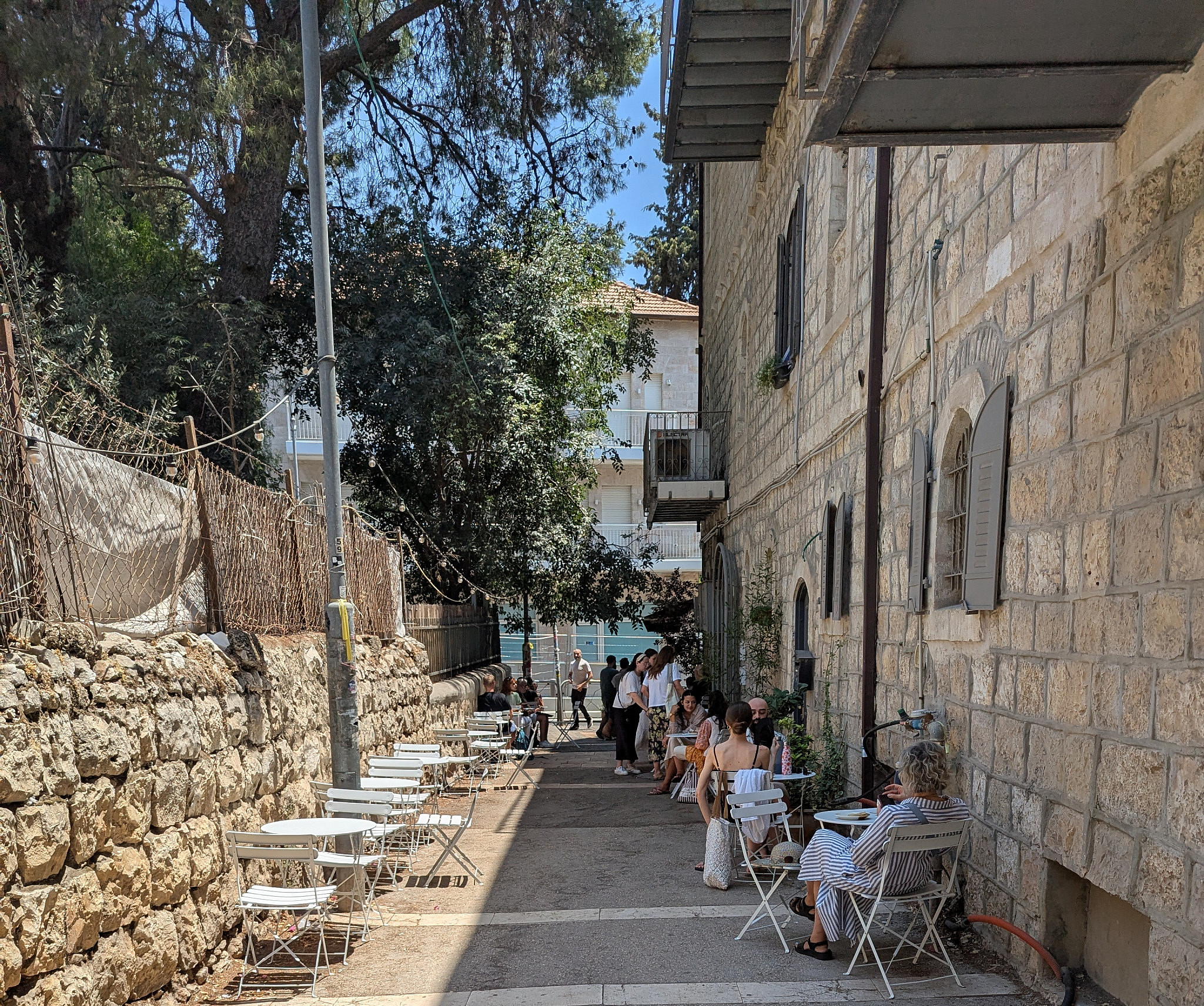
A neighborhood cafe in Israel where UN personnel sit close enough to taste the hospitality, yet remain blind to the humanity. (Courtesy Ilana Levinsky)
For decades, people have whispered what we now need to shout: the United Nations is not a neutral body in the Israeli-Palestinian conflict. It is not an impartial humanitarian lifeline. It’s a bureaucratic empire fueled by ideological bias, dysfunctional structure, and a carefully choreographed campaign to isolate and discredit Israel—all while pretending to keep the peace.
Living Among Us, Yet Against Us
I’ve spent the past few weeks talking with Israelis and internationals living in Israel about their day-to-day interactions with UN personnel—those in blue berets and those in civilian clothes, embedded in neighborhoods, dining in cafes, walking the same streets. What emerges is not just anecdotal. It is damning.
One of the people I spoke with has lived next door to various UN personnel for over a decade. They rotate every few years, so his experience isn’t limited to one person’s opinions. On occasion, they’ve even shared a glass of wine or dinner, chatting about politics, culture, or the everyday. But invariably, when he’s dared to express even mild sympathy for Israel—mentioning the country’s restraint, or its longing for peace—he’s been met with a chilling shift.
They began to pull away, conversations turned cautious, and the once-easy dinners quietly stopped. The wine glasses no longer clinked. When they did cross paths in the hallway or at the local cafe—the air was strained, sometimes filled with forced pleasantries, other times with nothing at all. Empathy for Israelis, it seems, is enough to make you a pariah—even in your own home.
A few even say it outright: “The problem with Jews is they don’t assimilate.” These people live among Israelis. They see the reality with their own eyes. They know there is no apartheid. They experience the legendary camaraderie, the desperate yearning for peace, the terror of missiles overhead—and still, the contempt is stronger. They dine beside you and secretly believe you deserve to die.
The Structure Is the Bias
The UN’s operational design ensures that foreign program officers cannot have any ethnic, religious, or familial connection to the countries they work in. On paper, this is meant to reduce bias. In reality, it severs them from context. Instead of understanding the societies they operate in, they rely entirely on pre-loaded briefings—briefings informed by decades of UNRWA narratives, written and shaped by tens of thousands of local hires with their own political agendas.
From the moment these officers arrive, the messaging is clear: you are here to help Palestinians. And “helping” is quickly conflated with endorsing nationalist aspirations and framing Israel as the primary aggressor. Even officers whose official mandate is to monitor threats to Israeli national security routinely omit key intelligence—when they’re tasked to report on activity, say of Hezbollah engaging in suspicious movement in villages near the border, they purposefully sanitize the information from their reports. Why? Because those reports might justify Israeli military action. Better, in their eyes, to stay radio silent and let Israel walk blind. We’ve seen this play out in the recent war when Hezbollah used UN facilities as firing and defensive positions. It’s not infrequent that the IDF will have to fire on a UN compound on the Lebanese border because they have essentially handed over the structures to Hezbollah.
Who’s Watching the Watchers?
Each Israeli border is manned by a different nation. Along the Syrian border (Golan Heights), the UN Disengagement Observer Force (UNDOF) includes Fijian, Indian, and Nepalese peacekeepers. The Fijians are widely known for their neutrality, religious orientation, and sometimes even sympathy toward Israel. Their approach is typically more cooperative and less politicized.
But the Lebanese border tells a very different story. Under the UN Interim Force in Lebanon (UNIFIL), Irish personnel make up one of the most prominent contingents—and are frequently described by Israeli sources as some of the most hostile. There’s a clear groupthink at the executive level. A collaborative understanding—sometimes subtle, sometimes fanatical—that Israel is the bad actor in the region. Try to challenge this bias and you’ll often be met with anger and a litany of old grievances, as though someone sat them down in front of a propaganda montage.
Other countries involved in peacekeeping include India (often bureaucratically neutral but diplomatically cautious), Indonesia and Malaysia (with known anti-Israel stances), and Ghana and Nepal (generally neutral but inexperienced in regional nuance). When UN personnel refuse direct contact with Israelis or undermine security reporting, they don’t just skew perceptions—they endanger lives.
When the UN Looks Away
When Hezbollah launches rockets next to a UN compound—something Israel has documented on multiple occasions—and Israel returns fire, the UN responds not by condemning Hezbollah, but by accusing Israel of war crimes. In one infamous incident, Israel was accused of killing UN peacekeepers with artillery fire. What went unreported is that Hezbollah had fired first, using the compound for cover.
Silence is policy. The UN’s rules prohibit peacekeepers from engaging, even when enemies coalesce right outside their gates. On paper, this sounds like neutrality. On the ground, it’s suicide.
Gaza Aid Games
In early 2024, when aid convoys became targets and chaos reigned, Israel didn’t demand control. It was asked to provide protection. But when it did, the UN pushed back, insisting it would rely on its own contractors. The results were catastrophic: thousands of Gazans have died in looting and convoy-related incidents—entirely on the UN’s watch. But when the headlines hit? The blame is always on Israel.
Israel, along with the US, then backed the creation of the Gaza Humanitarian Foundation (GHF)—a new initiative meant to bypass corrupt Hamas channels and finally deliver food to civilians in need. The UN and its web of NGOs boycotted it immediately. Not because it wouldn’t work, but because it might. Because it wasn’t under their control and threatened the narrative.
The BBC’s Quiet Bias
A BBC report on May 31, 2025, by Matt Murphy and Kevin Nguyen, covered the GHF chaos—but began by blaming the Israeli blockade. “A vital lifeline for Gazans who haven’t seen fresh supplies for more than two months due to an Israeli blockade . . . ” No mention that Hamas stockpiled food or blocked its own people’s access.
The BBC wrote that GHF had distributed 2 million meals by day four but said it couldn’t verify the figure. Interesting—because BBC seems to have no trouble verifying Hamas-supplied casualty numbers. Then it reported that when GHF contractors used non-lethal deterrents at a site in Nuseirat to control a panicked crowd, the BBC again “couldn’t confirm” their version of events. Yet Hamas propaganda? No problem.
It gets better: the BBC “discovered” two fake GHF Facebook pages sharing misinformation. That warranted serious concern. When Israel points out fake Hamas social media, the BBC yawns. But here? Front-page news.
NGO Hypocrisy and Manufactured Outrage
Oxfam chimed in to complain about GHF’s locations and “military control.” Bushra Khalidi worried the elderly couldn’t reach aid zones. When the UN ran distribution, there were 400 points. GHF had only four. But the UN also had 75 years to fix this. They didn’t. GHF was built in a war zone—overnight.
Chris Newton from Crisis Group claimed it was an attempt to “concentrate” the population. Professor Stuart Gordon of LSE bemoaned aid at “the point of a mercenary’s gun.” No mention that UN warehouses are looted. That Israel coordinates food drops because no one else will. That people are dying while bureaucrats debate optics.
The Real Scandal
And yet, outrage is nowhere to be found. UN personnel can openly work to undermine Israel, observe terror infrastructure without reporting it, and stand by while civilians—on both sides—pay the price for their silence. When Israel offers to protect aid convoys, it’s accused of militarizing relief. When it defends its borders, it’s blamed for the violence. Even the act of surviving is reframed as aggression.
They sit in our cafes, close enough to hear the sirens and see the fear on our faces. They witness our grief, our exhaustion, our longing for peace—and still, they choose the lie. Because to admit the truth would shatter the story they’ve built around themselves.
No one with a conscience could call this humanitarianism.
This is humanitarian theater.
Related Topics
Related Posts