Hungary: Still a Friend, No Longer a Veto
Seventy years ago, on October 23, 1956, students took to the streets of Budapest. Workers joined them, then families, and thousands of Hungarians who had grown tired of being told what to think and how to live. They wanted Soviet troops out of their country. They wanted to speak freely and decide their own future. For a few extraordinary days, they believed they might succeed. Then the Soviet tanks returned.
Hungary is commemorating that revolution at an unusual moment in its history. Six months ago, Hungarians voted to end Viktor Orbán’s sixteen years in power. On October 27, Israelis will elect their own parliament. And earlier this week, President Isaac Herzog visited Budapest, where a new government is turning back toward Europe.
Herzog himself drew attention to the anniversary. Speaking alongside Hungarian President András Baka, he recalled the courage of those who challenged Soviet rule. He also thanked Hungary for helping Israel maintain constructive relations with the European Union (EU).
That second remark deserves a closer look.
For years, Hungary was the country Israel could count on when things became difficult in Brussels. As criticism of Israeli policies grew, Orbán repeatedly came to Jerusalem’s defense. He and Benjamin Netanyahu enjoyed a close political friendship, and that friendship gave Israel something increasingly valuable: a European leader willing to stand in the way when others wanted to act against it. More precisely, Hungary had a veto.
Many EU foreign policy sanctions require the agreement of every member state. If one country objects, the measure cannot pass. Orbán understood how much influence that gave him, and he was not afraid to use it. When European governments discussed sanctions involving Israel, officials in Jerusalem had good reason to watch Budapest.
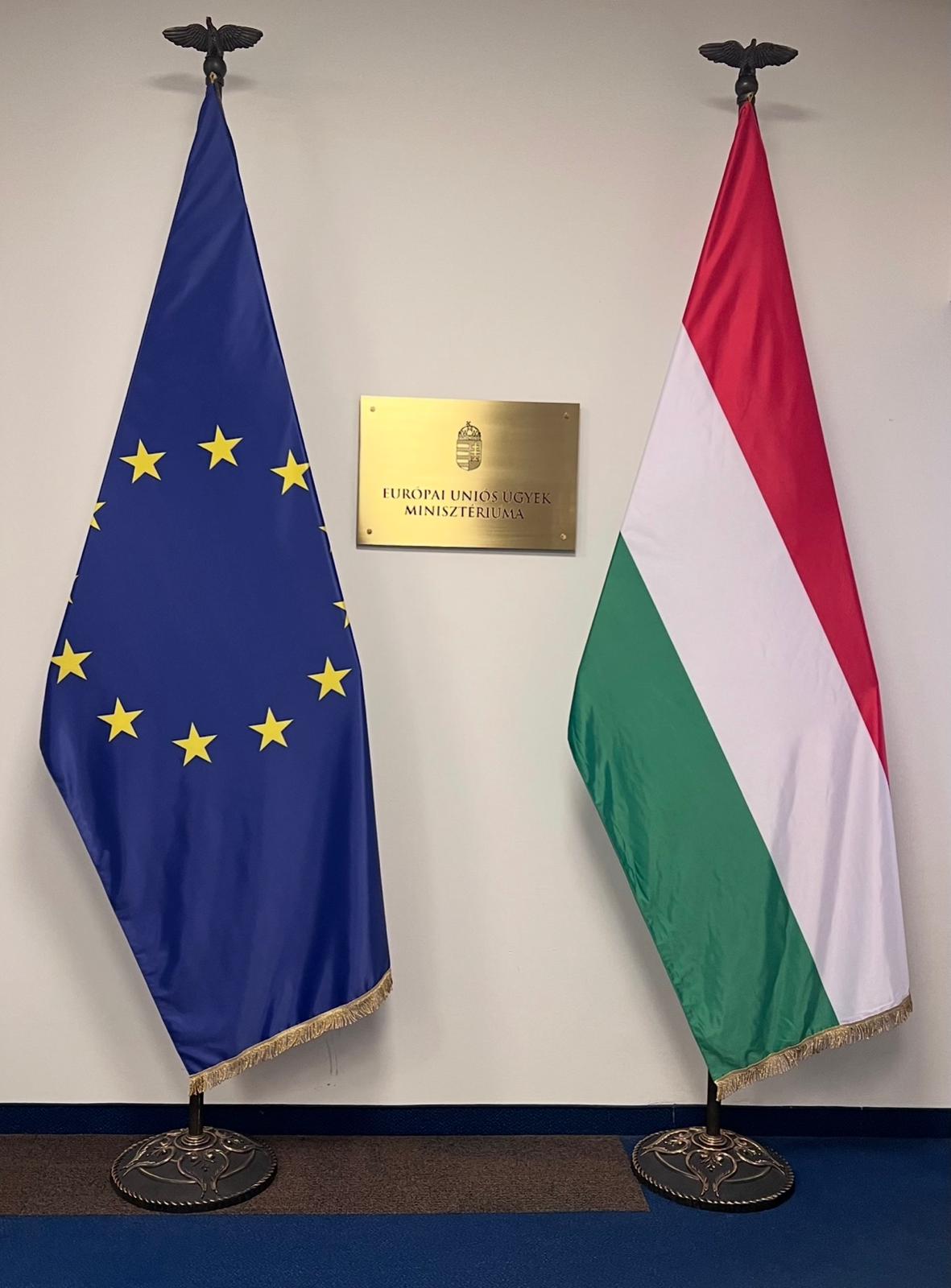
Then, on April 12, Hungarians voted for someone else. Péter Magyar’s Tisza party won a decisive victory. Orbán was out, and the new prime minister made repairing Hungary’s relations with Brussels a priority. Years of disputes over judicial independence, democratic standards, and European funding had taken their toll. Magyar wanted Hungary to have a stronger voice in Europe rather than remain isolated within it.
The consequences became clear within weeks. On May 11, the EU approved sanctions against violent Israeli settlers and settler organizations after Hungary lifted the veto maintained under Orbán. The sanctions had previously been blocked. Now they could go forward. Israel had grown accustomed to Hungary providing protection when European governments considered measures it opposed. One election in Budapest had changed that arrangement.
Yet Magyar has been careful not to turn Hungary’s political transition into a break with Israel. During Herzog’s stay, Magyar accepted an invitation to Israel. His government has spoken of maintaining close ties and emphasized its commitment to combating antisemitism. Hungary still wants Israel as a friend. It is simply less inclined to defend every Israeli position in Brussels.
In May, Hungary also reversed Orbán’s decision to withdraw from the International Criminal Court (ICC), which had issued an arrest warrant for Netanyahu. Budapest was making clear that its friendship with Israel would no longer determine its stance in international institutions.
For Israel, Orbán’s support had been useful, sometimes enormously so. But it also encouraged a habit of looking for the European government that would block an unwelcome decision rather than dealing with the disagreements themselves. That approach could deliver a diplomatic victory on a particular day. It could not repair Israel’s wider relations with Europe.
Prague may now become the next Budapest. Under Prime Minister Andrej Babiš, Czechia has opposed aspects of the EU’s proposed measures against Israel. But what happens when that government changes, too? Governments lose elections. Building a strategy around one ally leaves a country exposed when that ally is gone.
And a friendly government cannot block everything. EU foreign policy sanctions generally require unanimity, but other decisions follow different rules. In September 2025, the European Commission proposed suspending certain trade provisions of the EU-Israel Association Agreement. That measure requires a qualified majority rather than unanimity. It remains pending and has not secured sufficient support. Hungary’s veto was never Israel’s only safeguard, and it was never enough.
The Hungarian and Israeli elections are not quite alike. Hungary’s place in Europe was part of the political debate that brought Magyar to power. Israelis are heading to the polls with other concerns foremost in their minds: security, Iran, the consequences of October 7, and accountability for what followed. Europe is unlikely to decide their vote. But it will still be there the morning after.
Whoever forms Israel’s next government will inherit the same difficult conversations about Gaza, settlements, Palestinian statehood, and international law. European leaders will continue raising questions that many Israelis consider unfair or biased. Israel, for its part, faces security threats many Europeans struggle to grasp. Neither side can expect the other simply to change its mind.
In 1957, as the Treaties of Rome were signed, Shimon Peres, acting on behalf of David Ben-Gurion, met Jean Monnet to explore the possibility of Israeli membership in the emerging European Economic Community. When I researched that meeting, what struck me was how early Israel’s leaders understood that Europe’s future would have a direct bearing on their own.
They were right. Europe is now Israel’s largest trading partner. Israeli scientists work with colleagues across the continent through “Horizon Europe,” although the Commission’s July 2025 proposal to restrict Israeli participation in part of the research programme shows how vulnerable those connections have become. Agreements signed by politicians matter less here than the people who have learned to trust one another, often despite their governments. Losing those ties would be far easier than rebuilding them.
Europe has responsibilities, too. The threats from Iran and its regional allies are serious. Herzog’s appeal in Budapest for greater international cooperation against them was a reminder that Israel needs partners willing to work with it, not merely governments that block proposals in Brussels. European leaders cannot expect Israel to listen to their concerns if they show little interest in understanding Israel’s own.
There will always be disagreements. Some are profound, and no amount of goodwill will make them disappear. But a relationship built over decades should be able to withstand difficult conversations without putting everything else at risk.
Whoever governs Israel after October 27 will have to decide how to approach Europe. It can keep searching for sympathetic leaders who will occasionally rescue it from an unwelcome decision. Or it can put time and effort into repairing ties that have been allowed to deteriorate.
Elections determine who governs. What happens to a country’s friendships afterward depends on what those governments choose to do.