


A Mermaid in Jerusalem
I live in Israel. Here’s why I don’t think all Jews necessarily should
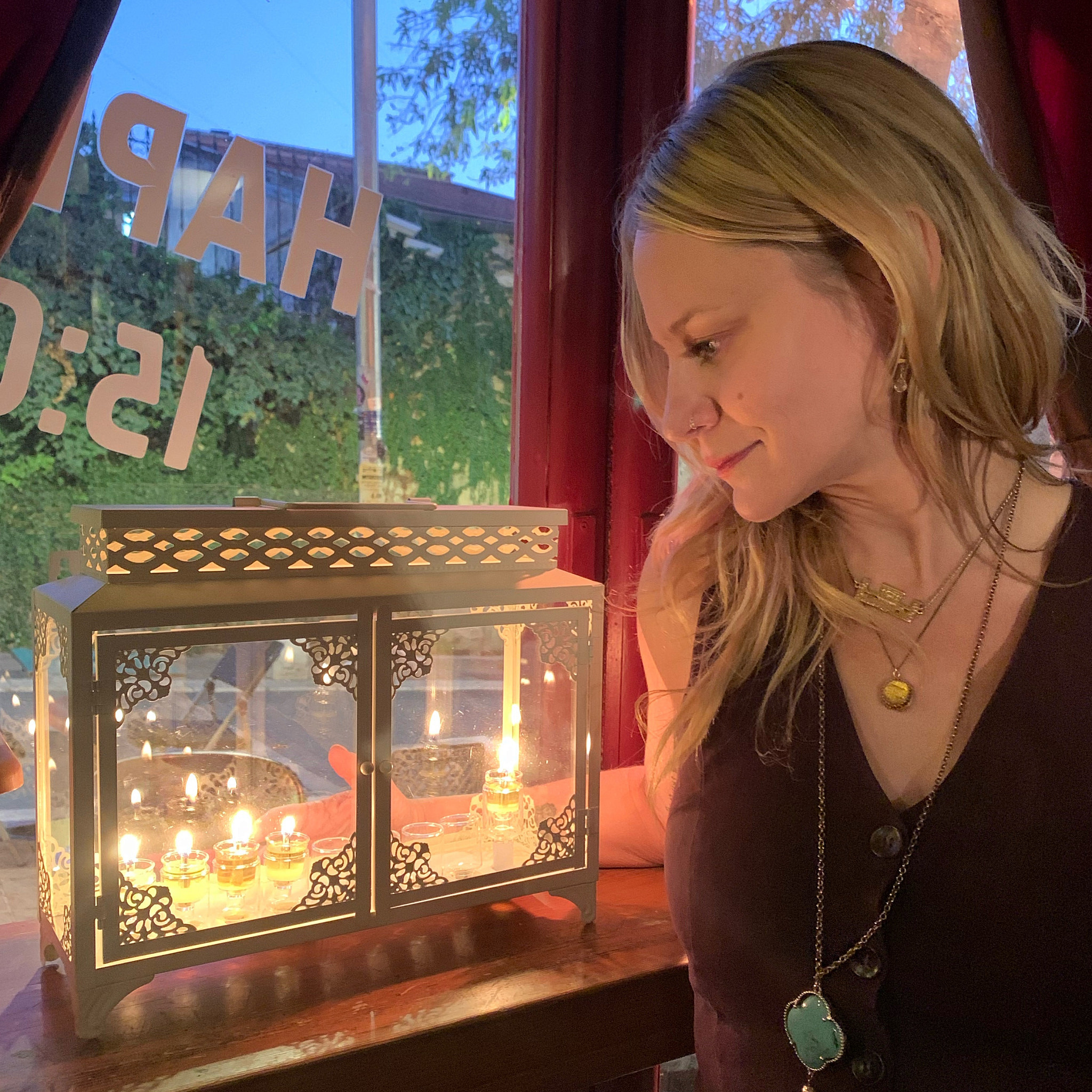
Someone asked me a burning question on the 4th night of Hanukkah:
Should all Jews move to Israel?
And here’s my answer:
I chose this place and youll have to take me out of hete feet first. I’m not leaving.
But should everyone move here? Not necessarily.
Jews have never been a simple people. We live with contradiction, tension, argument. After all, Jacob didn’t become Israel by arriving somewhere peacefully — he became Israel by wrestling. With God. With himself. With the future. Complexity isn’t a bug in Jewish life; it’s the operating system.
For one thing, safety. History has taught us — again and again — that concentrating all Jews in one place is not always wise. A dispersed people is, paradoxically, a resilient one. The tribe survives because it knows how to live in many landscapes at once.
There is also moral wisdom in dispersion. Living as a minority — as outsiders — keeps certain muscles strong: empathy, humility, alertness. Absolute power corrupts, and forgetting what it means to be vulnerable is dangerous — not only for others, but for us.
And yet — roots matter. Memory matters. Language, land, rhythm, calendar. Israel is not a solution to Jewish life, but it is a central text of it. A place where Judaism is not an abstraction or an inheritance, but the air itself — messy, miraculous, infuriating, alive.
So no, not all Jews should move to Israel.
But every Jew should visit.
Every Jew should encounter Israel not as a headline or an argument, but as a breathing, living place — loud, tender, infuriating, and endlessly inventive. A country built on ancient longing and daily improvisation. A place where contradiction isn’t a failure but a feature.
Every Jew should experience Israel as a society that argues in public, mourns collectively, innovates out of necessity, and somehow still finds time for weddings, startups, protests, prayer, poetry, great hummus, and terrible parking.
Israel is miraculous not because it is perfect — it isn’t — but because it exists at all. Because it is constantly becoming. Because it holds beauty and brutality, holiness and exhaustion, memory and invention in the same small, impossible space.
To visit Israel is to understand that Jewish sovereignty doesn’t erase Jewish complexity — it amplifies it. It forces ancient questions into modern form: power and responsibility, safety and morality, particularism and universalism, survival and soul.
You don’t have to live here to love it.
You don’t have to agree with it to be shaped by it.
But you should know it — not as an idea, but as a place.
Because Israel isn’t just where Jews live.
It’s where Jewish history, argument, grief, hope, and imagination collide — every single day.
And those of us who live here should visit our brothers and sisters in the diaspora, too — to remember what Jewish life looks like without sovereignty, without Hebrew on street signs, without the army as background noise. To remember how much creativity, moral courage, and Jewish renewal happens far from this place.
Both communities are essential.
One without the other becomes distorted.
Israel without diaspora Jews risks power without perspective.
The diaspora without Israel risks memory without grounding.
We need the tension.
We need the wrestling.
We need the conversation.
We need each other.
We can’t be a light unto the nations unless we are also part of the nations.
— and we need to keep moving together between worlds, the way Jews always have.