I read this book over Shabbas
People who never question what they read or inquire about what they sense with their other senses are like Hermits, fools who close themselves in caves. They tell others that they are communicating with God, a lie, since God created or formed humans with a mind to think, the first gift He gave people, so that they can enjoy the beautiful world He built for them, and not ignore the gift. This gift, according to the great sage Maimonides, is stated in Genesis 1:27, where God declares He made humans in “His image.” This image is the gift of intelligence which God wants us to use rather than depending upon his help, which human babies need.
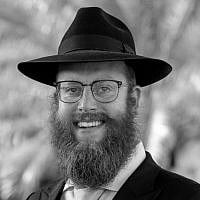
Rabbi David (Dovid) Bashevkin is an American Orthodox rabbi, educator, writer, podcaster, and scholar who has become especially well known for making serious Jewish ideas accessible to a broad contemporary audience. He is the founder and host of 18Forty, a Jewish media and educational organization built around long-form conversations about religion, identity, history, psychology, and contemporary Jewish life.
Bashevkin serves as a clinical assistant professor of Jewish values at Yeshiva University’s Sy Syms School of Business and has also been widely associated with Jewish youth education through NCSY, the Orthodox Union’s youth movement. He received rabbinic training at Yeshiva University and pursued graduate work that included Jewish studies and public policy. His scholarly and educational interests range widely: Jewish thought, religious failure, Hasidism, psychology, history, and the problems facing contemporary religious communities.
His 2026 book, I Read This Over Shabbos: Reading Jewish History in the Parasha, published by Koren/Maggid, is a substantial work of roughly 540 pages, organized around the annual cycle of the Torah readings.
There are hundreds, perhaps thousands, of books of parashah commentary. Most follow one or more familiar approaches: explaining difficult verses; citing classical commentators such as Rashi, Ramban, Ibn Ezra, or Sforno; deriving religious or ethical lessons; presenting sermons; explaining laws connected with the weekly portion; and offering mystical or Hasidic interpretations.
Bashevkin’s book does something significantly different. His central innovation: reading Jewish history through the parashah does not primarily ask, “What does this Torah portion mean?” Instead, he often asks: “Where do we see the ideas, tensions, and problems raised by this Torah portion appearing again in Jewish history?”
He has described his approach as showing how the themes and concepts of the weekly portion “reverberate through Jewish history into our contemporary lives.” In his formulation, the project is not simply about “reading Torah into our lives,” but about “reading our lives into the Torah.”
Thus, a Torah portion becomes a doorway into: Jewish history; biographies of important Jewish figures; religious controversies; political arguments; psychological questions; modern Israel; American Jewish life; synagogue disputes; and books and intellectual movements.
This gives the book a distinctive character. It is simultaneously a book of Torah interpretation, Jewish history, biography, intellectual history, and contemporary reflection. A second difference: Bashevkin is a guide to further reading.
Each chapter concludes with recommended books and articles under the heading “Shabbos Reads.” Thus, the book is not designed merely to provide Bashevkin’s answers. It encourages readers to continue investigating subjects on their own. In this respect, Bashevkin acts less like a traditional commentator delivering a final interpretation and more like an enthusiastic teacher saying: “Here is an important connection. Now let me show you what you can read if you want to explore it further.”
The subjects connected with the parashot include, among others: the State of Israel; German reparations after the Holocaust; arguments over mixed seating in synagogues; Rabbi Adin Steinsaltz; Rabbi Joseph B. Soloveitchik; Jewish conversion; religious leadership; family and inheritance; the relationship between Jews and the land of Israel.
The result is that the weekly Torah portion is not treated as an isolated ancient text. It becomes part of a continuing Jewish conversation extending from the Bible to the present.
Here are some examples illustrating Bashevkin’s contributions to the study of the weekly Torah portions. He connects the Torah portion with real Jewish history. A biblical idea serves as the starting point for a historical investigation. In his discussion of Birkat Kohanim, Bashevkin raises a striking question from the Talmud: Why do the children of great religious scholars or leaders not always follow in their parents’ paths? He explores religious education, inheritance, family expectations, and the difficulty of transmitting spiritual enthusiasm from one generation to the next. He asks and answers, “Who belongs to the Jewish people? What is the relationship between religion and peoplehood? How has Jewish identity developed historically? “Is Jewish History Lashon Harah?” This is a particularly characteristic Bashevkin question. Jewish history necessarily contains failures, scandals, conflicts, and imperfect leaders. But Judaism also has serious ethical problems.
In short, the book teaches readers about the Torah and Jewish history, helps them retain what they learn, and prepares them to become future readers.