Life on the Border with the Gaza Strip
I Travelled to Germany with a Small Trolley, Came Home with a Trunk Full of Love
For the past two years, I declined invitations to travel abroad to bear witness to our survival of the October 7 massacre. I needed to spend that day with my community, surrounded by people who had experienced the same terror and understood the grief and the long journey of healing.
But this year, on the third anniversary of the day our lives changed forever, I felt ready to venture out on my own, sharing our stories, our realities, and our efforts to rebuild with people who wanted to hear them.
I had no idea how much I would receive in return.
I am deeply grateful to everyone who made this journey possible, giving me the opportunity to represent my community, our region, and the People of Israel before Christians and Jews who love us and stand with us.
A story that Hollywood couldn’t make up
My journey began on the evening of October 6 with a screening of The Road Between Us: The Ultimate Rescue. Had this extraordinary rescue story been written as a Hollywood screenplay, people might have dismissed it as too far-fetched to be true.
Except it happened.
I’ve met Amir Tibon, whose family is at the heart of the film, during the days when people who lived in our region were in the throes of building cross-border collaborations with Gazans, a dream we came heartbreakingly close to realizing before October 7. Hearing what Amir and his family endured while trapped in their safe room, with terrorists outside and rescue delayed, was deeply affecting. It was so familiar – experiences that anyone hiding in their saferoom that day, lived. In the end, it was Amir’s father who came to save them. Too many stories from that day did not have such a happy end.
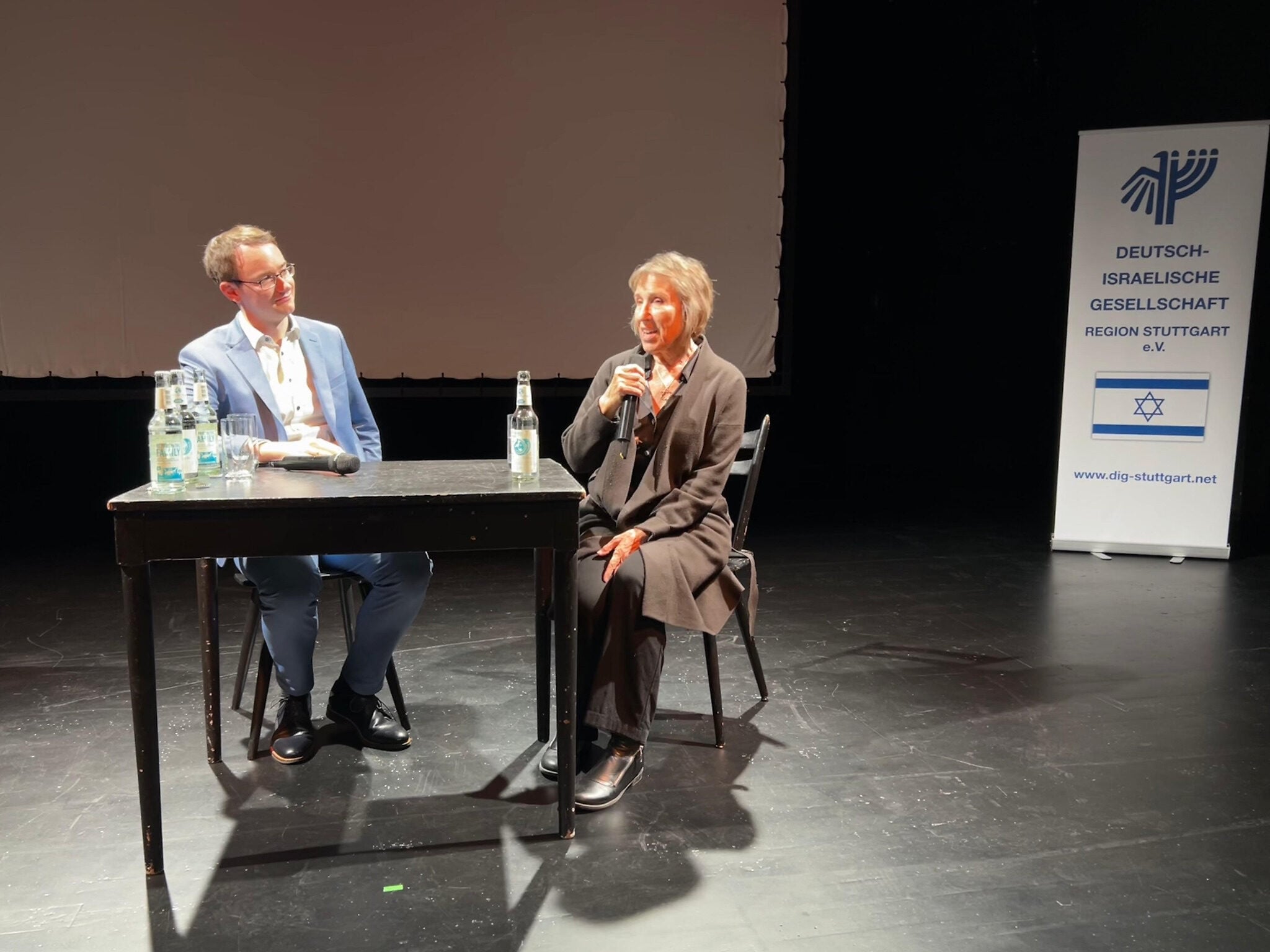
I spoke to the audience afterward, sharing my own survival story and answering questions. Some were difficult, but all were important. My heartfelt thanks to the Alliance for Israel – Against Antisemitism in Tübingen for making this screening possible.
Walking through Germany with Jewish eyes
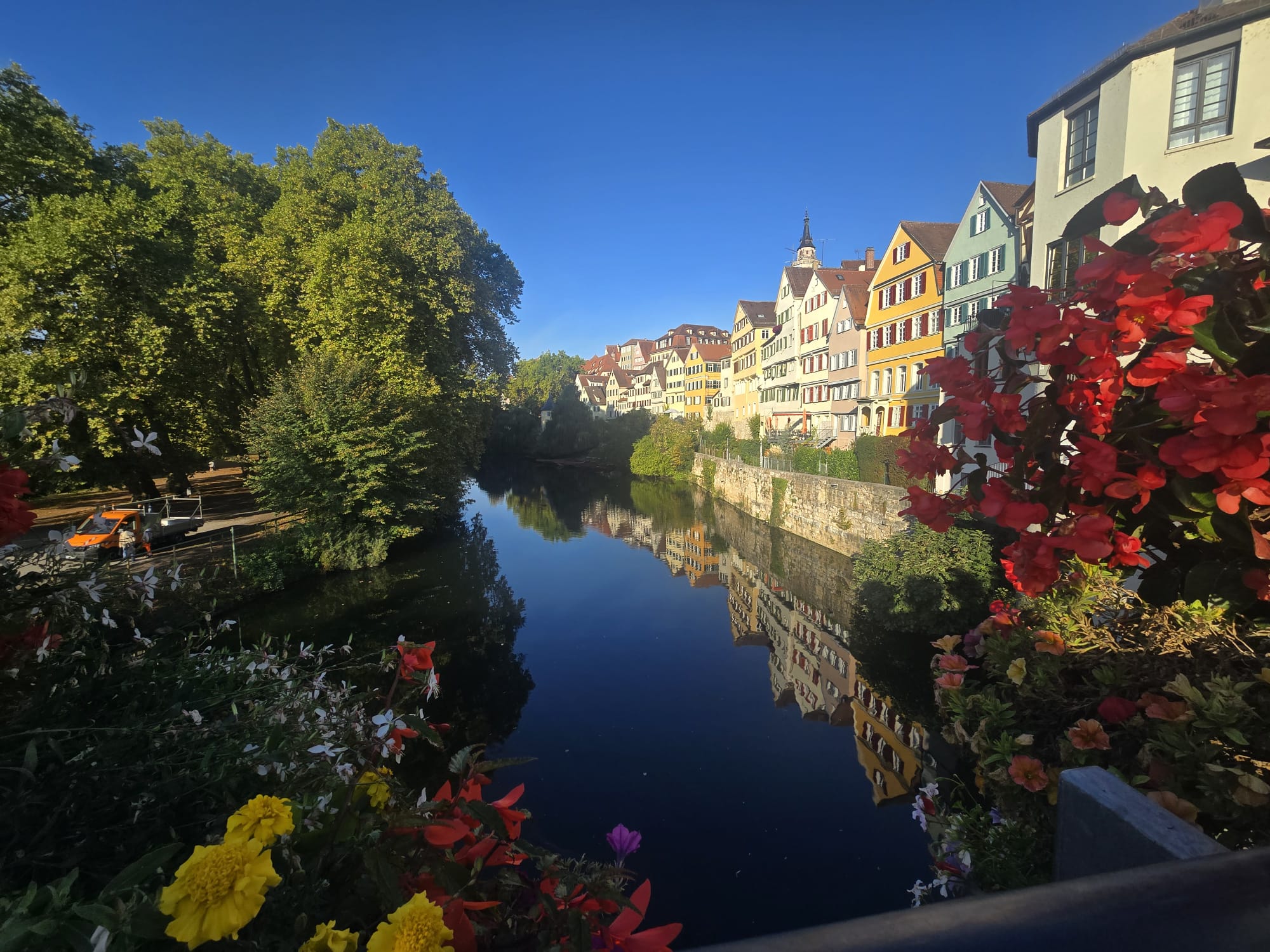
The following day, I explored Tübingen’s beautiful old city, admiring its ancient castle, historic streets, village square, and the people enjoying ice cream beside the scenic Neckar River.
But another thought kept intruding: What were your parents and grandparents doing in the late 1930s and early 1940s?
I grew up Jewish in New York City, learning about the horrors of the Holocaust. Jewish Americans of my parents’ generation wanted nothing to do with anything produced in Germany. That history was part of our collective memory, shaping how we understood the world.
It was impossible to walk through a German town without wondering about those who had lived there when Jews were being persecuted and murdered.
And yet, here I was, a Jewish Israeli woman, about to discover a very different side of Germany.
October 7: Two thousand people, blue and white flags, and tears I couldn’t hold back
That afternoon, my wonderful driver and guide, Laura, drove me to Stuttgart for what would be the largest solidarity gathering for Israel in Germany.
Approximately 2,000 people of different ages and backgrounds filled the city’s central marketplace, hoisting a sea of blue and white flags, to demonstrate their support for Israel and their opposition to antisemitism.
It was October 7.
As I prepared to speak, the date, the place, memories of what my community and our country had endured and all those people waving our Star of David flag, in the middle of Germany, overwhelmed me. I don’t often get choked up, but when I walked onto that stage, tears of gratitude streamed down my cheeks.
There is something profoundly moving about standing before a crowd in a foreign country that has gathered to tell you that you are not alone.
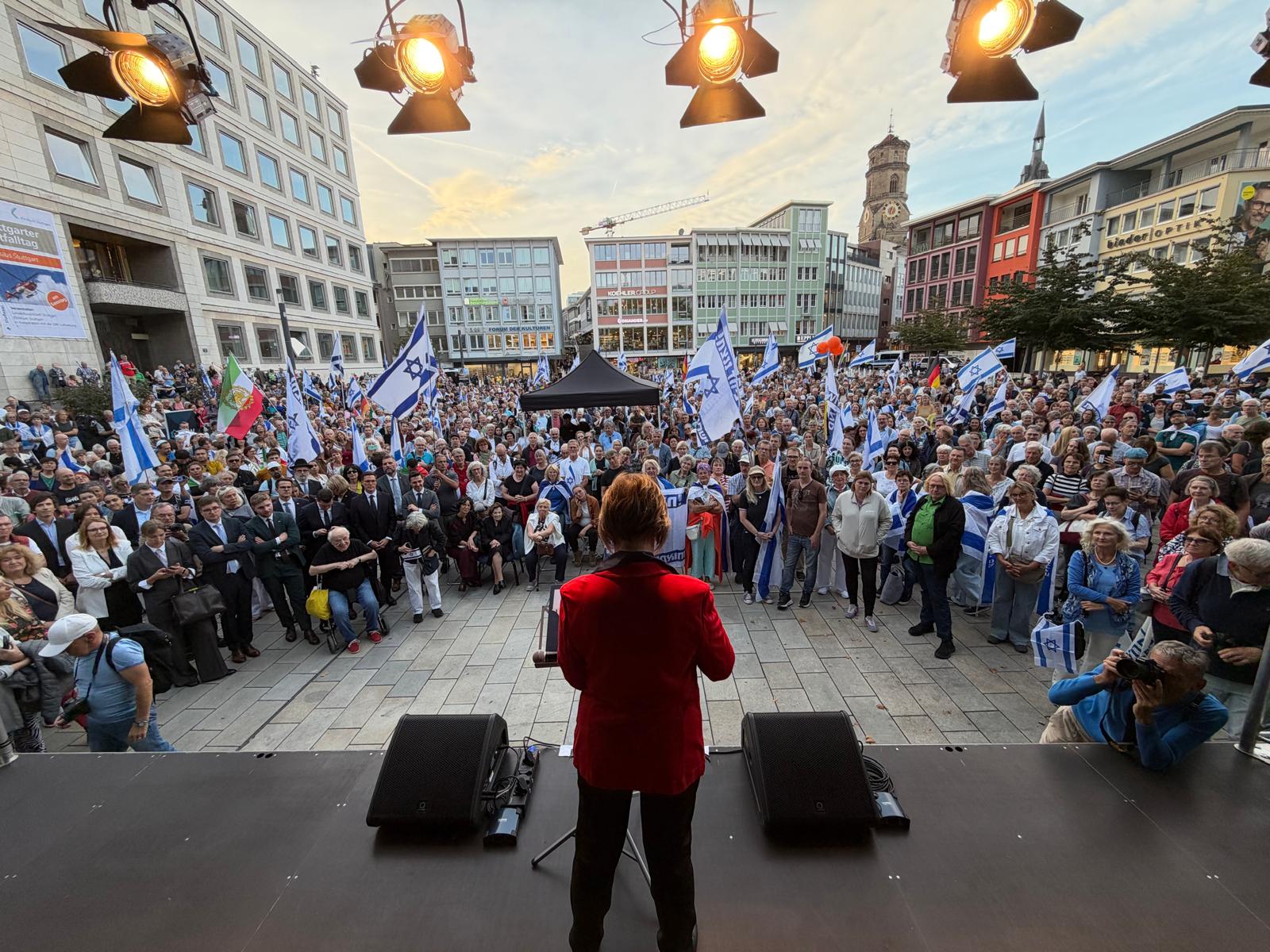
After me, Maral Salmassi, an Iranian woman whose family fled to Germany after radical Islamists seized control of their country, took the stage. Today, she fights for the freedom of her people and against antisemitism and the willingness of people in the West to empower Hamas, backed by Iran’s Islamic Revolutionary Guard Corps. “Reza Shah, Roohet Shad”
Her story was a powerful reminder that the struggle against radical Islamism and antisemitism crosses borders. People with very different histories can recognize the same threats and stand together against them.
That day, in Stuttgart, I felt the strength of that solidarity firsthand.
Lunch in a castle, and a lesson in perseverance
The following day, I had lunch in a castle with Gottfried Bühler, chairman of the International Christian Embassy Jerusalem (ICEJ), his family, and a very special woman, Eva Erben, and her escort.
Eva, a Holocaust survivor in her 90s, lives in Israel, not far from me. She continues to travel to schools in Germany to bear witness, ensuring that young people hear directly from someone who lived through the Holocaust. She had also spoken before me at the Stuttgart rally.
I felt both admiration and humility in her presence. Here she is, well into her 90s, still telling her story and educating the next generation.
If Eva can keep doing it, I suppose I can keep saying yes when invitations arrive!
That evening, Gottfried accompanied me to the Israel Congress at Schönblick in Schwäbisch Gmünd. Its motto was “Israel concerns us all.”
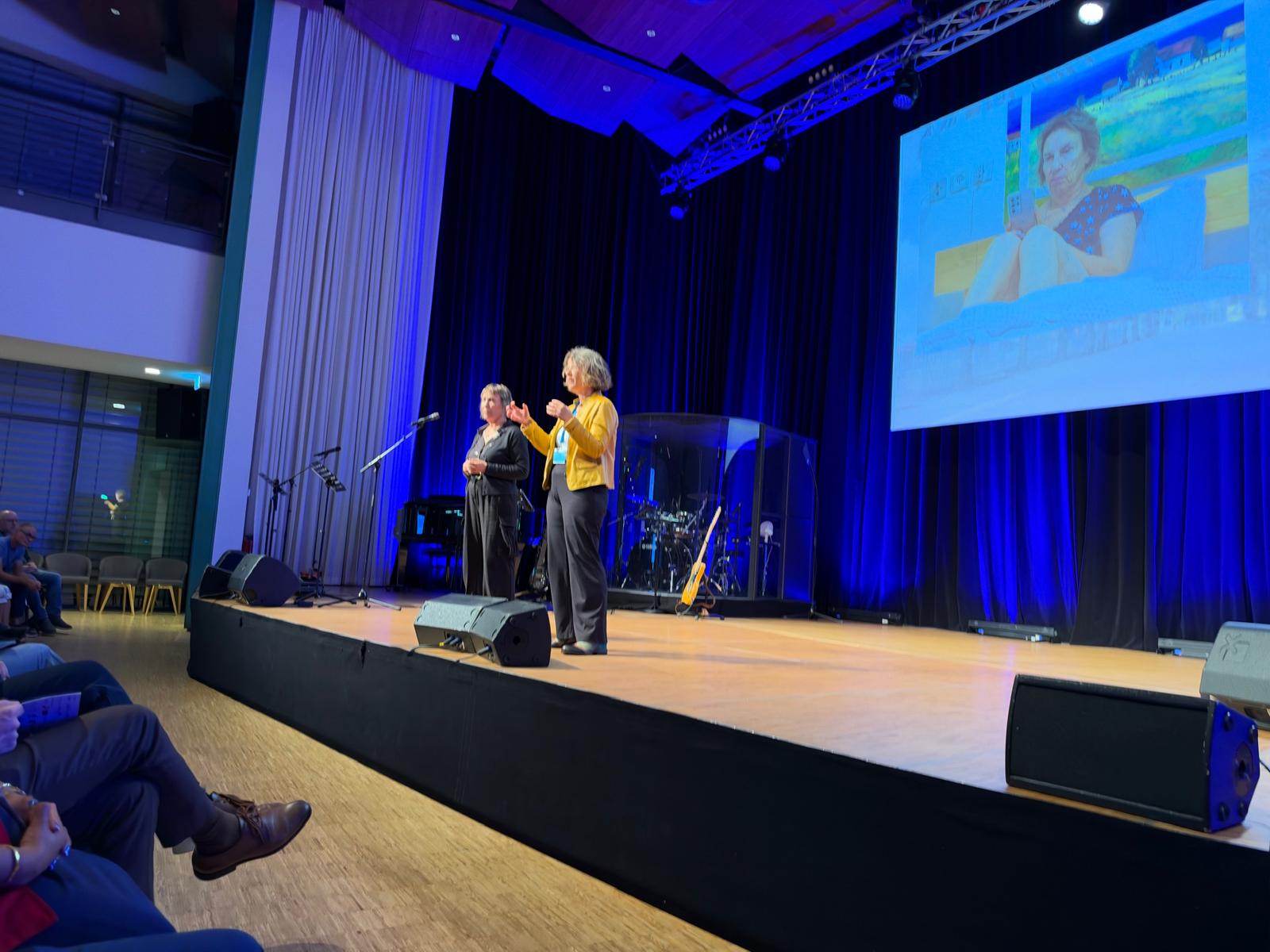
Speaking to approximately 800 participants, I told them about life on the Gaza border, how close I came to losing my family on October 7, and the journey our community has taken since that terrible day.
I spoke about our lives beyond the headlines: our efforts to rebuild our homes and community, to regain a sense of security, and to create a future despite everything.
Israel is where we live. Where our children and grandchildren grow up, where friends and neighbors are buried, where we plant gardens, make plans, laugh, argue, and carry on. For those of us living along the Gaza border, the reality of October 7 is never far away.
I went to Germany to give something. I came home having received so much.
Being Jewish and a proud Zionist isn’t easy these days. Sometimes I feel as though I’m shouting into a void, trying to reach people who have already decided what they think of us, with little interest in understanding the reality of our lives.
Growing up as a young Jew in New York, I didn’t always feel the love of my Christian neighbors. I certainly never imagined that decades later, I would find myself embraced so warmly by Christians in Germany.
Yet even before October 7, I had begun discovering how many people around the world genuinely care about us here in Israel, including those of us living on the Gaza border.
Christians from different countries have visited us in Nirim to learn what life is like just a couple of kilometers from Gaza. Since October 7, Christian groups have invited me to share our experiences and our pain, helping us on our journey toward healing. They have become valued friends and allies.
Each time I’m invited to speak abroad, I find myself thinking, This will probably be the last time. How much longer will people want to hear me?
And then someone invites me again.
This time, it was Oliver Vrankovic, a journalist, staunch Zionist, and chairman of the Stuttgart chapter of the German-Israeli Society (DIG), with whom I’ve been in touch for years. His invitation, in cooperation with ICEJ, brought me to the Stuttgart solidarity rally. Others opened their doors, organized events, asked thoughtful questions, and made me feel welcome.
To Oliver, Gottfried, the organizers in Tübingen, Laura, Lisa, Bruno and Stefanie and everyone who made this journey possible: thank you.
Thank you for listening, for asking even the difficult questions, and for standing with Israel and against antisemitism. Thank you for reminding me that there are people who care about our future and understand that behind every headline are real human beings.
I travelled to Germany with nothing more than a small trolley.
I returned home to Nirim with something much bigger: a trunk full of love, encouragement, friendship, and renewed faith in the people who stand beside us.
I went to bear witness to what we survived.
I came home reminded that we do not have to face the world alone.
Related Topics