His name is Mamdani. Say it.
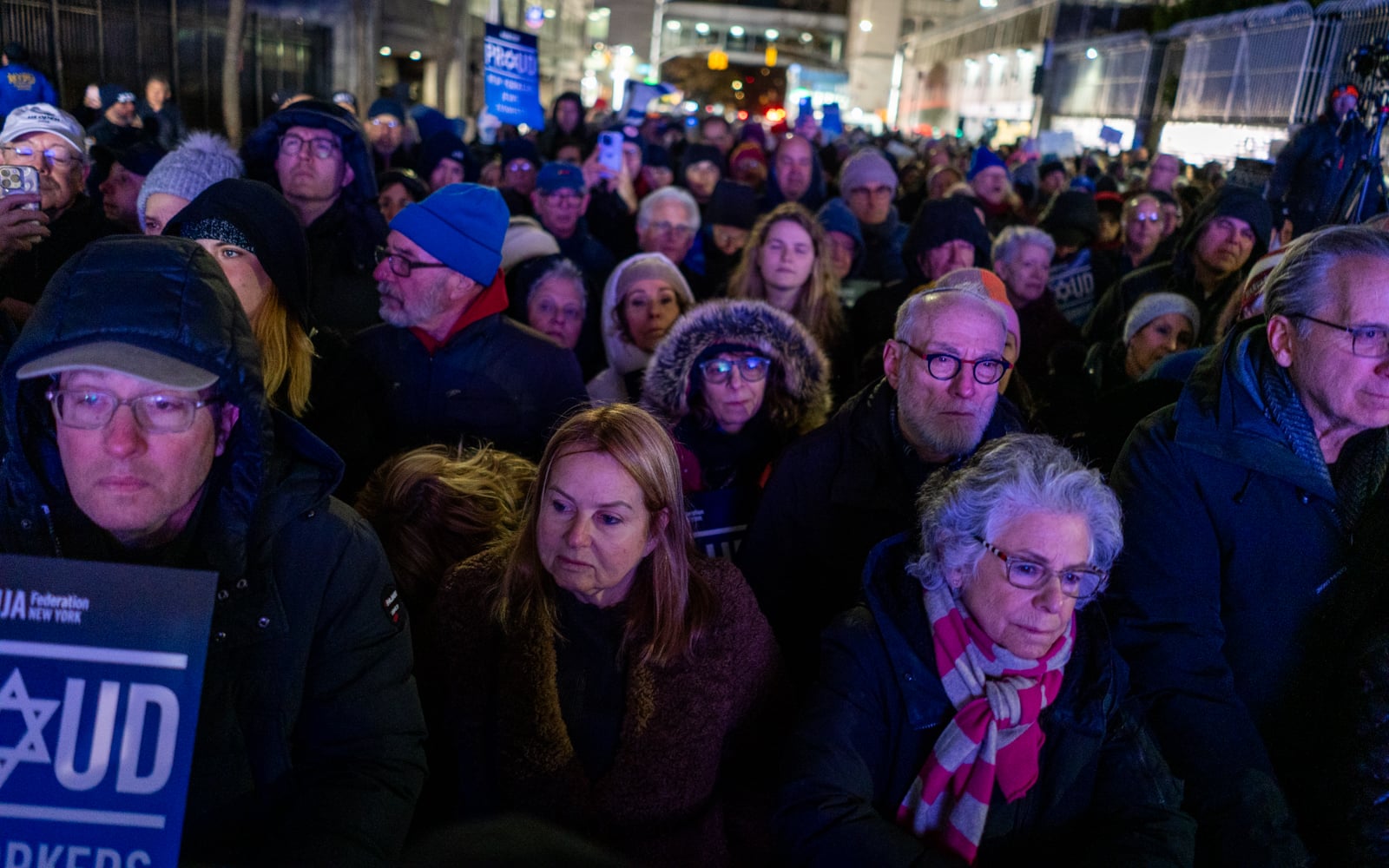
This past Thursday night’s rally at Park East Synagogue, held in response to the recent intimidation and threats directed at individuals who participated in a Nefesh B’Nefesh aliyah event there, was critically important.
My first reaction was one of uplift. Despite the cold, hundreds came out. Our leaders from different denominations and political bents stood together. All of this was spiritually strengthening.
And yet, alongside that inspiration, I felt a heavy ache in my heart.
I thought to myself: what would happen if, God forbid, a Christian or Islamic house of worship was under attack? The Jewish community, as it has done in the past, would come out in force — and rightly so — standing shoulder to shoulder with people of other faiths to raise our voices in solidarity, demanding justice.
But last night, as I looked around, I felt alone. Perhaps members of other faith communities were present — maybe leaders of churches or mosques were there — but they were not visible. And that absence was painful. Painful to feel that we were standing largely on our own, even as our commitment to stand for others has always been unconditional. We yearn for that solidarity to be mutual and visible.
As the rally went on, another absence weighed on me: one word was never spoken — the name “Mamdani.” Much was said about the pain of what happened at Park East and about our responsibility to stand strong in the face of antisemitism. Yet the person whose antisemitic rhetoric helped shape the atmosphere that made such intimidation possible was never publicly named.
In moments of silence, I called out from where I stood: “Mamdani — we are Zionists. Mamdani — we are Israel.”
I could not help but wonder why his name was avoided.
Knowing how our community operates, I don’t believe this was coincidence. A conscious decision was made not to challenge Mamdani publicly — from the fear that confronting him might jeopardize future negotiations regarding the safety of the Jewish community.
But the opposite is true.
There is everything right — and nothing reckless — about dignified, peaceful Hadar Yisrael: telling the mayor-elect clearly that his rhetoric has contributed to a climate in which protests against synagogues become possible, even normalized. When phrases such as “globalize the intifada” or false accusations of “genocide” are said or tolerated or left unchallenged, a message is sent: that incitement is acceptable.
When the Jewish people’s right to a Jewish state is opposed, Israel itself is delegitimized. And when outrage is directed at Israel alone while real genocides receive little or no attention — in Sudan, in Nigeria where Boko Haram has kidnapped hundreds of Christian children, or in China where Muslim populations face internment — the double standard is unmistakable.
And when the mayor-elect’s office declares that discussing aliyah in a synagogue is a “violation of international law,” a defilement of sacred space, that crosses the line from disagreement into intimidation, it is intolerable.
The strategy to avoid calling out Mamdani’s name is mistaken. Silence does not strengthen us – silence weakens us. Public moral clarity does not endanger negotiators; it empowers them. It strengthens the hands of those who must sit across the table because it shows they represent a community that will not be bullied into quiet.
Our responsibility is to raise a voice of moral conscience, of Jewish conscience — with dignity, with strength, with gevurah. To live what we have learned over decades: to speak truth to power. This is not a time to hide. This is a time to stand tall. For the quieter we are, the more vulnerable we become. The louder we speak — in peace with moral courage — the more protected we are.
No matter who leads this city, our message must echo the words of the Prophet Isaiah: “For the sake of Zion, I will not be silent.”