


Notes from home and far away
Ideology over Children at Plan Canada
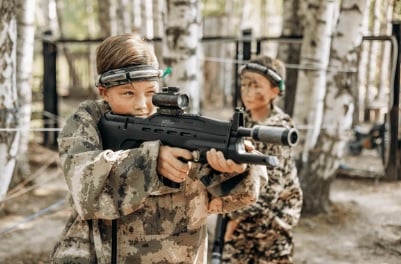
Boy Soldiers in developing countries needs to become far more of a priority to feminist organizations like Plan Canada
When Advocacy Becomes Ideology: My Concerns With Plan Canada’s One-Sided Framework: Fact-Free Bias on Gender Issues & Israel
For years, I believed in Plan Canada’s mission. I assumed the organization was grounded in child-centered humanitarian work and empirical evidence. But I’ve become increasingly troubled by their direction in recent years.
Whether in their gender programming or their political messaging, Plan Canada seems to be guided less by balanced, evidence-based child protection and more by a narrow ideological framework imported from Western activism.
This framework is not neutral.
It selectively amplifies certain narratives while ignoring others—even when children’s lives are at stake.
My Attempts to Engage With Plan Canada
I reached out to Plan Canada to request a meeting to present research on boy soldiers, one of the most severe and under-addressed child-protection crises in the world.
A meeting was initially accepted—then canceled.
Attempts to re-engage were ignored.
The message was clear:
Topics that don’t align with a particular ideological narrative are not welcome.
When an organization refuses to even hear evidence about a highly vulnerable group of children, it raises legitimate concerns about bias.
Plan Canada’s Political Messaging on Israel and Palestine
What deepened my concerns even further was Plan Canada’s recent political messaging regarding the Israel–Hamas conflict.
In their public statements, Plan Canada echoed language that:
-
accuses Israel of “genocide”
-
treats claims from Hamas as verified fact
-
uses highly inflammatory terminology without reference to independent investigations or internationally vetted evidence
These accusations—originating from a designated terrorist organization—were treated as established truth.
Whether one agrees or disagrees with Israel’s actions is not the point.
The issue is credibility.
For a major Canadian NGO to promote unverified allegations from a combatant group in an ongoing war undermines trust. It blurs the line between humanitarian advocacy and political activism—and it risks spreading misinformation to the Canadian public.
If an organization is willing to repeat unverified claims in one context, how can families, donors, or policymakers trust the objectivity of its programming in others?
This erosion of credibility affects everyone—most importantly the children they claim to represent.
The Forgotten: What Boy Soldiers Endure
While Plan Canada publicly positions itself as an organization centered on girls, the suffering of boys—especially in conflict zones—is systematically absent from their advocacy.
Yet in many regions, boys face extreme, gender-targeted violence that Western frameworks fail to acknowledge.
Realities Boy Soldiers Face
-
Forced recruitment
-
Coercion into frontline combat roles
-
Beatings, intimidation, and forced obedience
-
Use as porters, scouts, and human shields
-
Exposure to executions and extreme brutality
-
Psychological trauma that lasts decades
-
Community rejection after escape
Why Boys Are Targeted
-
Armed groups exploit cultural expectations that males must serve as fighters
-
Boys are physically coerced into dangerous labor
-
Boys are abducted at higher rates in certain regions
-
They are viewed as expendable “resources”
This is not a fringe issue—it is central to global child protection.
Yet Western feminist frameworks erase it almost entirely.
Girls Need Support. But Boys Should Not Be Invisible.
Girls face:
-
Early or arranged marriages
-
Limited access to education
-
Cultural constraints that limit freedom
These challenges matter deeply and deserve real intervention.
But acknowledging girls’ suffering does not require erasing boys.
A child-protection framework should protect children, not narratives.
The Danger of Imported Ideology
What we are seeing is the rise of a simplified gender framework—shaped in Western academic spaces—that:
-
assumes one gender is the primary victim
-
ignores contexts where boys are overwhelmingly targeted
-
discourages balanced discussion
-
frames child suffering through political ideology rather than evidence
Decades of Canadian research show that violence and harm do not follow simplistic, one-directional patterns.
Exporting these flawed assumptions to developing countries risks serious consequences.
When ideology replaces evidence, children pay the price.
A Better Way Forward: Evidence, Not Ideology
Humanitarian advocacy must:
-
be grounded in verified data, not political narratives
-
avoid repeating unverified claims from combatants in a war
-
recognize the suffering of all children—boys and girls
-
avoid importing Western ideological templates onto developing countries
-
focus on real conditions, not activist talking points
Plan Canada has the potential to do tremendous good. But that good is compromised when ideology replaces objectivity and when certain children become invisible because they don’t fit a predetermined narrative.
Final Thoughts
I write this not to attack Plan Canada, but to demand better.
When a major NGO:
-
ignores the suffering of boy soldiers
-
refuses dialogue
-
imposes a narrow ideological lens on developing countries
-
and echoes unverified claims about complex geopolitical conflicts
…it raises serious concerns about its commitment to evidence-based humanitarianism.
We owe it to vulnerable children around the world to demand advocacy grounded in truth, balance, and integrity—not ideology.