
If Iran Assassinated Trump, Would President Vance Destroy Iran?
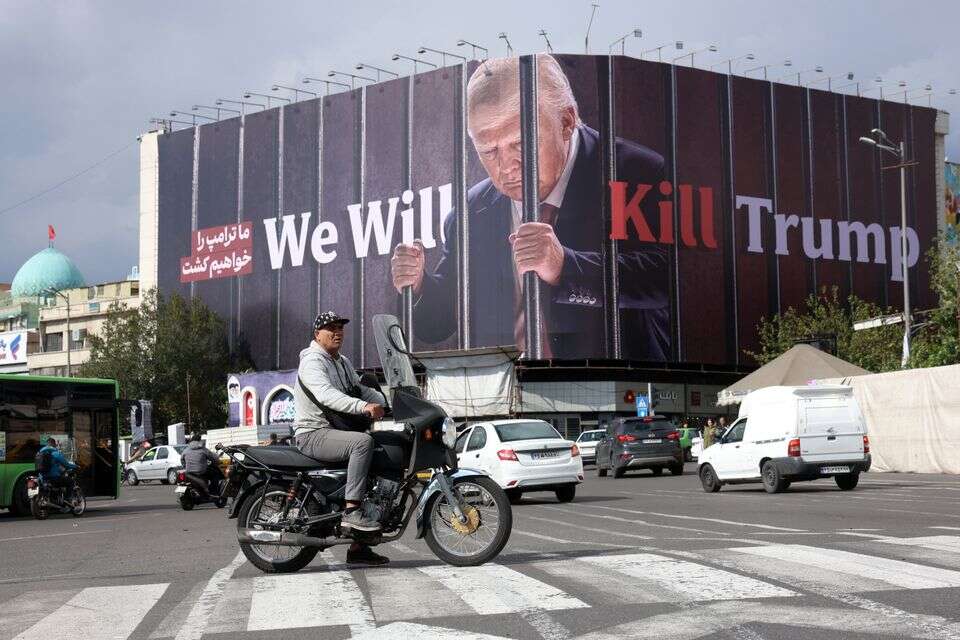
On November 14, Israel Hayom reported that the Mossad had provided American intelligence agencies with information about an alleged Iranian plan to assassinate President Donald Trump and senior administration officials using drones. According to the newspaper, which cited senior Israeli and American officials, the intelligence had been corroborated by another Western agency, prompting extraordinary security precautions.
The allegations have not been independently confirmed. They still raise a stark question.
What would happen if Iran succeeded in assassinating the president of the United States? And what would his successor do?
On February 4, 2025, Trump publicly declared that he had left instructions for Iran to be “obliterated” if it assassinated him. In July 2026, he went further, claiming that 1,000 American missiles were ready and aimed at Iran, with thousands more prepared to follow. Whether those statements correspond to specific, executable military orders remains unknown. But Trump had made his intentions clear to Tehran: assassinating him would bring devastating consequences.
There is a constitutional complication. If Trump were assassinated, Vice President JD Vance would immediately become president. As the Associated Press explained in July, there is no automatic mechanism requiring the military to execute a deceased president’s instructions. Vance could follow Trump’s wishes, modify them, or reject them. The decision would be his.
Trump and Vance have not always agreed on military intervention against Iran. In March 2026, Trump acknowledged that his vice president had been “philosophically a little bit different” and initially less enthusiastic about military action. Vance, a Marine Corps veteran who served in Iraq, has repeatedly warned against prolonged foreign conflicts. His political identity has been shaped partly by opposition to the costly interventions of the past two decades.
At the same time, he has defended the objective of preventing Iran from acquiring nuclear weapons and publicly supported Trump’s handling of the conflict once operations began. His reservations do not mean he would automatically oppose retaliation.
On November 12, Trump publicly directed Vance to concentrate on investigating alleged corruption in Democratic-controlled states and cities. The vice president, who had played an important role in earlier diplomatic efforts involving Tehran, appeared to have been sidelined from negotiations with Iran.
Trump can assign his vice president other duties and exclude him from negotiations. He cannot change the constitutional fact that Vance is next in line. The man who appears to have been pushed aside today could become president tomorrow, with the authority to decide whether Iran faces the devastating response Trump has promised.
Imagine the situation. An American president has just been assassinated by a foreign government. The country is in shock. Millions of Americans are grieving or furious. Congress is demanding answers. The military is awaiting instructions. The world is watching.
In that moment, Vance’s previous caution about prolonged wars could become politically irrelevant. Constitutionally, he could refuse to carry out the retaliation Trump announced. Politically and strategically, that decision would be extraordinarily difficult.
A president who had been in office for only a few hours could face immediate accusations of weakness. Members of Trump’s movement might demand that he honor the explicit warnings. Many other Americans, including some who had opposed Trump, could regard the assassination of a sitting president by a foreign government as an attack requiring a decisive national response. The pressure could transcend ordinary partisan lines.
Vance would also have to consider how Iran, Israel, America’s regional partners, and its strategic competitors interpreted his choice. A response perceived as insufficient could raise serious questions about the credibility of American deterrence at the exact moment he needed to establish his authority as commander in chief.
A limited military strike would demonstrate resolve without fulfilling Trump’s threat of obliteration. A campaign matching the scale Trump described would satisfy demands for retaliation but require Vance to authorize action far beyond what he had previously considered necessary. That distinction could define the first day of his presidency.
History offers examples of disagreements between presidents and vice presidents over military policy. Lyndon Johnson and Hubert Humphrey differed over Vietnam. Barack Obama and Joe Biden disagreed over Afghanistan. George W. Bush rejected Dick Cheney’s recommendation to strike a suspected Syrian nuclear reactor. None of these vice presidents inherited the presidency because a foreign adversary had assassinated the commander in chief.
There is also doan essential condition: Iranian responsibility would have to be established. In November 2024, the Justice Department announced charges connected to an alleged Iranian-directed plot to assassinate Trump before that year’s election. Iran denied involvement. Those allegations would shape American suspicions, but suspicion alone would not establish responsibility. Assume, for the purposes of this question, that American intelligence obtained compelling evidence that Iran’s leadership ordered and carried out the assassination.
The question would then be what President Vance was prepared to do. He might conclude that the murder of an American president justified overwhelming retaliation. He might choose a more limited response and defend it as sufficient. His earlier skepticism would not necessarily determine the outcome.
What makes the scenario particularly difficult is the gap between legal authority and political reality. As president, Vance would have the constitutional authority to reject Trump’s instructions. The circumstances of his succession could place enormous pressure on how he exercised that authority. He might believe that refusing to act would permanently damage his presidency and America’s credibility, and authorize a campaign he would never have chosen under ordinary circumstances.
Today, Trump can sideline Vance from negotiations with Iran. Tomorrow, under the most extreme circumstances, that same vice president could become the president of the most powerful nation on Earth, inheriting not only its immense military capabilities but also the responsibility to decide whether Trump’s threat against Iran should be carried out.
But would Vance project that power with the same determination as his predecessor? A man who questioned the wisdom of another war could suddenly find himself under extraordinary pressure to demonstrate that the United States remains just as formidable under his leadership.
He would have the constitutional freedom to say no. The harder question is whether he would believe he could afford to.