If it were really that bad, someone would have done something…Wouldn’t they?
 Parshat Vayishlach and the responsibility of a community to confront abuse
As the director of the Magen crisis support and advocacy center for survivors of sexual abuse, the topic of sexual assault is one of the defining issues in my life. Yet every year, Parshat Vayishlach challenges me with questions and perspectives that are so familiar, and yet so confronting. This year, when I sat down to read the parsha a few weeks ago, the question that echoed up to me was one I have heard so many times before from victim-survivors:
How could so many people have known, and nobody did anything?
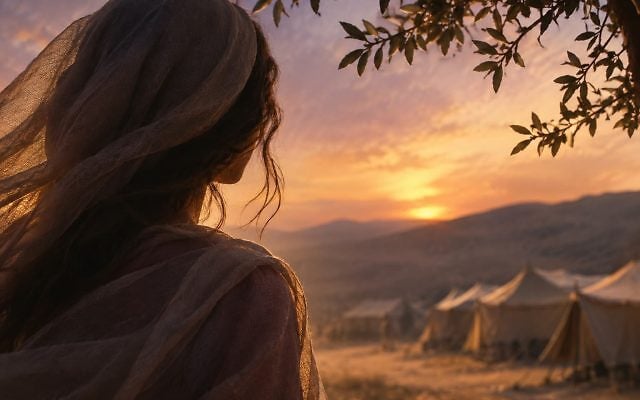
The Torah tells us that Dinah was taken and raped by Shechem, the son of Chamor, a prince in the district. What follows is a disturbing and confusing story, culminating in Shimon and Levi killing the men of Shechem in retaliation for what was done to their sister.
Much has been written about the morality of their actions, and Yaakov’s condemnation of their violence. But the Rambam raises another question, shifting our attention directly to the people of Shechem.
In Hilchot Melachim (9:14), the Rambam explains why the inhabitants of Shechem bore responsibility for what happened:
“שהרי שכם גזל והם ראו וידעו ולא דנוהו”
For Shechem had committed a violation, and they saw and knew, but did not bring him to justice.
According to the Rambam, the people of Shechem were not simply innocent bystanders to a terrible situation. They knew what had happened, and they failed to hold Shechem accountable.
The Rambam is addressing a specific legal obligation under the 7 Noahite laws, and his interpretation of the brothers’ actions is not universally accepted. But the underlying principle is one that deserves serious consideration.
What responsibility do we bear when we know that someone in our community has harmed another person?
Not long ago, I received a call from a therapist in a particularly insular ultra-Orthodox community. He wanted to ask me about a Rosh Yeshiva who, rumor had it, had been convicted of sexually abusing a student.
As it happens, Magen had been involved in the case for years, supporting victims through the legal proceedings. Following his conviction and sentence, the Rosh Yeshiva had returned to his position at the yeshiva, despite legal restrictions prohibiting him from doing so. We had been working through legal channels to address the loopholes he had been exploiting to retain his position.
The therapist was incredulous. How is it possible that the legal system was allowing this man to still run a yeshiva?!
It is an excellent question. But to me, there was an even bigger one.
How was the community allowing this to happen? How were parents continuing to send their sons to a school run by a convicted sex offender?
I asked the therapist, who lives in the community and has sons of a similar age, what he was hearing from other parents.
He told me that he had spoken with several of them, and their response was that they didn’t believe the allegations.
“But he was convicted,” he had pointed out.
Yes, they acknowledged. But clearly the conviction must have been mistaken, or the abuse couldn’t have been that serious.
Because if it really were serious, surely someone would have stopped him from returning to the yeshiva.
I have thought about that conversation many times since.
Here parents had effectively convinced themselves that the absence of intervention was proof that intervention wasn’t necessary.
And unfortunately, I know so many parents are in situations where they are making exactly the same calculation.
We have a name for one of the phenomena at play here: the bystander effect. When responsibility is shared among many people, each individual can become less likely to act, assuming that somebody else will.
In cases of sexual abuse, these dynamics are often compounded by fear, loyalty, social pressure, and the difficulty of accepting that someone we know and respect could be capable of terrible things.
People worry about making a mistake. They worry about reputations, families, and communal conflict. Sometimes they genuinely don’t know what to do. Sometimes they are afraid of what will happen if they speak up.
And sometimes, they simply assume that if something really needed to be done, someone else would already have done it.
I understand those instincts. But understanding why people fail to act does not absolve us of the responsibility to do so.
The Gemara in Shabbat (54b) teaches:
“כל מי שאפשר למחות לאנשי ביתו ולא מיחה נתפס על אנשי ביתו, באנשי עירו נתפס על אנשי עירו”
One who has the ability to protest wrongdoing within their household and does not is held accountable for that household; one who can protest wrongdoing within their city and does not is held accountable for their city.
Our obligations do not end with ensuring that we ourselves are not the ones causing harm.
When a community repeatedly fails to confront abuse, the consequences extend far beyond the individual victims. People learn that speaking up is dangerous, that silence is safer, and that the reputations of powerful individuals are more carefully protected than the people they have harmed.
Slowly, a community can become a place where the appearance of righteousness is more carefully protected than righteousness itself.
People often ask me whether I believe meaningful change in how communities respond to sexual abuse must come from the top down or the ground up.
My answer is always the same.
It has to come from every direction.
From rabbis and Rabbanits and community leaders who are prepared to take responsibility, even when doing so is uncomfortable. From parents who ask difficult questions and refuse to accept reassuring answers simply because they are easier to live with. From educators, therapists, neighbors, friends, and ordinary community members who understand that keeping children safe is not somebody else’s job.
This does not mean abandoning due process or taking justice into our own hands. It means taking concerns seriously, involving the appropriate authorities, protecting those at risk, and refusing to confuse protecting a community with protecting its reputation.
The story of Dinah raises many difficult questions. The Rambam challenges us to consider one deeply uncomfortable one.
What were the people of Shechem doing while Dinah was being harmed?
They saw. They knew. But they did nothing.
Safe communities are not built by waiting for somebody else to step up. They are built when each of us understands that we have a role to play, and acts accordingly.
Because when everyone assumes that somebody else will do something, all too often, nobody does.