

In a Divided Israel, Playing on the Same Side
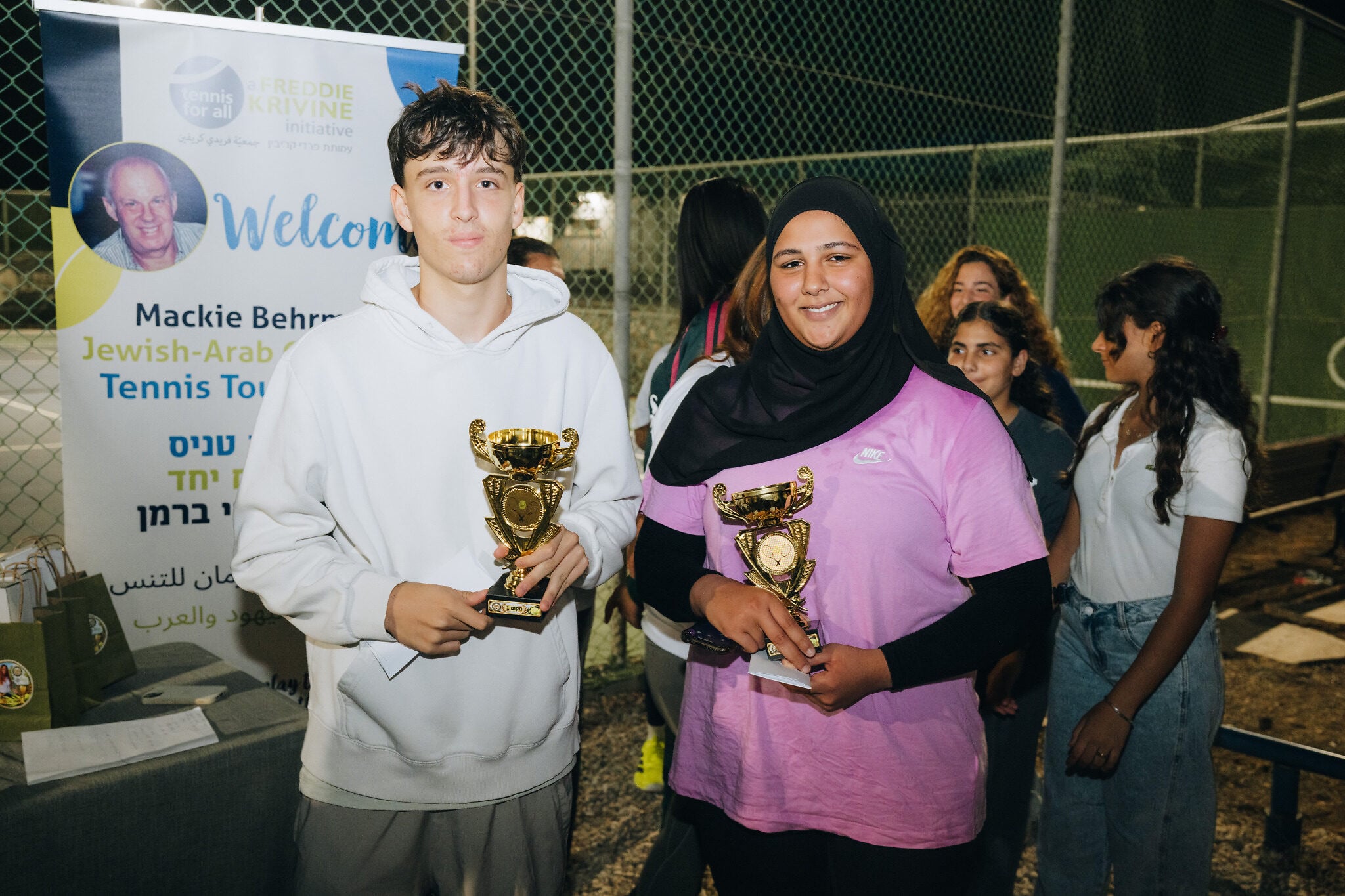
 Next week, Jewish and Arab tennis players from across Israel will compete as doubles partners in Haifa. Some have known each other for years. Others will meet for the first time.
Next weekend, tennis players from Jerusalem to Kiryat Shmona will gather in Haifa for an unusual competition. Every doubles pair will consist of one Jewish and one Arab player. Some are friends who have played together for years. Others have registered without a partner and will be paired with someone they have never met. They may come from different towns, speak different languages and hold very different views about the country they share. But for the duration of a match, their success will depend on their ability to work together.
The Tennis Together Open, organised by the Freddie Krivine Initiative in cooperation with the Israel Tennis Association, comes at a particularly difficult moment in Jewish–Arab relations. More than three years after October 7, the fear and suspicion that followed the Hamas attacks and the subsequent war have left their mark on relations between Israel’s Jewish and Arab citizens. The recent elections have brought these tensions into even sharper focus. Arab parties won a historic 19 Knesset seats, yet their electoral success has been accompanied by a wave of anti-Arab rhetoric, including accusations questioning the legitimacy of Arab political participation.
The extent of the divide is documented in research. According to Givat Haviva’s Partnership Index, published in January 2026, only 26% of Jewish respondents said they trusted most Arab citizens, compared with 54% of Arab respondents who expressed trust in Jews. Perhaps even more revealing, only 31% of Jewish respondents said they were willing to form friendships with Arabs, compared with 69% of Arab respondents willing to form friendships with Jews. These are not encouraging figures for a country in which both communities share so much of their daily lives.
A study published by researchers at the University of Haifa in April 2026 adds another dimension. Comparing relations between Jewish and Arab students before and after October 7, the researchers found a significant decline in Jewish students’ willingness to engage with Arab students, while Arab students continued to demonstrate greater openness to academic and social relationships. These findings raise an important practical question: if people are becoming less willing to interact with members of another community, where will the relationships that might challenge these attitudes begin?
For more than 25 years, the Freddie Krivine Initiative has brought Jewish and Arab children together through tennis. Many of the participants in next week’s tournament are alumni of our programmes, now adults whose lives have taken them in different directions. Some have completed military service, others have pursued studies or careers, but they are returning to a sport and a community that were part of their childhood.
One example is Gil and Muhammad. Gil joined our programme as a young boy, when Muhammad was his tennis coach. Gil has since completed his army service, and next week the two will compete together as doubles partners. Their relationship has evolved from that of a child and his coach to two adults playing on the same team. It is a reminder that the value of bringing children together cannot always be measured at the end of a programme or a summer camp. Sometimes its significance becomes apparent many years later.

But the tournament is not only about relationships that have already been established. Some participants have registered without partners, and we are matching them with players from the other community. They will arrive in Haifa knowing that the person they are about to compete alongside may be a complete stranger. They are prepared to place their confidence in someone they have never met, in a competitive environment where their own performance will depend partly on that person’s decisions and abilities.
Doubles tennis demands a particular kind of cooperation. Players must communicate, adapt to one another’s playing styles, decide who takes which shot and recover together when things go wrong. Unlike a friendly encounter organised around dialogue, the purpose here is not to discuss coexistence. It is to win a tennis match. That shared objective creates a different kind of interaction, one in which cooperation is necessary rather than simply encouraged.
There is no reason to romanticise this. A weekend tournament will not resolve the political disagreements, inequalities or painful experiences that shape Jewish–Arab relations in Israel. Nor can it undo the damage caused when public figures portray an entire community as untrustworthy or question its legitimate place in the country’s democratic life. But it does offer a practical response to one aspect of the problem: the growing reluctance to engage with people from the other community.
The tournament will take place at the Haifa Tennis Centre on Friday, November 27, and Saturday, November 28. The public is warmly invited to come and watch the matches and cheer on the players. There will be a reception and short speeches on Friday at 11:00 a.m., while the finals and awards will take place on Saturday.
In a country where so much attention is devoted to the divisions between Jewish and Arab citizens, it is worth making room for the people who are prepared to compete together. Not because a tennis match can change the political reality, but because the future of a shared society also depends on the relationships people are willing to form within it.