In Oslo, Human Rights Meets Its Own ‘Scream’
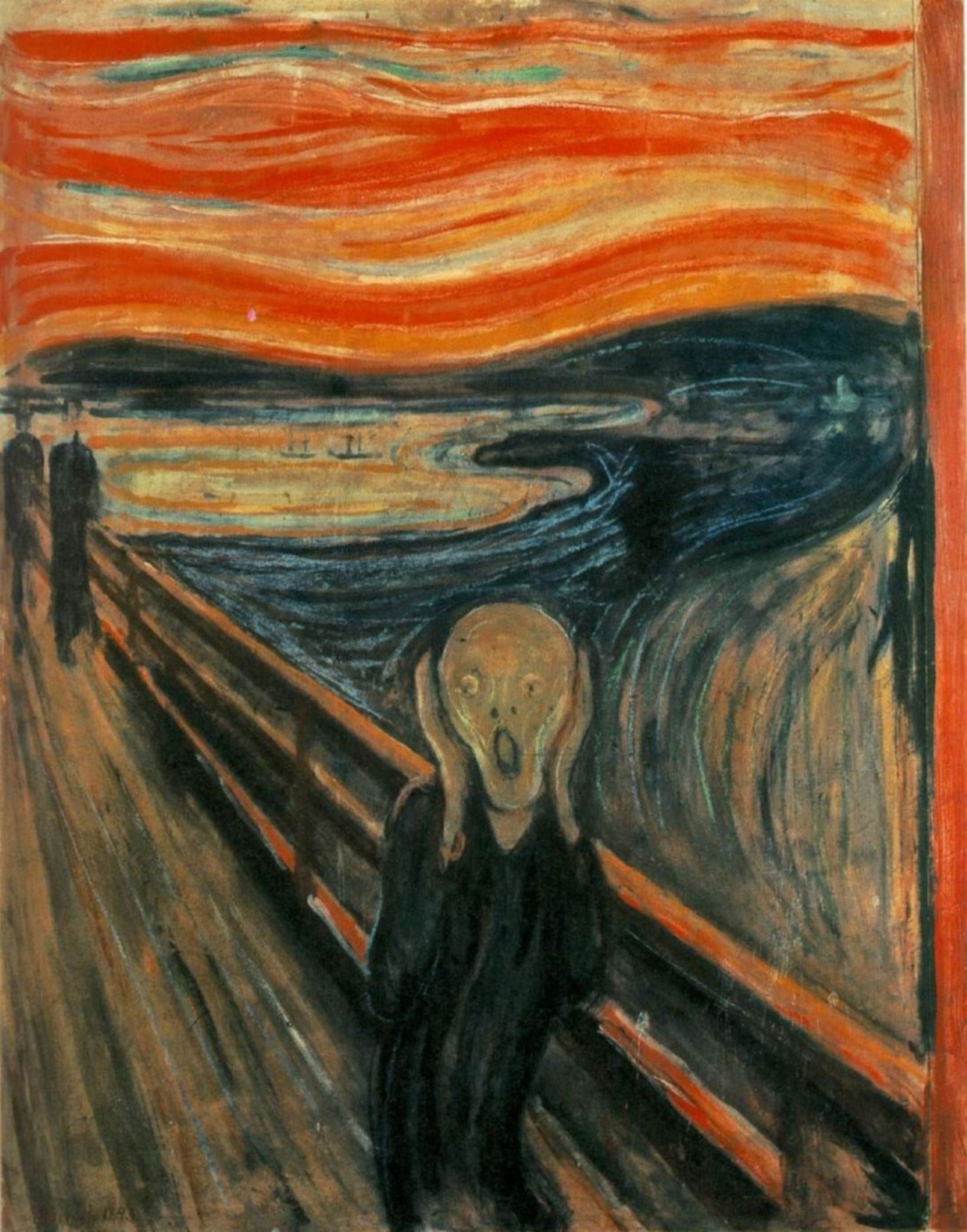
Life imitated art last week in Oslo—and not in a good way. At a panel on human rights and humanitarian groups, two iconic Norwegian images materialized before me: the iridescent Northern Lights and the raw angst of Edvard Munch’s The Scream.
I was in Norway for a discussion hosted by Kos & Kaos, a dynamic Nordic Jewish network, on “credibility, impartiality, and how to rebuild public trust” in the human rights world.
Few questions feel more urgent. Since October 7, 2023 —and long before—major human rights and humanitarian organizations have exercised enormous yet largely unregulated influence in shaping global understanding of conflicts, including the Israel–Gaza war. Inside these institutions, staff have described mission drift, inconsistent methodology, indifference to professional concerns, and racism.
Oslo offered a rare opportunity to address those failures openly.
My fellow panelists—Jan Egeland, head of the Norwegian Refugee Council, a humanitarian behemoth with an annual budget of some $850 million; Erik Fosse, a cardiothoracic surgeon who has worked in Gaza and co-founded the Norwegian Aid Committee (NORWAC); and Yariv Mohar, co-founder of the Pro-Human Campaign and ex-deputy director of Amnesty’s suspended Israel office—brought decades of experience.
But instead of turning inward, Egeland and Fosse spent most of the two hours focusing on Israel, Gaza, Hamas, and geopolitics. I drilled down on the NGOs themselves. Mohar moved between the two tracks.
The experience triggered a memory from my time at Human Rights Watch in New York, where a painting hung beside the organization’s 1997 Nobel Peace Prize: a green-white tail of light sliced through an inky sky before splitting into three strands. I once saw it as a symbol of moral illumination. But in Oslo, the diverging ribbons felt like a metaphor for the NGO sector today—fractured ideals, divergent monologues, and unexamined forces shaping the field beyond public scrutiny.
There were brief flashes of awareness that something is amiss.
“Is there too much attention on the Israeli–Palestinian conflict compared to other crises?” Egeland asked rhetorically at one point. “I would say, yes.”
And later: “If you talk about October 7th, you’re asked: ‘Are you against Palestinian liberation? Don’t you understand the occupation?’ No – it was a massacre. It was terror.”
It was a far clearer stance than the mealy-mouthed responses of Amnesty, HRW, and other groups that couched Hamas’ attack in “root causes” of apartheid and colonialism.
“If there is too little internal debate in some organizations,” Egeland added, “that’s a weakness.”
But these moments were exceptions. For the most part, the familiar pattern persisted: lack of experiential boundaries, a “no problems here” posture, and almost no curiosity about the rot within.
“My role is not to be a court or to issue verdicts, but to describe what we see,” Fosse said, despite pronouncing on matters far beyond the operating room: international law, the Geneva Conventions, and urban warfare.
It’s hard to know whether the near-total lack of focus on the NGO world reflects inability, unwillingness, or simply an entrenched industry norm of demanding transparency, accountability, and standards from others while exempting themselves from the same scrutiny. As I suggested in Oslo, organizations like HRW that castigate world leaders for clinging to power would have more credibility if their own leaders’ tenures didn’t outstrip the average dictator: Ken Roth remained at the helm for 29 years.
I didn’t get the chance to ask them. Egeland made a hasty exit; Fosse slipped out to the cafeteria without a goodbye.
But their unwillingness to engage with the sector’s core failures only reinforced what I’ve come to believe: that too many of these groups function as closed fiefdoms, governed by a mix of arrogance and contempt for outside questioning. And that the only way to secure accountability from such cloistered power brokers is to demand it—forcefully and publicly—much like the 2023 Congressional hearings that exposed the rotten moral logic of Ivy League university presidents.
Given the lost opportunity for real reflection, a Scream would have been the most honest sound in the room.
Danielle Haas was senior editor at Human Rights Watch from 2009-2023