Examining Extremism, Identity, and Influence
Indian Courts, Not Mamdani or US Lawmakers, Will Judge Umar Khalid
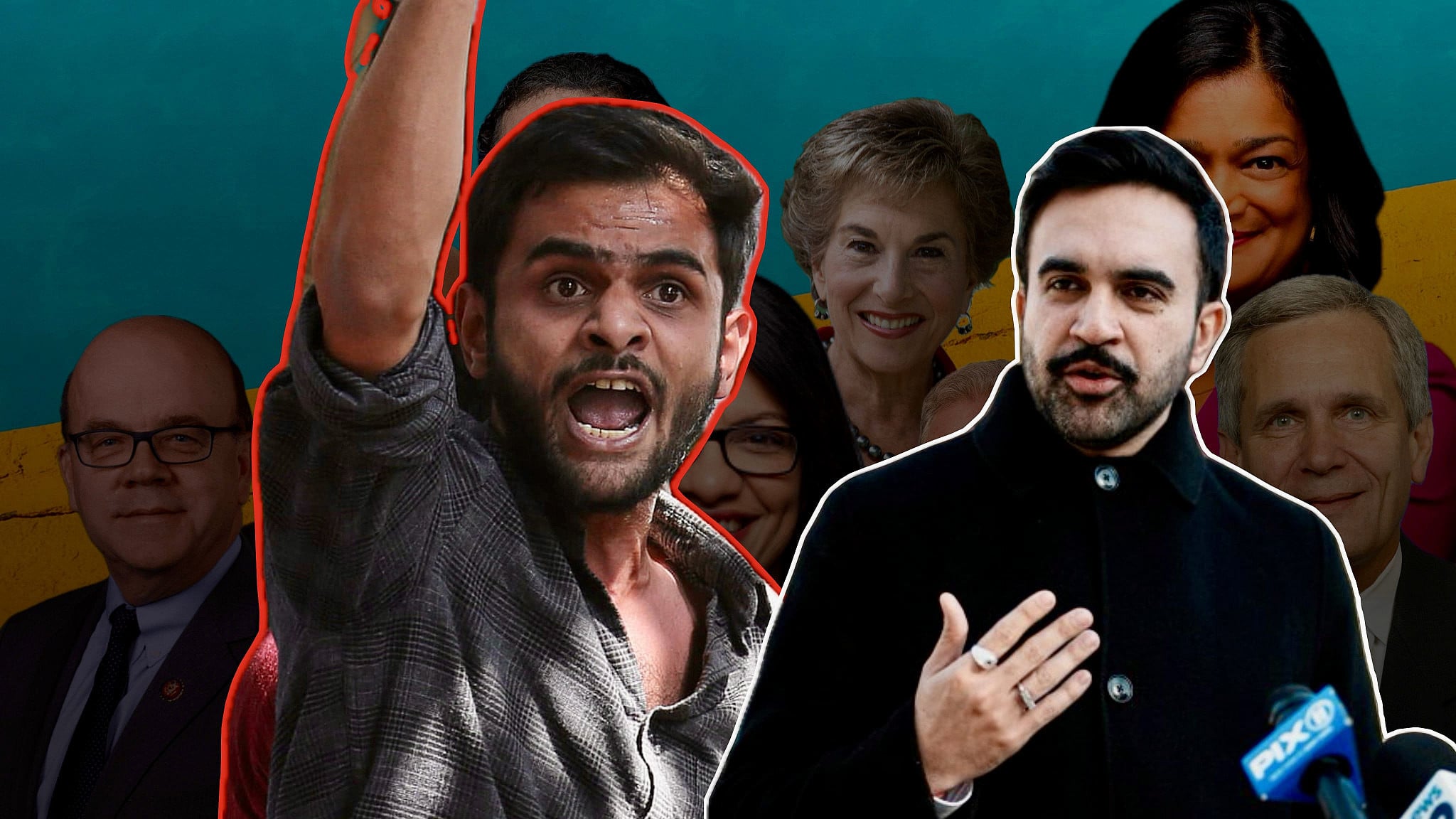
Photo: Courtesy of the Author
The Indian judiciary’s recent decisions demonstrate a nuanced, evidence-based approach that refuses to be bullied by international headlines.
The bedrock of any sovereign democracy is the independence of its judiciary, a principle that dictates that legal proceedings should be free from the shadow of political pressure—especially from foreign capitals.
However, on December 30, 2025, a group of eight U.S. lawmakers, led by Democrats Jim McGovern and Jamie Raskin, opted to bypass this fundamental diplomatic boundary.
In a formal letter—signed by Senator Chris Van Hollen, Senator Peter Welch, Congresswoman Pramila Jayapal, Congresswoman Rashida Tlaib, Congressman Jan Schakowsky, and Congressman Lloyd Doggett—and addressed to the Indian Ambassador to the United States, Vinay Mohan Kwatra, these representatives sought to influence the judicial process regarding Umar Khalid, an activist currently facing trial under the Unlawful Activities Prevention Act (UAPA).
This move followed a highly publicized gesture by the newly elected Mayor of New York, Zohran Mamdani, who handed a personal note of solidarity to Khalid’s parents during their US visit in early December.
While the rhetoric of human rights is frequently deployed by Democrats to justify such overtures, the Indian Ministry of External Affairs (MEA) has rightly characterized this as an unwarranted interference in internal matters.
The timing and nature of this advocacy are particularly striking, given that the Indian legal system is actively processing these cases through established constitutional frameworks.
By attempting to dictate bail conditions and trial standards to the world’s largest democracy, these US lawmakers are not championing justice, they are undermining the very institutional integrity they claim to protect.
The Selectivity of the “Left-Lobby” Agenda
One of the most revealing aspects of this international pressure campaign is its stark selectivity. The US lawmakers’ letter focuses almost exclusively on Umar Khalid, yet the case involving the 2020 Northeast Delhi riots involves a much broader spectrum of individuals.
On January 5, 2026, the Indian Supreme Court demonstrated its commitment to due process by granting bail to five other accused individuals: Shifa ur-Rehman, Shadab Ahmed, Meeran Haider, Gulfishan Fatima, and Mohammed Saleem Khan. These individuals have also spent years in pre-trial detention, yet their names are curiously absent from the high-decibel advocacy of New York’s mayor or the halls of the US Congress.
Shifa ur-Rehman, the President of the Jamia Alumni Association, is a poignant example of this disparity. Known among the student body for his philanthropic efforts—often funding the food and housing of rural students from his own pocket—Rehman’s case lacked the ideological “glamour” required for international headlines.
Because he did not fit the specific narrative of the “Left-lobby,” he remained in the shadows while Khalid was elevated to the status of a global cause célèbre.
The fact that the Indian judiciary granted bail to Rehman and others while denying it to Khalid and Sharjeel Imam suggests that the courts are making distinctions based on specific evidence and the gravity of charges, rather than blanket political affiliation.
Radical Rhetoric and the Boundaries of Free Speech
To understand the Indian judiciary’s caution, one must look at the specific allegations against Khalid and his associate Sharjeel Imam.
Khalid, a self-described “Communist-Atheist,” has a documented history of rhetoric that many in India view as an existential threat to the state’s territorial integrity. He has frequently referred to Kashmir—a region with a 5,000-year historical tie to India—as “occupied territory,” essentially calling for the balkanization of the country.
Most troubling is Khalid’s past social media activity, where he eulogized Burhan Wani, a commander of the terrorist group Hizbul Mujahideen. In a post citing Che Guevara, Khalid wrote, “Rest in Power, Burhaan! #FreeKashmir,” framing a militant hunted down by armed forces as a revolutionary hero.
To put this in perspective for an American audience, it would be akin to a Harvard scholar publicly mourning Qasem Soleimani or Osama bin Laden as a “hero of the people” while calling for the secession of an American state.
Similarly, Sharjeel Imam’s rhetoric went beyond mere protest. In recorded speeches, Imam detailed a strategy to “cut off” Northeast India by blockading the Siliguri Corridor, known as the “Chicken’s Neck.”
He explicitly called for a mass mobilization to ensure Assam would be permanently separated from the Indian union. When individuals call for the violent dismantling of a nation’s geography, the legal response is not a matter of suppressing dissent, but of maintaining national security.
Glass Houses and Global Double Standards
The irony of US lawmakers lecturing India on judicial restraint is compounded by the United States’ own rigid stance on sedition and secession. Under 18 U.S.C. § 2383, the US government reserves the right to imprison and fine anyone who “incites, sets on foot, assists, or engages in any rebellion or insurrection.”
Furthermore, the landmark Supreme Court case Texas v. White (1869) established that the Union is indissoluble and that states have no right to unilateral secession. The US has historically acted against groups like the “Republic of Texas” movement or any entity suggesting a break from the federal union.
Moreover, New York Mayor Zohran Mamdani’s focus on Indian activists is a baffling prioritization of his office. New York City currently faces a staggering housing crisis, with Mamdani himself promising to build 200,000 affordable units and raise the minimum wage to $30—ambitious goals that remain unfunded and stalled by fiscal constraints.
When a city official spends attention on foreign criminal trials while his own constituents face crumbling infrastructure and a cost-of-living squeeze, it suggests a preference for ideological posturing over governance.
This is not the first time these lawmakers have overstepped. In the past, similar interference occurred regarding Saudi Arabia’s execution of Nimr al-Nimr and the Jamal Khashoggi investigation, leading to sharp rebukes from Riyadh for “blatant interferences” that undermined regional stability.
India is home to a Muslim population that is now estimated at over 250 million, making it the third-largest in the world and larger than any single Arab nation. This community is not a monolith, it is composed of a vast array of thriving traditions, including Sufi, Barelvi, Deobandi, Tablighi, Ahlehadees, Salafi, Shia, Bohra, Ismaili, and Khoja sects. The vibrancy of this pluralism is protected by the very courts that US lawmakers are now disparaging.
Respect Between Democracies Begins With Non-Interference
A partnership between the world’s oldest and largest democracies should be rooted in mutual respect for the internal mechanisms that sustain them.
When US lawmakers demand special treatment for an individual facing serious national security charges, they are not merely “commenting” on human rights, they are attempting to exert a “White Savior” influence over a legal system that has already proven its ability to be both firm and fair.
The Indian judiciary’s recent decisions demonstrate a nuanced, evidence-based approach that refuses to be bullied by international headlines. While individuals like Shifa ur-Rehman were granted bail based on the court’s assessment of their specific involvement, others remain in custody due to the gravity of their alleged actions against the state.
This is how a rule-of-law society functions: through the impartial weighing of evidence, not the selective pressure of foreign political lobbies.
If the United States wishes to remain a credible voice for global democracy, its representatives must learn to distinguish between legitimate human rights advocacy and the protection of individuals who explicitly call for a nation’s “balkanization.”
For Mayor Mamdani, the priority must remain the 1.4% vacancy rate and the mounting economic inequality in New York City. For US lawmakers, the priority must be a diplomatic protocol that treats India as a sovereign peer, not a subordinate. True justice is found in the courtrooms of New Delhi, not in the social media posts of foreign lawmakers.
Related Topics
Related Posts