
Policy researcher exploring geopolitics, public policy, national security, technology and India’s place in a changing world.
India’s October 7: A Shared Front Against Terror
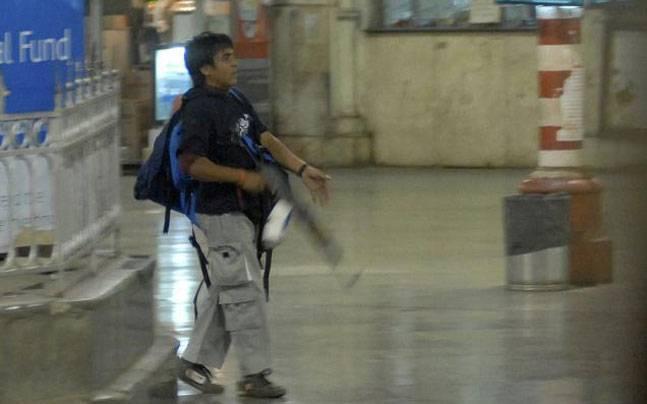
The 26/11 Mumbai attacks: Ajmal Kasab at Chhatrapati Shivaji Terminus, November 26, 2008.
On the evening of November 26, 2008, Mumbai was settling into an ordinary evening. Commuters were making their way home from the Chhatrapati Shivaji Maharaj Terminus (CSMT); guests were dining at the Taj Mahal Palace hotel; and friends and relatives were having dinner at Leopold Café. However, ten heavily armed terrorists arrived by sea turning one of the world’s busiest cities into a battleground where 166 people died over the course of three days (including civilians and security officers) and hundreds were injured.
Eighteen years later, the pictures are still upsetting. The burning Taj, the siege at Nariman House, the gunfights at CST, and desperate cries for help – all of that remains a permanent part of the Indian collective memory. The horrors of October 7, 2023, carry an agonizing familiarity for Israelis. Hamas terrorists crossed into Israeli communities, attacked civilians in their homes, murdered families and took hundreds hostage.
Besides the sentimentality of the comparison, there are more reasons why the attacks share a lot in common. In both of them, the terrorist organizations showed their capability to conduct and coordinate attacks efficiently, as well as to use civilians for the purpose of psychological pressure in line with their ideologies. Although Lashkar-e-Taiba (LeT) and Hamas have distinct histories and organizational structures, both demonstrate how extremist ideology, militarization, propaganda and transnational support networks can be transformed into instruments of organized violence against civilians. The United Nations Security Council identifies Lashkar-e-Taiba as a Pakistan-based terrorist organization responsible for the 26/11 attacks. The sanctions records have revealed that Jamaat-ud-Dawa, which acts as a front organization for LeT, plays an important part in its financial network.
For India, the threat has never been limited to the gunmen executing the attack; it is the cross-border infrastructure that helps them to recruit, train, logistically assist and enables alleged connections with terrorist organizations and elements in Pakistan’s army and intelligence apparatus. Likewise, Israel is facing a similar threat from Hamas that was sustained through outside support and regional infrastructure. It is not sufficient to combat the gunmen but the infrastructure of financing, equipping, radicalization and enabling the terrorist organization should also be dismantled.
There is an infrastructure of financial nature behind that one. It uses charitable fronts, money transfer, shell companies and more sophisticated channels of financial transactions through the digital space. The Financial Action Task Force has already sounded several warnings about the abuse of non-profit organizations and financial institutions for terrorist funding. Recently, in October 2026, the U.S. Treasury has uncovered the network of Hamas, which transferred more than $2 million using deceptive charitable fronts and cryptocurrency. It is evident that counterterrorism efforts should go beyond the elimination of terrorists but should identify and dismantle their financial infrastructure as well.
Therefore, the cooperation of India and Israel in the sphere of financial intelligence should be further developed and joint investigations should be conducted to uncover the participants and the jurisdictions of financing networks for the terrorist organizations.
However, in addition to cooperation in the financial sphere, it should also be accompanied by closer cooperation in the defense and intelligence spheres. The Memorandum of Understanding for India-Israel Defense Cooperation signed in November 2025 becomes the solid platform for such cooperation.
India and Israel must now build on this foundation through institutionalized intelligence-sharing, real-time threat assessments, counter-drone technologies and coordinated efforts to disrupt online radicalization and terrorist recruitment. Their respective experiences in counterterrorism offer valuable opportunities for learning, technological collaboration and operational preparedness.
Yet, both countries must remain clear about the nature of the threat. The war needs to be waged against the jihadists’ extremist beliefs and the terror groups using religion to legitimize acts of terrorism and violence; however, it should not be directed at entire communities or religions. Muslims make up a sizable chunk of India’s population while Arab residents play a vital role in the fabric of Israeli society. It would be unjust to blame any community for the acts of terror groups. Both democracies have demonstrated their ability to preserve pluralism while remaining uncompromising in their fight against terrorism.
The victims of 26/11 deserve better commemoration this anniversary. This tragedy must serve as a reminder to India about the need to take action against cross-border terror and hold those responsible for such atrocities accountable. Both India and Israel are aware of the human toll caused by the acts of terrorism and the significance of being firm on their enemies.
The victims of Taj and the communities attacked on October 7th, despite their being separate events in terms of dates and geography, are connected by their fight against terrorism. India and Israel need to be sure that their partnership will help in breaking down terrorist networks, saving innocent civilians and upholding the principles of democracy.
Related Topics
Related Posts