


Inside Washington’s Gaza Plan — and Why Turkey Isn’t Welcome
Washington is diligently accelerating an audacious plan to stabilize Gaza after a brutal two-year war. Behind closed doors at the United Nations, a draft resolution is circulating that would authorize an International Stabilization Force (ISF) with a mandate through at least 2027, a civilian technocratic administration for day-to-day governance, and a US-led “Board of Peace” to steer reconstruction and funding priorities. The initiative aims to thread a narrow needle: provide security and humanitarian lifelines without reviving an open occupation. Yet one of the clearest signals emerging from the diplomatic skirmishes around the proposal is which countries are preferred — and which are not. Turkey’s bid for a central role has collided with a rare consensus among Israel and several Arab capitals: Ankara is unwelcome.
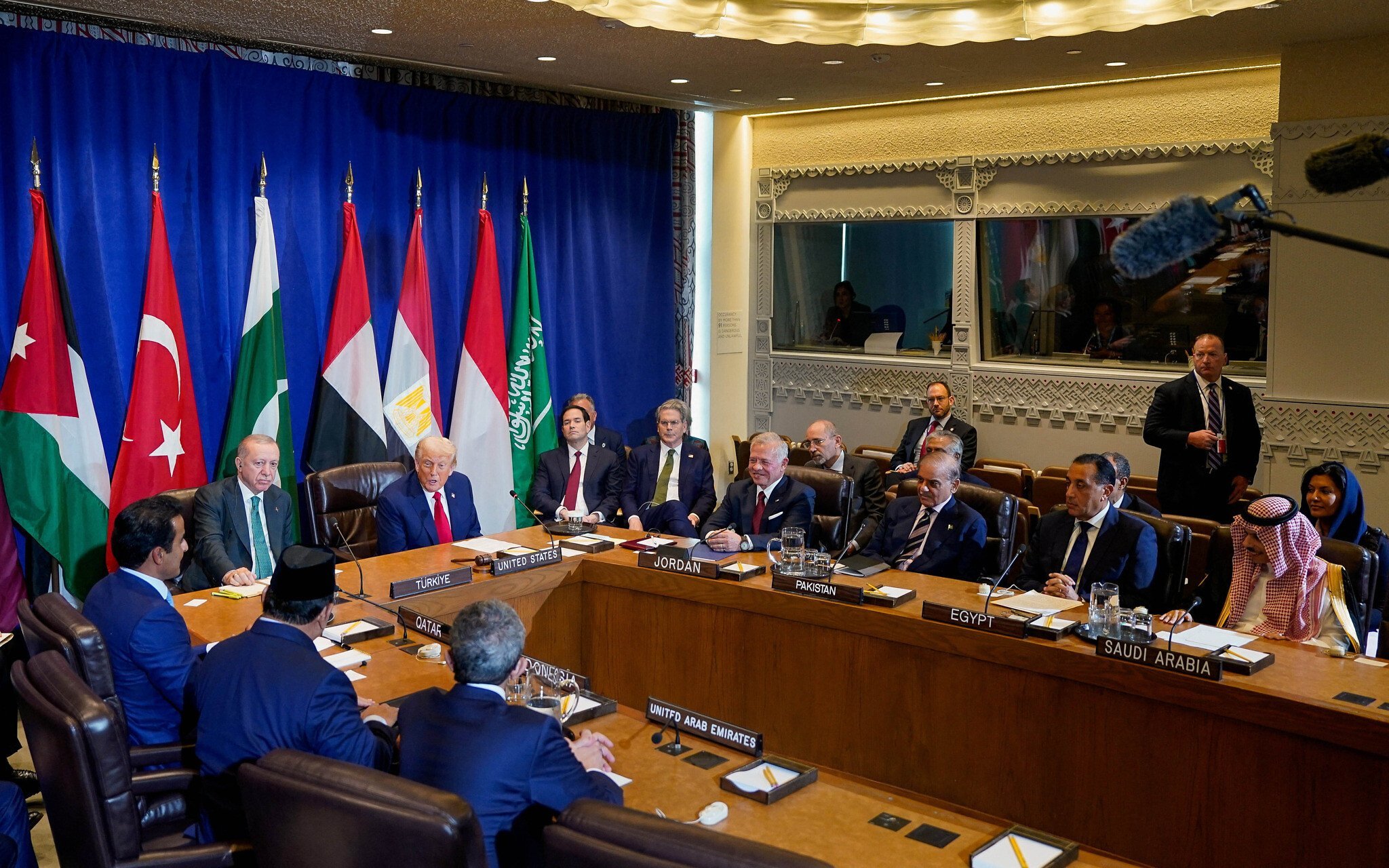
Michael Waltz, the US ambassador to the United Nations, on Wednesday convened the elected members (E10) of the UN Security Council – representatives of Algeria, Denmark, Greece, Guyana, Pakistan, Panama, the Republic of Korea, Sierra Leone, Slovenia, and Somalia. Notably, the US also welcomed Egypt, Qatar, the Kingdom of Saudi Arabia, Turkey, and the United Arab Emirates to the meeting, demonstrating regional support for the resolution to the UN Security Council on Gaza.
The draft — described by diplomats as an “enforcement mission” rather than a classic Chapter VII UN peacekeeping deployment — would place international troops under a unified command to secure borders, protect civilians, facilitate humanitarian corridors, train a vetted Palestinian police force, and oversee the systematic destruction and buy-back of non-state weapons caches. Parallel to that, a committee of vetted Palestinian technocrats would manage civil services while a “Board of Peace,” chaired publicly in concept by President Donald Trump, would set reconstruction priorities and raise funds. The architects say the hybrid design preserves Palestinian dignity while ensuring the security conditions required for return and rebuilding.
That compromise — a force with teeth but not framed as an occupation — is politically convenient but operationally thin. The draft envisages a mandate through the end of 2027, renewable, and a force made up of contingents from a patchwork of countries: Indonesia, Azerbaijan, potentially Egypt, Pakistan, and others; Turkey has offered troops too. But here is the rub: Israel insists on veto authority over participants, saying it will not accept Turkey, having any role on the ground, and several Arab capitals distrust Ankara so deeply that their cooperation — and crucially, their reconstruction funding — would be at risk if Turkey were included in any meaningful security role.
Why Turkey? For Ankara, participation in Gaza would restore prestige, deepen its influence in Palestinian affairs, and burnish its credentials as a regional interlocutor. President Recep Tayyip Erdoğan has cultivated links with Hamas and the Muslim Brotherhood for years; Turkish officials argue those ties give Ankara leverage with Gaza’s factions. But that same record is why Gulf monarchies, Egypt and Israel view Turkey with suspicion. The Gulf and Cairo see Ankara’s Islamist-tinged foreign policy as the opposite of the stability they crave; Israel sees it as a security threat.
Riyadh and Abu Dhabi have been explicit and uncompromising: reconstruction funding and political support hinge on credible disarmament. For the Gulf, the idea of a “state-within-a-state” in Gaza — armed militias running checkpoints, exercising sovereign functions, and answering to external patrons — is unacceptable. Among Arab capitals, there is sharp consensus on one point: there can be no durable peace in Gaza while militant organizations retain the capacity to act as a parallel authority. That line — voiced most forcefully by Saudi Arabia and the United Arab Emirates — explains much of the resistance to Ankara’s ambitions.
Dalia Ziadeh, a Middle East scholar and Washington coordinator at the Institute for the Study of Global Antisemitism and Policy, put the dynamic bluntly in a recent interview with i24:
“It’s obvious to everyone that Turkey feels jealous of not being the star of the show… Egypt has led crucial coordination with Israel over Gaza’s future — deliberately ensuring that Turkey remains sidelined.”
Ziadeh noted that Saudi Arabia, the UAE and influential anti-Hamas clans inside Gaza have distanced themselves from Ankara — a diplomatic alignment that leaves Turkey isolated on the very question it most wants to shape.
According to observers, the opposition is not merely personal; it is structural. Egypt, which controls the Rafah crossing and has long been the chief Arab interlocutor on Gaza, sees Turkey’s ambitions as a direct challenge to its role. Saudi Arabia and the UAE, which have been quietly deepening ties with Israel and view Islamist movements as regional threats, are wary of any actor they perceive as enabling those movements. And Israel — whose security concerns are the most immediate — has signalled it will block Turkish troops outright.
Those vetoes matter. Gulf states have made clear that financial pledges for Gaza’s reconstruction — numbers as high as tens of billions have been mentioned in diplomatic circles — are conditional on robust disarmament and an architecture that cannot be captured by pro-Hamas actors. Ankara’s record of sheltering or politically supporting Brotherhood-linked figures only amplifies fears that Turkish involvement could undercut the very demilitarization the ISF is meant to impose.
At the same time, Washington and many European capitals believe some regional buy-in is indispensable. The US draft aims for a multilateral formula that keeps American troops off Gaza while giving the US a central coordinating role (hence the proposed Board of Peace and a US-led civil-military coordination center for humanitarian operations). European diplomats — Germany prominent among them — have urged speed, warning that the fragile ceasefire and the humanitarian relief it unlocked will quickly unravel without security and governance measures in place.
Yet beneath the diplomatic choreography lies a more fundamental challenge: ensuring that those who step forward to shape Gaza’s future are genuinely detached from Hamas and other militant networks. If the countries participating in the peace framework maintain a clear distance from groups with armed or ideological agendas — and instead commit themselves fully to the principles of disarmament, stabilization, and reconstruction — many of the practical questions now clouding the mission will begin to resolve themselves.
Authority, command structures, and local legitimacy will follow naturally once the environment is free from the shadow of parallel power centers. The question of how the International Stabilization Force (ISF) coordinates with a reconstituted Palestinian police, or how quickly Israeli troops can withdraw, becomes far less contentious when no militant faction holds veto power through violence. Similarly, debates over governance — whether the technocratic committee is Palestinian-led or externally managed — lose their divisive edge when the actors involved are united by a single commitment: building a Gaza where political authority, security, and reconstruction all rest on lawful, demilitarized foundations.
In short, disconnecting from Hamas is not just a political choice — it is the precondition for clarity, credibility, and peace. Once that separation is made, the rest of Gaza’s questions become technical, not existential.
Within this evolving order, Turkey’s exclusion is less about rivalry and more about principle. Ankara’s overtures — from hosting summits to offering troops — clash with the consensus emerging among Arab powers that genuine peace requires a complete break from armed or ideological proxies. Its diminished influence over Hamas, coupled with distrust among regional capitals, underscores a new reality: Gaza’s reconstruction will be led by states that back disarmament, not those that hedge it.
That does not entirely shut the door on Ankara. Turkey may still find space for humanitarian coordination or limited diplomatic engagement — roles that allow participation without control. Yet the core architecture of Gaza’s stabilization will rest with those nations willing to separate political influence from security responsibility.
If this clarity holds, the practical hurdles that have long stalled progress — from command structures to governance legitimacy — could finally begin to ease. But if the International Stabilization Force (ISF) becomes entangled in political bargaining, Gaza risks sliding back into the familiar limbo of “no war, no peace.”
For Washington, the mission’s success will depend less on rhetoric and more on patient, disciplined diplomacy that aligns Arab funding, UN legitimacy, and Palestinian participation under a single principle: disarmament before development.
As Dalia Ziadeh observed, Turkey’s frustration reflects its waning relevance. “Turkey wants to prove it’s still part of the story,” she said, “but it no longer holds real leverage over Hamas. Today, Egypt, Saudi Arabia, and the UAE set the tone — and they’ve made clear that only those detached from militancy can shape Gaza’s future.”
In the emerging postwar order, relevance will no longer be measured by visibility at summits, but by credibility in delivering stability. Whether this new coalition can transform that principle into a durable peace will define not just Gaza’s next chapter, but the future of the Middle East.